Flag Day
June 14
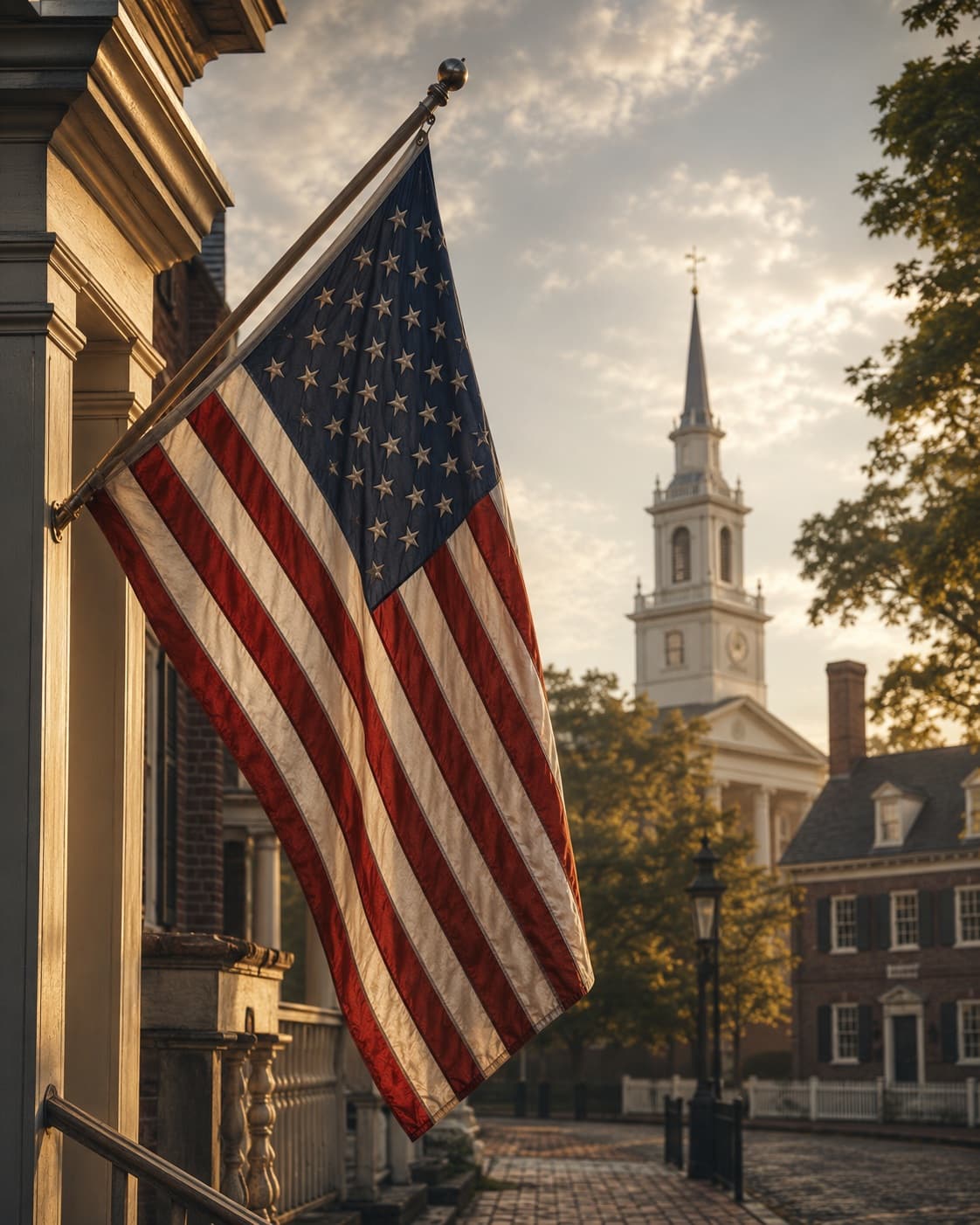
Flag Day honors one of the most recognized and beloved symbols in the world — the American flag. The Stars and Stripes has flown over battlefields, courthouses, schoolhouses, and homes for nearly 250 years. It represents the unity of the states, the courage of those who have served under it, and the enduring ideals of liberty, justice, and opportunity that America stands for. On Flag Day, Americans celebrate the flag that has carried the nation through every chapter of its history.
What It Commemorates
Flag Day commemorates the adoption of the Stars and Stripes as the official flag of the United States by the Second Continental Congress on June 14, 1777. The original flag featured 13 stars and 13 stripes representing the thirteen original colonies. Today the flag bears 50 stars — one for each state — and 13 stripes in enduring honor of the founding generation.
Historical Background
The Continental Congress passed the first Flag Resolution on June 14, 1777, establishing the design of the national flag. President Woodrow Wilson proclaimed June 14 as Flag Day in 1916, and Congress established it as a permanent national observance in 1949. The current 50-star flag has been in use since 1960 — making it the longest-serving version in American history — and was designed by 17-year-old Robert G. Heft as a school project.
Why It Matters
The American flag is a symbol of national unity, shared values, and the promise of liberty. It represents not just a government but a set of enduring ideals that have united a diverse people across 250 years. Flag Day invites Americans to reflect on what the Stars and Stripes stands for — and to honor those who have served and sacrificed under it.
How Americans Observe It
Americans observe Flag Day by displaying the American flag, participating in flag ceremonies and parades, attending patriotic programs, and learning about proper flag etiquette and the flag's history. Flag Day also marks the official birthday of the United States Army, founded June 14, 1775.
America 250 Connection
Flag Day& the 250th Anniversary
As America approaches its 250th birthday, Flag Day has special resonance. The flag — evolved over time but continuous in spirit — has accompanied the nation through 250 years of history. When Americans look at the Stars and Stripes, they see the same symbol of liberty that flew at Valley Forge, Iwo Jima, and the Moon.
About Flag Day
What Flag Day Commemorates
Flag Day commemorates the adoption of the Stars and Stripes as the official flag of the United States by the Second Continental Congress on June 14, 1777. It celebrates the American flag as one of the world's most recognized symbols — a banner that has flown over battlefields, courthouses, schoolhouses, and the surface of the Moon, standing for liberty, unity, and the enduring promise of the American republic.
The flag has evolved over the centuries as new states joined the Union, but its meaning has remained constant: it represents the American people, their shared values, and the nation they have built together across 250 years.
Historical Background
The Flag Resolution of June 14, 1777, passed by the Continental Congress, established the design of the national flag: thirteen stars and thirteen stripes representing the original thirteen colonies. As new states joined the Union, stars were added — until the current 50-star flag was adopted on July 4, 1960, after Hawaii's admission.
The 50-star flag was designed by 17-year-old Robert G. Heft as a high school class project in 1958. He received a B− for the assignment — but his design was selected from more than 1,500 entries submitted to President Eisenhower. It has now been in use longer than any previous version of the flag.
President Woodrow Wilson proclaimed June 14 as Flag Day in 1916, and Congress established it as a permanent national observance in 1949. Flag Day also marks the birthday of the United States Army, founded on June 14, 1775 — linking the flag to the very beginnings of American military service.
Why It Matters
The American flag is more than cloth and color. It is a symbol of national unity — proof that a diverse people, spread across a vast continent, can be united by shared ideals and a common commitment to liberty and self-government.
When Francis Scott Key watched the flag fly over Fort McHenry through a night of British bombardment in 1814 and wrote the words that became "The Star-Spangled Banner," he captured something essential: the American flag is a symbol of resilience, of defiance in the face of threat, and of the endurance of the republic.
How Americans Observe It
Americans observe Flag Day by displaying the American flag at homes and businesses, participating in flag-raising ceremonies and parades, attending patriotic programs, and learning about the history and proper etiquette of the flag. Schools, veterans' organizations, and civic groups often hold special programs. The Betsy Ross House in Philadelphia marks the day with events honoring the creation of the first American flag.
Connection to America 250
As America approaches its 250th birthday, Flag Day takes on special significance. The Stars and Stripes that flies today is the same flag — evolved but continuous in spirit — that has accompanied the nation through every chapter of its 250-year history. It flew at Valley Forge, at Gettysburg, on the beaches of Normandy, and on the surface of the Moon.
Flag Day 2026 invites Americans to look at the flag and see not just a national symbol, but a living testament to 250 years of courage, sacrifice, and the enduring promise of American liberty.
Historical Note
Francis Scott Key witnessed the American flag flying defiantly over Fort McHenry through a night of British bombardment during the War of 1812, inspiring 'The Star-Spangled Banner.' His poem captured what the flag meant to Americans: proof, visible at dawn's early light, that the republic still stood.
Frequently Asked Questions
What does Flag Day commemorate?
Flag Day commemorates the adoption of the Stars and Stripes as the official flag of the United States by the Continental Congress on June 14, 1777. It celebrates the American flag as a symbol of national unity, liberty, and pride.
When is Flag Day observed?
Flag Day is observed every year on June 14.
Is Flag Day a federal holiday?
Flag Day is a national observance but not a federal holiday. Congress established it as a permanent annual observance in 1949. It is also the official birthday of the United States Army.
Related

Ask Dr. Abigail Hart
AI Historical Guide · America 250 Atlas
Have a question about this topic? Dr. Hart can help you explore the context, connections, and meaning behind America’s history.