Thanksgiving Day
Fourth Thursday in November
Thanksgiving is one of America's most cherished and distinctively national holidays — a day when families and communities gather to share a meal, count their blessings, and give thanks for the abundance and freedom that American life makes possible. With roots stretching back to the earliest days of colonial settlement, Thanksgiving has grown into a beloved annual tradition that brings Americans together across every background and belief in a shared spirit of gratitude, generosity, and joy.
What It Commemorates
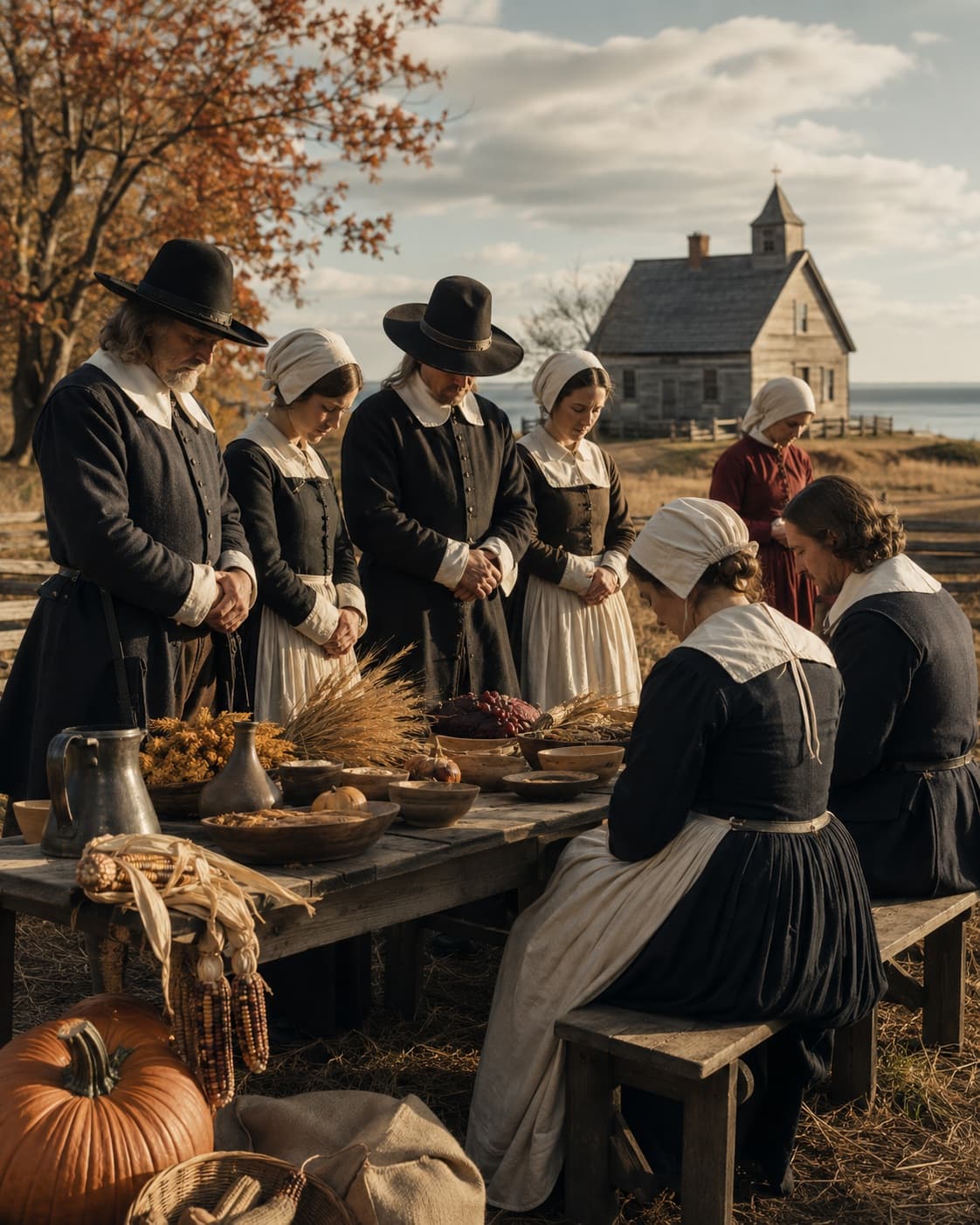
Thanksgiving commemorates the spirit of gratitude and community that has been part of American life since the nation's earliest days. The holiday draws on the tradition of the 1621 harvest celebration at Plymouth Colony, where Pilgrim settlers and Wampanoag people shared three days of feasting and thanksgiving. It was elevated to a national holiday by President Abraham Lincoln, who in 1863 proclaimed a national day of Thanksgiving and Praise, calling Americans to give thanks for national blessings. Congress established the fourth Thursday of November as the permanent date in 1941.
Historical Background
Thanksgiving observances date to the earliest American colonies. George Washington proclaimed national days of Thanksgiving during the Revolutionary War and his presidency. Sarah Josepha Hale, editor of Godey's Lady's Book, campaigned for a national Thanksgiving holiday for decades before Lincoln formalized it in 1863. The Macy's Thanksgiving Day Parade, first held in New York in 1924, has become one of America's most beloved holiday traditions. The holiday marks the beginning of the American holiday season.
Why It Matters
Thanksgiving is a reminder that gratitude is one of the great virtues of civic life. It invites Americans to appreciate the blessings of liberty, opportunity, and community — and to recognize that a free, prosperous, and generous nation is worth celebrating and protecting. It is a day to gather with those we love and give heartfelt thanks for the remarkable gift of American life.
How Americans Observe It
Americans celebrate Thanksgiving with family and friends gathered around a table, traditional turkey dinners, football games, the Macy's Thanksgiving Day Parade in New York City, volunteering at food banks and soup kitchens, and expressions of personal and community gratitude. Traditions vary by family and region, but the shared spirit of thankfulness unites Americans from coast to coast.
America 250 Connection
Thanksgiving Day& the 250th Anniversary
As America marks 250 years, Thanksgiving invites the nation to reflect on the extraordinary blessings of American life — liberty, opportunity, prosperity, and community. The tradition of national gratitude, practiced since the founding era, is itself one of the remarkable threads of continuity running through 250 years of American history. Americans today give thanks for the same republic their ancestors built and defended.
About Thanksgiving Day
What Thanksgiving Day Commemorates
Thanksgiving Day is one of America's most beloved and distinctively national traditions — a day set aside for gratitude, family, and reflection on the blessings of American life. It draws on a tradition stretching back to the earliest days of the American experience, when settlers gave thanks for surviving the rigors of a new world, and it has grown into an annual celebration of the abundance, liberty, and community that American life makes possible.
At its heart, Thanksgiving is a day to appreciate what you have, to gather with those you love, and to give thanks — for family, for country, and for the remarkable gift of American freedom.
Historical Background
The most celebrated early Thanksgiving took place in the autumn of 1621 at Plymouth Colony in Massachusetts, when Pilgrim settlers and Wampanoag people shared a three-day harvest celebration after a difficult first year. The Pilgrims had arrived on the *Mayflower* in 1620 and faced terrible hardship; the harvest of 1621 was a cause for genuine gratitude.
George Washington proclaimed national days of Thanksgiving during the Revolutionary War and again as president in 1789 — the first national Thanksgiving proclamation under the new Constitution. Sarah Josepha Hale, editor of *Godey's Lady's Book*, campaigned for a permanent national Thanksgiving holiday for decades before Abraham Lincoln finally proclaimed it in 1863, calling Americans to give thanks for national blessings even in a time of civil war.
The Macy's Thanksgiving Day Parade, first held in 1924 in New York City, became one of America's most beloved holiday traditions. Congress fixed the holiday as the fourth Thursday of November in 1941.
Why It Matters
Thanksgiving matters because gratitude is one of the great virtues of civic life. It invites Americans to pause and appreciate the blessings they enjoy — liberty, opportunity, prosperity, family, and community. It is a reminder that the American way of life, with all its abundance and freedom, is not something to be taken for granted.
Thanksgiving also matters because it is uniquely and irreducibly American. No other nation has a holiday quite like it — a day that brings Americans together across every background, region, and belief in a shared spirit of thankfulness and joy.
How Americans Observe It
Americans celebrate Thanksgiving with family gatherings, the traditional turkey dinner with stuffing, mashed potatoes, cranberry sauce, and pumpkin pie; football (the Thanksgiving game is one of the most-watched sporting events of the year); the Macy's Thanksgiving Day Parade in New York City; and volunteering at food banks and soup kitchens.
The holiday begins the American holiday season, and it remains one of the most widely observed days in the country. Travel on the Wednesday before Thanksgiving is among the busiest of the year, as Americans cross the country to be with family.
Connection to America 250
As America marks 250 years, Thanksgiving invites the nation to reflect on the extraordinary blessings of American life — 250 years of liberty, self-government, growth, and opportunity. The tradition of national thanksgiving, practiced since George Washington's presidency, is itself one of the remarkable threads of continuity running through the American story.
In 2026, Americans will gather around tables from coast to coast with an extra reason for gratitude: the astonishing fact that the republic founded in 1776 is still standing, still free, and still growing — 250 years on.
Historical Note
President Lincoln's 1863 Thanksgiving Proclamation called for national thanksgiving and praise even in the midst of Civil War — recognizing that gratitude for America's enduring blessings was appropriate in every season. It established Thanksgiving as a permanent expression of American civic faith and hope.
Frequently Asked Questions
What does Thanksgiving commemorate?
Thanksgiving commemorates the spirit of gratitude and community that has been part of American life since the colonial era. It draws on the 1621 harvest celebration at Plymouth Colony and was established as a national holiday by President Abraham Lincoln in 1863.
When is Thanksgiving observed?
Thanksgiving Day is observed on the fourth Thursday of November each year.
How does Thanksgiving connect to America 250?
The tradition of national Thanksgiving has been part of American life since George Washington's presidency. As America marks 250 years, Thanksgiving invites citizens to give thanks for the enduring blessings of liberty, democracy, and community that the American republic has made possible.
Related

Ask Dr. Abigail Hart
AI Historical Guide · America 250 Atlas
Have a question about this topic? Dr. Hart can help you explore the context, connections, and meaning behind America’s history.