Constitution Day and Citizenship Day
September 17
Constitution Day marks the anniversary of one of the greatest achievements in the history of self-government: the signing of the United States Constitution. The document created a framework for republican government that has endured for nearly 250 years, guiding the nation through crises, growth, and change while protecting individual liberty. Citizenship Day, observed on the same date, celebrates the men and women who become Americans by birth or by choice — and the rights and responsibilities that come with citizenship in the world's oldest constitutional republic.
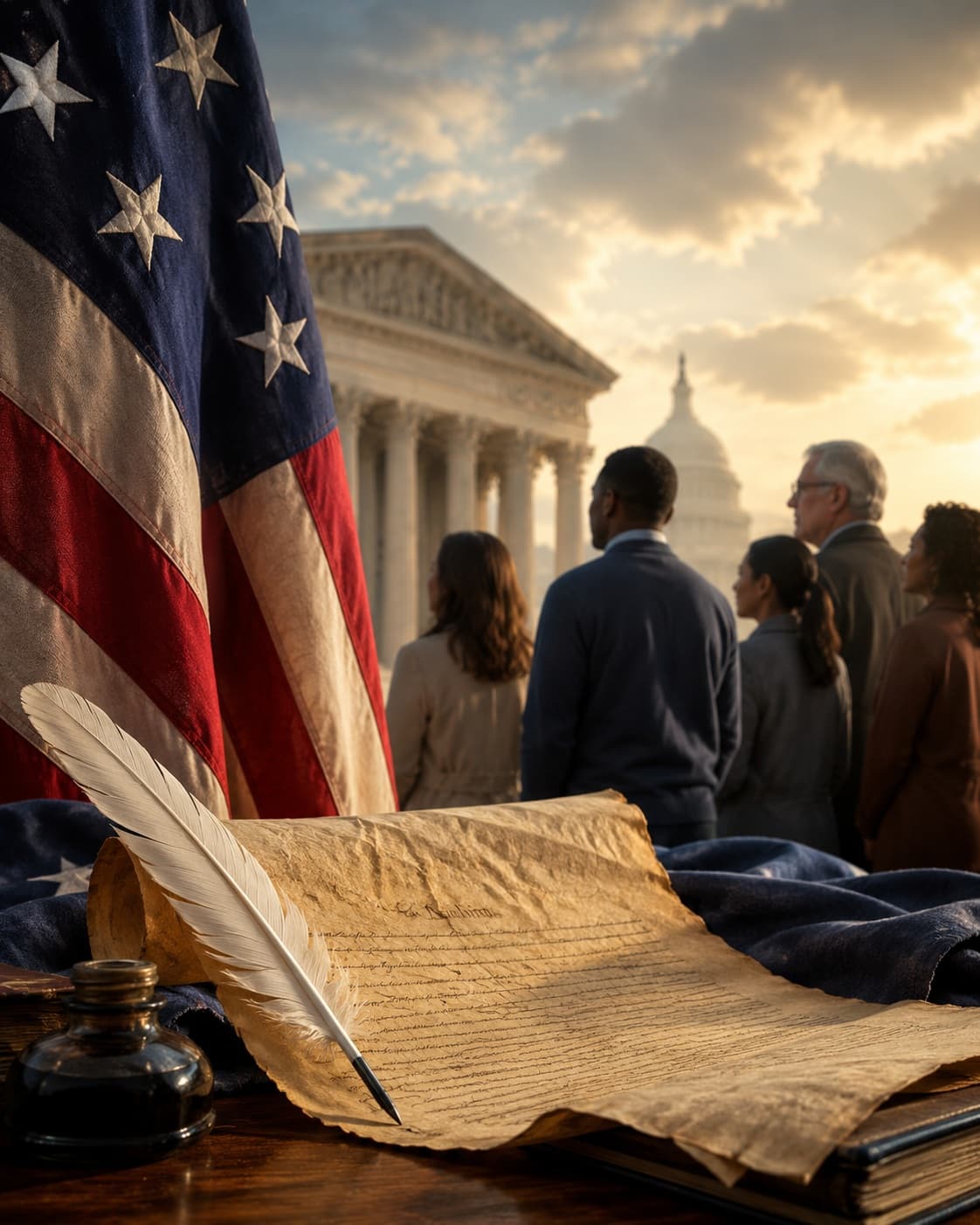
What It Commemorates
Constitution Day commemorates the signing of the United States Constitution by delegates to the Constitutional Convention on September 17, 1787, in Philadelphia, Pennsylvania. The Constitution established the framework of the federal government — with three branches, separation of powers, and checks and balances — that has governed the United States for nearly 250 years. Citizenship Day honors all Americans who have taken the oath of citizenship and all those born into the rights and responsibilities of American civic life.
Historical Background
The Constitutional Convention met in Philadelphia from May to September 1787. Delegates including James Madison, Benjamin Franklin, George Washington, and Alexander Hamilton worked through the summer to create a new framework for government. The Constitution was ratified by the required nine states in 1788, and the new government took effect in 1789. Congress established Constitution and Citizenship Day as a federal observance in 2004.
Why It Matters
The Constitution is the foundation of American liberty, limited government, and self-rule. Constitution Day invites Americans to study and appreciate the document, understand the genius of its design, and renew their commitment to the civic responsibilities that citizenship requires. It is a day to celebrate the remarkable achievement of a written constitution that has endured — and protected freedom — for nearly 250 years.
How Americans Observe It
Schools and universities are required by law to hold Constitution Day educational programming. Many communities host naturalization ceremonies, welcoming new citizens into the American family. Libraries, museums, and civic organizations offer programs about the Constitution, the Bill of Rights, and American citizenship. It is a day for civic pride and civic education.
America 250 Connection
Constitution Day and Citizenship Day& the 250th Anniversary
The Constitution has governed the United States for nearly as long as the nation has existed. As America marks 250 years, Constitution Day invites citizens to appreciate one of the most successful experiments in self-government in human history — and to reflect on the civic responsibility every American has to understand, honor, and defend it.
About Constitution Day and Citizenship Day
What Constitution Day and Citizenship Day Commemorates
Constitution Day honors the signing of the United States Constitution on September 17, 1787 — one of the greatest achievements in the history of democratic self-government. On that day in Philadelphia, delegates to the Constitutional Convention affixed their signatures to a document that has governed the United States for nearly 250 years, protecting individual liberty and establishing the framework of republican government that Americans still live under today.
Citizenship Day, observed on the same date, honors all who have become Americans — by birth or by taking the oath of citizenship — and the rights and responsibilities that come with membership in this extraordinary republic.
Historical Background
The Constitutional Convention met in Philadelphia from May to September 1787. The delegates faced a daunting task: the Articles of Confederation had proven too weak. A stronger, more effective framework of government was needed.
James Madison arrived with a detailed plan. Benjamin Franklin, at 81 the oldest delegate, lent wisdom and gravitas. Alexander Hamilton was among the most forceful advocates for a strong national government. George Washington presided over the proceedings with the authority of the nation's most trusted leader.
After months of debate, compromise, and revision, 39 of the 55 delegates signed the Constitution on September 17, 1787. It was ratified by the required nine states the following year and took effect in 1789. Congress established Constitution and Citizenship Day as a federal observance in 2004.
Why It Matters
The United States Constitution is the oldest written national constitution still in active use in the world. It has guided the nation through the Civil War, two World Wars, the Great Depression, and the challenges of the 21st century. Its framework of separated powers, checks and balances, and individual rights has protected American liberty for nearly 240 years.
Constitution Day invites Americans to appreciate this remarkable achievement — and to understand that constitutional government is not self-sustaining. It requires citizens who know and respect the Constitution, who participate in civic life, and who take seriously the responsibilities that come with self-government.
How Americans Observe It
By law, all schools and universities receiving federal funding are required to hold Constitution Day educational programming. Many communities host naturalization ceremonies, welcoming new Americans into the republic. Libraries, civic organizations, and museums offer programs about the Constitution, the Bill of Rights, and American citizenship.
The National Archives in Washington, D.C. — where the original Constitution is on permanent display — holds special events, and naturalization ceremonies are conducted at courthouses and historic sites across the country. It is a day to celebrate both the document and the people who choose to live under it.
Connection to America 250
The Constitution has governed the United States for nearly as long as the nation has existed. As America marks 250 years, Constitution Day invites citizens to appreciate the genius of the Founders who designed this enduring framework of self-government — and to reflect on the civic responsibility every American has to understand, honor, and defend it.
The fact that the same constitutional framework established in 1787 is still governing the world's oldest democracy in 2026 is itself one of the most remarkable achievements in human history.
Historical Note
The Constitution is the oldest written national constitution still in active use in the world. Benjamin Franklin, at 81 the oldest delegate at the Convention, remarked that the sun carved on the back of George Washington's chair was a rising sun, not a setting one — a fitting image for a document that would govern a growing nation for centuries.
Frequently Asked Questions
What does Constitution Day commemorate?
Constitution Day commemorates the signing of the United States Constitution on September 17, 1787. It also serves as Citizenship Day, honoring all Americans who enjoy the rights and responsibilities of citizenship in the world's oldest constitutional republic.
When is Constitution Day observed?
Constitution Day and Citizenship Day are observed every year on September 17, the date the Constitution was signed in 1787.
How does the Constitution connect to America 250?
The Constitution has governed the United States for nearly 250 years. America 250 is in many ways a celebration of the Constitution's success — the endurance of a document that has protected liberty and guided the nation from 13 struggling states to the world's leading democracy.
Related

Ask Dr. Abigail Hart
AI Historical Guide · America 250 Atlas
Have a question about this topic? Dr. Hart can help you explore the context, connections, and meaning behind America’s history.