Independence Day
July 4
Independence Day is the nation’s best-known patriotic holiday, marking the moment when the American colonies declared themselves free and independent states. It is both a celebration of national birth and a yearly invitation to reflect on the principles of liberty, self-government, civic responsibility, and national unity.
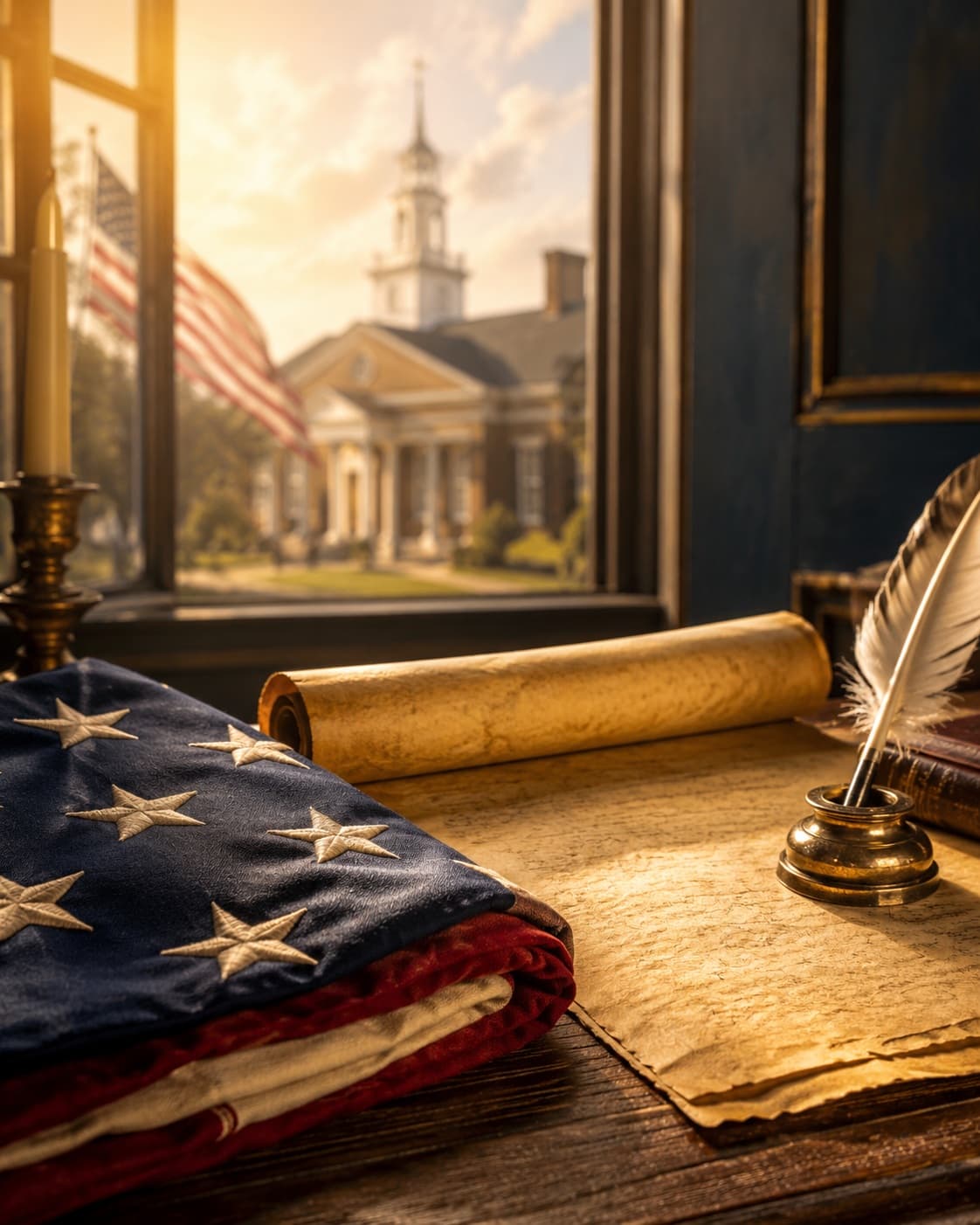
What It Commemorates
Independence Day commemorates the adoption of the Declaration of Independence by the Second Continental Congress on July 4, 1776. The document announced that the thirteen colonies regarded themselves as free and independent states, no longer subject to the British Crown.
Historical Background
By the summer of 1776, conflict between Britain and the colonies had moved from protest to revolution. The Declaration of Independence gave the American cause a philosophical foundation and announced the colonies’ claim to separate nationhood.
Why It Matters
Independence Day reminds Americans that the country began with a claim about liberty, rights, consent of the governed, and self-government. It is a celebration of national birth and a civic reminder that freedom must be defended and renewed.
How Americans Observe It
Americans commonly celebrate with parades, fireworks, public readings, concerts, family gatherings, historical programs, naturalization ceremonies, and displays of the American flag.
America 250 Connection
Independence Day& the 250th Anniversary
The 250th anniversary of the United States in 2026 gives Independence Day special meaning. It invites Americans to reflect on the Declaration, the Revolution, the endurance of constitutional government, and the unfinished work of liberty.
About Independence Day
What Independence Day Commemorates
Independence Day commemorates the adoption of the Declaration of Independence on July 4, 1776, when the American colonies formally declared that they were no longer subject to British rule. The holiday is often called the Fourth of July, but its meaning reaches beyond fireworks and summer gatherings. It marks the moment when Americans publicly asserted that legitimate government rests on the consent of the governed and that human beings possess rights that government must respect.
Historical Background
By the summer of 1776, the dispute between Britain and the colonies had moved beyond protest. Years of conflict over taxation, representation, trade restrictions, and imperial authority had produced a crisis of trust. The battles of Lexington and Concord in 1775 had already opened the Revolutionary War, and many colonial leaders concluded that reconciliation with Britain was no longer realistic.
The Declaration, largely drafted by Thomas Jefferson and revised by the Continental Congress, gave philosophical and political form to the American cause. Its most famous lines declared that all men are created equal and endowed with unalienable rights, including life, liberty, and the pursuit of happiness. These words did not describe a nation that had already perfected liberty for everyone. Instead, they established a standard by which future generations would judge the American experiment.
Why It Matters
Independence Day matters because it remembers the birth of the United States as a political community built around a bold claim: that free people can govern themselves. The holiday reminds Americans that the nation was not founded merely on shared ancestry, geography, or monarchy, but on principles expressed in public argument and defended through sacrifice.
The Fourth of July also carries honest historical tension. In 1776, slavery remained legal in many places, women did not possess equal political rights, and Native nations faced profound threats as the new republic expanded. Yet the Declaration’s language became a powerful tool for later generations, including abolitionists, civil rights leaders, women’s rights advocates, and immigrants seeking the promise of American citizenship.
How Americans Celebrate
Americans commonly observe Independence Day with fireworks, parades, concerts, public readings of the Declaration, family gatherings, civic ceremonies, and displays of the American flag. Many communities also hold naturalization ceremonies, connecting the holiday to the continuing story of American citizenship.
At its best, the holiday combines gratitude with reflection. It celebrates the courage of the founding generation while also reminding citizens that liberty requires memory, responsibility, and renewal.
Connection to America 250
As the United States approaches its 250th anniversary in 2026, Independence Day stands at the center of the national semiquincentennial. America 250 is not only a birthday celebration. It is a chance to revisit the founding principles, study the nation’s achievements and failures, and ask how Americans today can preserve self-government for the next generation.
Historical Note
The Declaration announced ideals that were not fully realized for all Americans in 1776. That tension is part of the holiday’s importance, because later generations repeatedly appealed to America’s founding principles in the struggle to expand liberty and citizenship.
Frequently Asked Questions
Why is Independence Day celebrated on July 4?
Independence Day is celebrated on July 4 because that is the date associated with the Continental Congress’s adoption of the Declaration of Independence in 1776.
Is Independence Day the same as the Fourth of July?
Yes. The Fourth of July is the common name for Independence Day, the federal holiday commemorating the Declaration of Independence.
How does Independence Day connect to America 250?
America 250 marks 250 years since the Declaration of Independence. Independence Day 2026 will be the central date of the national semiquincentennial.
Related

Ask Dr. Abigail Hart
AI Historical Guide · America 250 Atlas
Have a question about this topic? Dr. Hart can help you explore the context, connections, and meaning behind America’s history.