President #1 • Unaffiliated
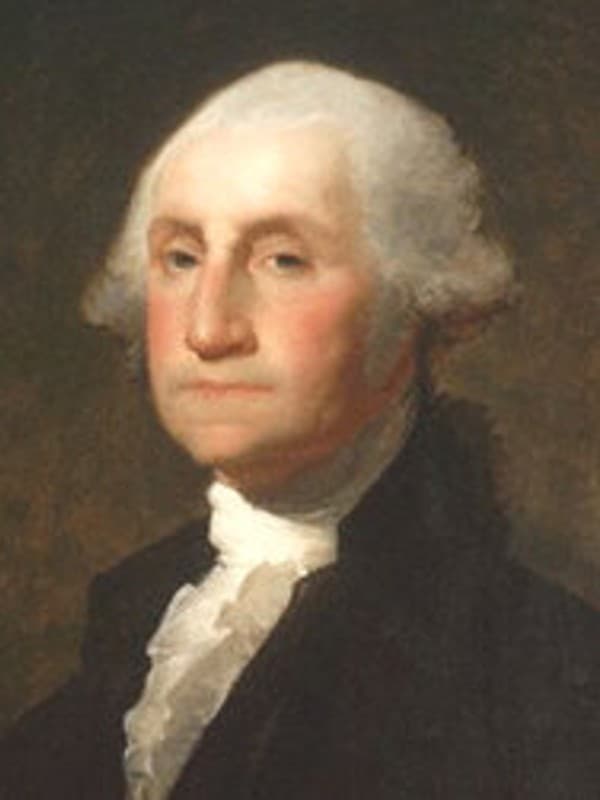
George Washington
1789–1797• 1783–1791: Constitution and Bill of Rights
George Washington was born in 1732 into Virginia’s planter elite and became a surveyor, militia officer, and landholder before the Revolution. His military experience in the French and Indian War, combined with his reputation for discipline and restraint, made him the unanimous choice to command the Continental Army in 1775. After victory in the Revolutionary War, he presided over the Constitutional Convention in 1787 and was unanimously elected the nation’s first president in 1789.
Washington’s first term established much of the presidency’s practical authority. He created a cabinet, relied on figures such as Alexander Hamilton and Thomas Jefferson, signed legislation creating the federal judiciary and executive departments, and supported Hamilton’s financial program, including federal assumption of state debts and creation of the Bank of the United States. His administration also demonstrated that the new Constitution could enforce federal law during the Whiskey Rebellion of 1794, maintaining order across the young republic.
Foreign policy dominated his second term. Washington issued the Neutrality Proclamation of 1793 to keep the United States out of war between Britain and revolutionary France, and he supported the controversial Jay Treaty of 1794 to avoid conflict with Britain. These decisions helped preserve the fragile republic but deepened the emerging divide between Federalists and Democratic-Republicans.
Washington declined a third term and retired to Mount Vernon in 1797, setting the precedent for peaceful transfer of executive power. He died in 1799. His legacy rests on republican restraint, military leadership, and the democratic model he established by voluntarily surrendering power — one of the most consequential acts in the history of democracy.
✓ Major Achievements
- 1Led Continental Army to victory in the Revolutionary War
- 2Presided over the Constitutional Convention
- 3Established the two-term presidential tradition
- 4Set precedents for executive branch organization
⚑ Historical Controversies
- 1Enslaved over 300 people at Mount Vernon
- 2Crushing of the Whiskey Rebellion
- 3Jay Treaty controversy
Legacy at 250 Years
Washington set the precedents that made American constitutional democracy viable. His voluntary relinquishment of power after two terms remains one of the most consequential acts in democratic history.
Key Speeches & Documents
- 📜Farewell Address (1796)
- 📜First Inaugural Address (1789)
About George Washington
George Washington became the central figure of the American founding because people trusted his judgment, discipline, and sense of duty. Before becoming president, he led the Continental Army through the Revolutionary War, holding the army together through hardship and uncertainty until independence was won.
As the first president, Washington helped turn the Constitution from a written plan into a working government. He established many traditions that later presidents followed, including the peaceful transfer of power, regular communication with Congress, and the idea that the president should serve the nation rather than a political faction.
One of Washington’s most significant achievements was stepping away from power after two terms. At a time when many countries were ruled by monarchs or military leaders, his decision strengthened the American example of civilian government and constitutional restraint.
Historical Era
Sources & Further Reading

Ask Dr. Hart about George Washington
AI Historical Guide · America 250 Atlas
Dr. Abigail Hart can help you understand George Washington's presidency, key decisions, historical significance, and place in America's 250-year story.