South
Alabama
“The Heart of the Civil Rights Movement”
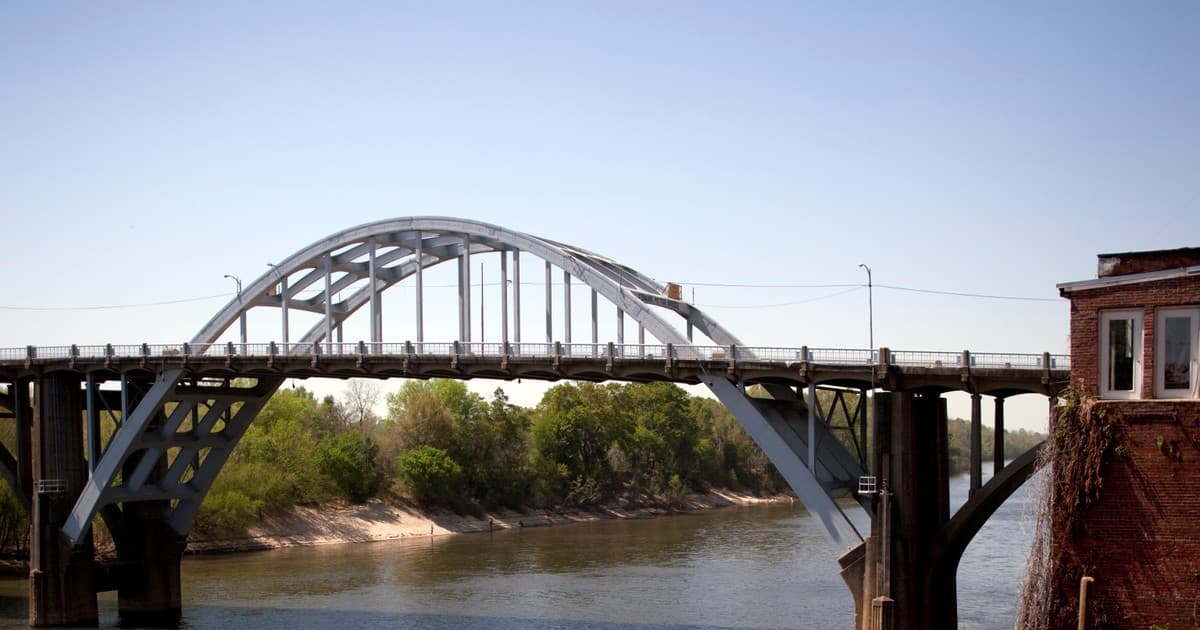
Alabama stands at the heart of the American civil rights story — a place where ordinary citizens displayed extraordinary courage and helped fulfill the nation’s founding promise of equality. The Montgomery Bus Boycott (1955–56), the Birmingham Campaign (1963), and the Selma to Montgomery marches (1965) were pivotal moments that galvanized the country and led directly to the Voting Rights Act of 1965. Alabama’s deep traditions of faith, music, and community resilience have shaped American culture, and its contributions to American democracy through the civil rights movement represent some of the most heroic chapters in the nation’s history.
Role in the Founding Era
Alabama was part of territory disputed between the United States, Spain, and Britain after the Revolution. It became a state in 1819, and its rich cotton-growing land made it a center of the slave economy that drove the sectional crisis toward Civil War.
Key Historical Themes
Major Events Connected to Alabama
Civil Rights Act of 1964
President Johnson signed the Civil Rights Act of 1964, outlawing discrimination based on race, color, religion, sex, or national origin — the most comprehensive civil rights legislation since Reconstruction.
Voting Rights Act of 1965
The Voting Rights Act outlawed discriminatory voting practices that had disenfranchised Black voters in the South for nearly a century — giving real force to the 15th Amendment at last.
15th Amendment — Black Male Voting Rights
The 15th Amendment prohibited denying the right to vote based on race, color, or previous condition of servitude — granting Black men the formal right to vote, though it would be systematically suppressed for nearly a century.
Civil War Begins — Fort Sumter
Confederate forces fired on Fort Sumter, beginning the Civil War — the bloodiest conflict in American history, fought over slavery and the future of the Union.
13th Amendment — Abolition of Slavery
The 13th Amendment to the Constitution was ratified, formally abolishing slavery throughout the United States — completing what the Emancipation Proclamation had begun.
About Alabama
Alabama sits in the Deep South, stretching from the Appalachian foothills in the north to the Gulf Coast in the south. Its geography includes river valleys, pine forests, blackbelt prairie, and Mobile Bay, giving the state a long connection to farming, trade, and coastal commerce. Birmingham, Montgomery, Huntsville, Mobile, and Tuscaloosa are among its best-known cities.
Historically, Alabama was home to Indigenous nations including the Muscogee (Creek), Choctaw, Chickasaw, and Cherokee before European settlement and U.S. expansion transformed the region. It became a state in 1819 and later played a central role in cotton agriculture, the Civil War, Reconstruction, and the struggle over civil rights.
One of Alabama's most important historical chapters is the modern Civil Rights Movement. Montgomery was the site of the bus boycott led by figures including Rosa Parks and Martin Luther King Jr., while Selma became a landmark of voting rights history. These events made Alabama a place where national debates about citizenship, equality, and democracy became visible to the world.
Today, Alabama has a diverse economy that includes aerospace, automotive manufacturing, shipbuilding, health care, education, and military-related activity. Huntsville is especially known for space and defense work, while the Gulf Coast remains important for tourism and trade. The state combines a rich cultural heritage in music, food, sports, and storytelling with growing technology and manufacturing sectors.

Ask Dr. Hart about Alabama
AI Historical Guide · America 250 Atlas
Dr. Abigail Hart can help you explore Alabama's history, key events, role in the American story, and connections to presidents and national milestones.