South
South Carolina
“First to Secede, Longest to Reckon”
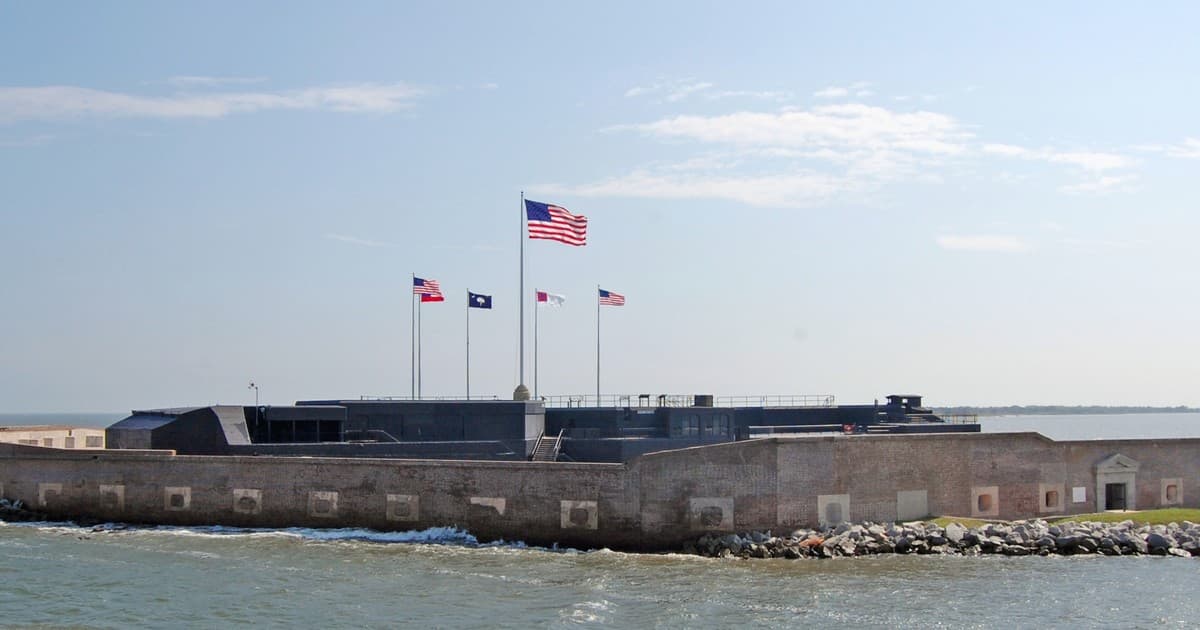
South Carolina’s history spans the founding era, Revolutionary heroism, and a remarkable modern transformation. A founding state and one of the original thirteen colonies, South Carolina’s patriots fought bravely during the Revolution, with Francis Marion — the Swamp Fox — becoming a legend of American resistance and ingenuity. Charleston, one of the great cities of the colonial Atlantic world, developed a rich culture of arts, architecture, and commerce that endures today. Fort Sumter, where the Civil War began in 1861, stands as a national monument to the conflict that ultimately preserved the Union and extended freedom. South Carolina has undergone remarkable transformation over the past century, building a confident future through growing cities, world-class universities, military installations, tourism, and manufacturing. Today, South Carolina is known for its hospitality, natural beauty, proud military heritage, and vibrant communities.
Role in the Founding Era
South Carolina was one of the original thirteen colonies and an early center of plantation agriculture and the Atlantic slave trade. Its delegates signed the Declaration of Independence and the Constitution, while its slave economy represented the central contradiction of the founding era.
Key Historical Themes
Major Events Connected to South Carolina
Civil War Begins — Fort Sumter
Confederate forces fired on Fort Sumter, beginning the Civil War — the bloodiest conflict in American history, fought over slavery and the future of the Union.
Dred Scott Decision
The Supreme Court ruled that Dred Scott, an enslaved man, had no right to sue for his freedom — and that Congress had no power to prohibit slavery in U.S. territories, inflaming the sectional crisis.
13th Amendment — Abolition of Slavery
The 13th Amendment to the Constitution was ratified, formally abolishing slavery throughout the United States — completing what the Emancipation Proclamation had begun.
14th Amendment — Equal Protection and Citizenship
The 14th Amendment granted citizenship to all persons born or naturalized in the United States and established equal protection under the law — overturning Dred Scott and laying the foundation for modern civil rights law.
About South Carolina
South Carolina stretches from the Blue Ridge foothills to the Atlantic Coast, with beaches, marshes, pine forests, and historic cities. Columbia is the capital, while Charleston, Greenville, Myrtle Beach, and Spartanburg are major centers. The Lowcountry gives the state a distinctive coastal culture.
The region was home to Indigenous peoples including the Catawba, Cherokee, Yamasee, and others before European colonization. South Carolina became one of the original thirteen colonies, with an economy shaped by rice, indigo, plantation agriculture, and Atlantic trade.
South Carolina played major roles in the American Revolution, the Civil War, and Reconstruction. Charleston was one of colonial America's major ports, and Fort Sumter was where the Civil War began in 1861. The state's Gullah Geechee culture preserves important African American language, food, and traditions along the coast.
Today, South Carolina has a growing economy based on tourism, manufacturing, ports, agriculture, aerospace, automobiles, and logistics. Charleston's port and historic district are nationally important, while Greenville has become a major upstate business center. The state faces issues involving coastal storms, growth, and preservation of historic and natural landscapes.

Ask Dr. Hart about South Carolina
AI Historical Guide · America 250 Atlas
Dr. Abigail Hart can help you explore South Carolina's history, key events, role in the American story, and connections to presidents and national milestones.