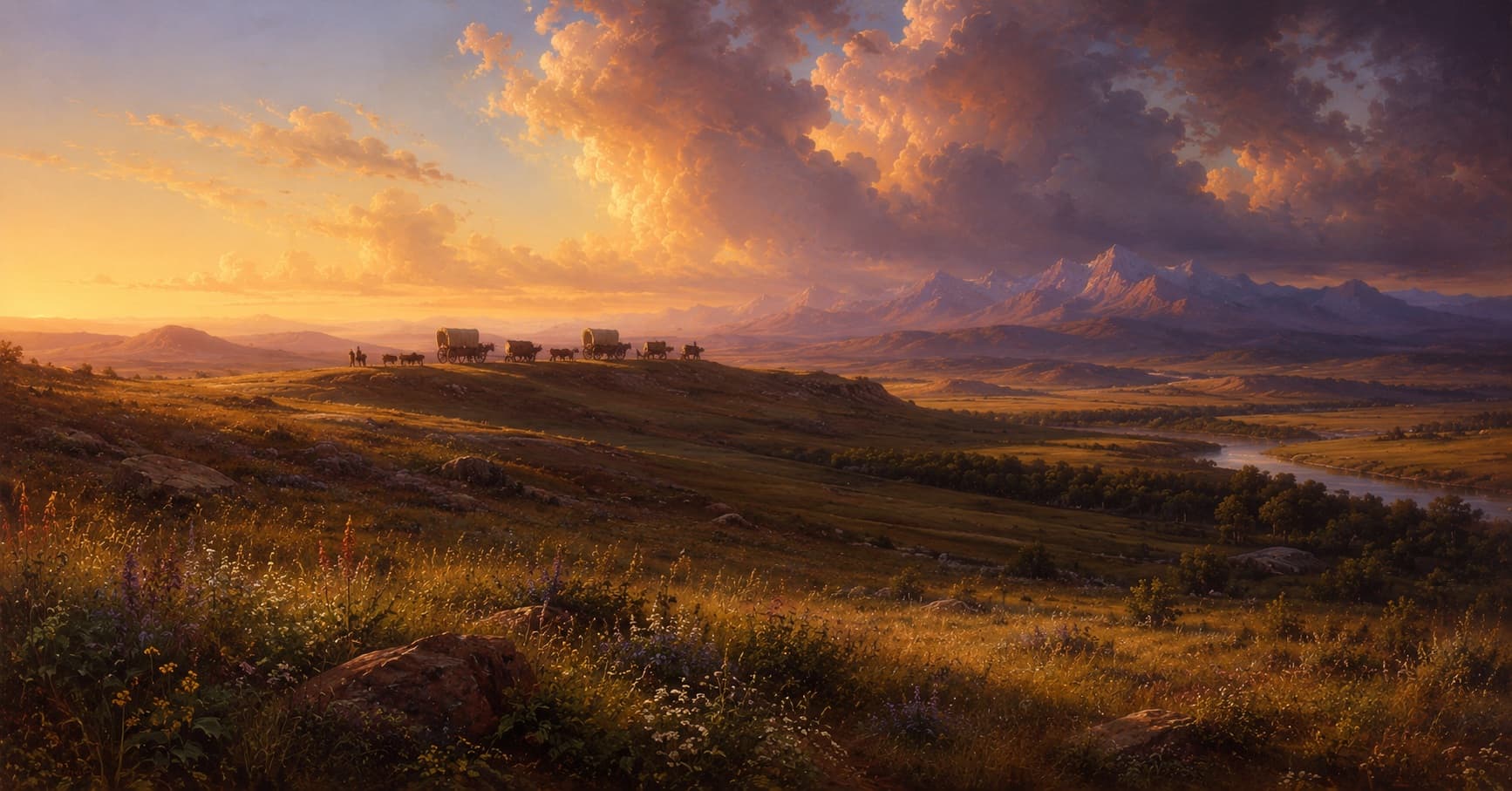
Opening Context: A Growing Republic Faces Its Own Contradictions
Between 1803 and 1848, the United States expanded dramatically in land, population, and democratic energy. The Louisiana Purchase opened vast western possibilities, while migration, commerce, canals, roads, and frontier settlement reshaped the nation. Many Americans saw expansion as evidence of providence, opportunity, and republican destiny. Landownership seemed to promise independence for ordinary citizens, and political participation widened for many white men.
Yet this same era also exposed some of America's deepest conflicts. The expansion of democracy for some occurred alongside the expansion of slavery, the forced removal of Native peoples, and the exclusion of women from political rights. The country grew more confident, but also more divided. The question was not only how far America would spread, but what kind of republic it would become.
Jacksonian Democracy and Popular Politics
The age of Andrew Jackson is often associated with the rise of mass democracy. Property requirements for voting declined in many states, political campaigns became more popular and energetic, and ordinary white male voters gained greater influence. Jackson presented himself as a defender of the common man against entrenched elites, banks, and concentrated privilege.
This democratic spirit changed American politics. Parties built stronger organizations, newspapers became more partisan, and elections drew wider participation. Supporters saw Jacksonian democracy as a blow against aristocracy and a fulfillment of republican equality among citizens. Critics warned that it encouraged demagoguery, weakened institutions, and placed too much power in the hands of a strong executive.
The struggle over the Second Bank of the United States revealed these divisions. Jackson believed the bank concentrated economic power unfairly. Opponents believed his attack damaged financial stability and exceeded proper presidential authority. This debate over markets, privilege, and federal power echoed earlier disputes and foreshadowed future ones.
Expansion, Removal, and the Frontier
Westward expansion brought opportunity to many settlers, but it came at a devastating cost to Native nations. The Indian Removal Act of 1830 authorized the federal government to pursue relocation of Native peoples from southeastern lands to territory west of the Mississippi. The forced removal of the Cherokee and other nations, including the suffering remembered as the Trail of Tears, remains one of the gravest injustices in American history.
The frontier was not empty. It was a complex world of Native diplomacy, trade, violence, adaptation, and resistance. American settlers often believed they were carrying liberty and civilization westward, but Native peoples experienced expansion as dispossession. This contradiction sits at the heart of the era.
Expansion also involved exploration, migration, and cultural encounter. The Oregon Trail carried families across difficult terrain in search of land and opportunity. Texas moved from Mexican territory to independent republic and eventually toward American annexation. The idea of national destiny became increasingly powerful, but it carried moral and political consequences.
Slavery, Reform, and the Mexican War
As the United States expanded, the question of slavery became more dangerous. Would new territories be free or slave? The cotton economy strengthened slavery in the South, while abolitionist voices grew louder in the North. Frederick Douglass, having escaped slavery, became one of the most powerful critics of the institution and a living witness to both American hypocrisy and American possibility. Harriet Tubman would later embody courage in the struggle for freedom through the Underground Railroad.
Reform movements flourished during this period. Religious revival, temperance, prison reform, education reform, abolitionism, and women's rights reflected a belief that society could be morally improved. The Seneca Falls Declaration of 1848 announced a new organized demand for women's rights, using the language of the Declaration of Independence to expose women's exclusion from political equality.
The Mexican-American War added vast territories to the United States, including lands that would become California and much of the Southwest. Supporters viewed the war as a fulfillment of national expansion. Critics saw it as aggressive and feared it would extend slavery. The war's aftermath sharpened sectional tensions and made compromise increasingly difficult.
Contradictions and Tensions
This era is one of the clearest examples of American growth mixed with moral conflict. Democracy expanded, but not equally. White male suffrage broadened while Black Americans, Native peoples, and women were denied full citizenship. The language of liberty coexisted with slavery and removal. The frontier promised independence to settlers while destroying Indigenous homelands.
Historians debate how to understand expansion. Some emphasize the energy, innovation, and opportunity that shaped the American character. Others stress conquest, racial hierarchy, and coercion. A balanced view must recognize both the aspirations and the injustices. The United States was becoming more democratic and more powerful, but it was also carrying unresolved contradictions toward crisis.
Legacy and Connection Forward
By 1848, America had become a continental power in ambition if not yet in full settlement. The era expanded political participation, strengthened popular campaigning, encouraged reform movements, and transformed the map. It also made the slavery question unavoidable. Every new acre raised constitutional and moral questions about freedom, labor, citizenship, and federal authority.
The legacy of this era remains visible in debates over democracy, land, federal power, Native sovereignty, and the meaning of equality. It reminds us that American expansion was both a story of courage and hardship and a story of displacement and conflict. The nation grew larger, but the bonds holding it together grew weaker. The road west led directly toward the sectional crisis and Civil War.