Gettysburg Address
President Lincoln delivered the Gettysburg Address at the dedication of the Soldiers' National Cemetery — a 272-word speech that redefined the purpose of the Civil War and the meaning of American democracy.
What Happened
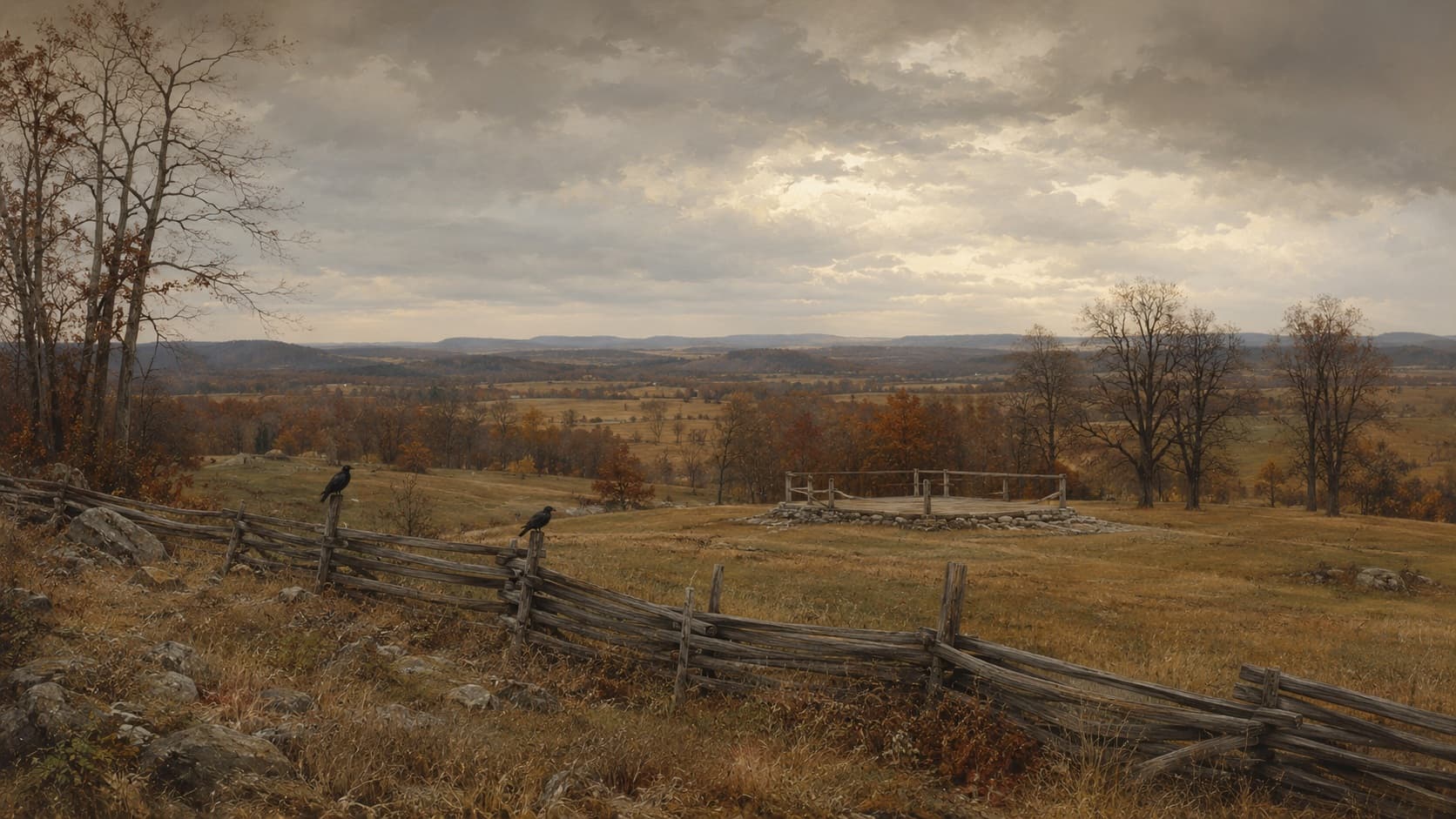
Four months after the Battle of Gettysburg — with approximately 50,000 casualties — President Lincoln was invited to deliver remarks at the dedication of the Soldiers' National Cemetery in Pennsylvania. He spoke for about two minutes. He framed the war as a test of whether a democratic republic could survive, invoked the Declaration of Independence's equality clause, and dedicated the nation to 'a new birth of freedom.' The speech became recognized as one of the greatest in American history.
Why It Mattered Then
The Gettysburg Address reframed the purpose of the war at a crucial political moment. By invoking the Declaration of Independence and the principle of equality, Lincoln connected the Union cause to a moral ideal that resonated beyond the immediate conflict.
Why It Matters Now
The Gettysburg Address remains one of the most quoted texts in American history. Its assertion that government 'of the people, by the people, for the people' has become the standard definition of American democracy — cited by leaders worldwide.
Key Themes
This event is part of the 1848–1865: Slavery, Sectional Crisis, and Civil War era (1848–1865).
Explore This Era →