President #16 • Republican
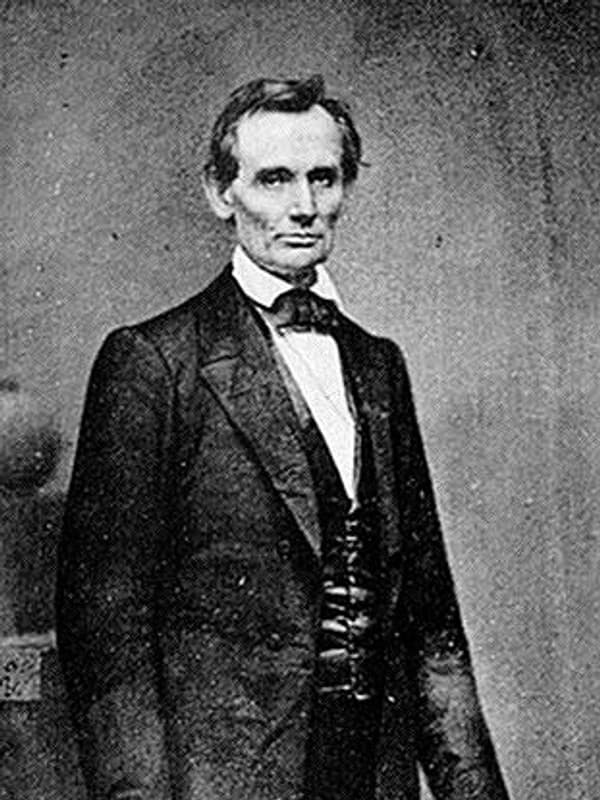
Abraham Lincoln
1861–1865• 1848–1865: Slavery, Sectional Crisis, and Civil War
Abraham Lincoln was born in Kentucky in 1809 and grew up in poverty on the frontier in Indiana and Illinois. Largely self-educated, he became a lawyer, state legislator, Whig congressman, and later a leading Republican critic of slavery’s expansion. His debates with Stephen Douglas in 1858 made him a national figure, and his election as president in 1860 triggered secession by Southern states.
Lincoln took office in 1861 with the Union already in crisis. After Confederate forces fired on Fort Sumter, he called for troops and led the nation into the Civil War. His central goal at first was preservation of the Union, but as the war continued he moved toward emancipation as both a moral and military necessity. The Emancipation Proclamation, issued in 1863, declared enslaved people free in Confederate-held territory and transformed the war’s purpose.
Lincoln’s leadership combined political discipline, moral growth, and strategic patience. He managed rival factions, sustained Northern commitment through immense casualties, delivered the Gettysburg Address in 1863, and supported passage of the Thirteenth Amendment abolishing slavery. He also suspended habeas corpus in some circumstances.
Reelected in 1864, Lincoln called for reconciliation in his Second Inaugural Address. Confederate surrender at Appomattox came in April 1865, but Lincoln did not live to direct Reconstruction. He was shot by John Wilkes Booth on April 14, 1865, and died the next morning, becoming the first assassinated American president.
✓ Major Achievements
- 1Preserved the Union through the Civil War
- 2Emancipation Proclamation (1863)
- 3Guided passage of the 13th Amendment abolishing slavery
- 4Gettysburg Address — redefined the purpose of the war
⚑ Historical Controversies
- 1Suspension of habeas corpus during the Civil War
- 2Initial reluctance to make abolition a war aim
Legacy at 250 Years
Lincoln preserved the Union and ended slavery at the cost of his life. At 250 years, his vision of American democracy — government of, by, and for the people — remains the defining standard for the nation.
Key Speeches & Documents
- 📜Gettysburg Address (1863)
- 📜Second Inaugural Address (1865)
- 📜House Divided Speech (1858)
About Abraham Lincoln
Abraham Lincoln rose from modest beginnings to become one of the most respected leaders in American history. He taught himself law, developed a powerful speaking style, and built a political career around the belief that the Union and the principles of the Declaration of Independence mattered deeply.
As president, Lincoln led the United States through the Civil War, the greatest crisis in the nation’s history. His leadership combined patience, moral clarity, and practical judgment as he worked to preserve the Union.
Lincoln’s most significant achievement was the Emancipation Proclamation, followed by his support for the Thirteenth Amendment, which ended slavery in the United States. His words at Gettysburg and in his second inaugural address continue to express the meaning of sacrifice, freedom, and national renewal.
Historical Era
Sources & Further Reading

Ask Dr. Hart about Abraham Lincoln
AI Historical Guide · America 250 Atlas
Dr. Abigail Hart can help you understand Abraham Lincoln's presidency, key decisions, historical significance, and place in America's 250-year story.