Northeast
Pennsylvania
“Birthplace of American Democracy”
Pennsylvania was the crucible of the American founding. Philadelphia hosted the Continental Congress, the signing of the Declaration of Independence, and the Constitutional Convention. The Commonwealth balanced Quaker traditions of religious tolerance with the realities of revolutionary conflict — and remains central to the American democratic story.
Role in the Founding Era
Pennsylvania hosted both the signing of the Declaration of Independence (1776) and the Constitutional Convention (1787) at Independence Hall in Philadelphia, making it the single most important physical location in the founding of the United States.
Key Historical Themes
Major Events Connected to Pennsylvania
Declaration of Independence
The Continental Congress adopted the Declaration of Independence, announcing the separation of the thirteen colonies from Britain and articulating the foundational principles of American democracy.
U.S. Constitution Signed
Delegates to the Constitutional Convention signed the United States Constitution, creating the framework for the federal government that has governed the nation for over 235 years.
Gettysburg Address
President Lincoln delivered the Gettysburg Address at the dedication of the Soldiers' National Cemetery — a 272-word speech that redefined the purpose of the Civil War and the meaning of American democracy.
Articles of Confederation Ratified
The Articles of Confederation, America's first governing document, were ratified — creating a loose union of states that proved too weak to govern effectively and was replaced by the Constitution in 1788.
America at 250 — The Semiquincentennial
The United States marks the 250th anniversary of the Declaration of Independence — a moment to reflect on what the nation has achieved, where it has fallen short, and what comes next.
About Pennsylvania
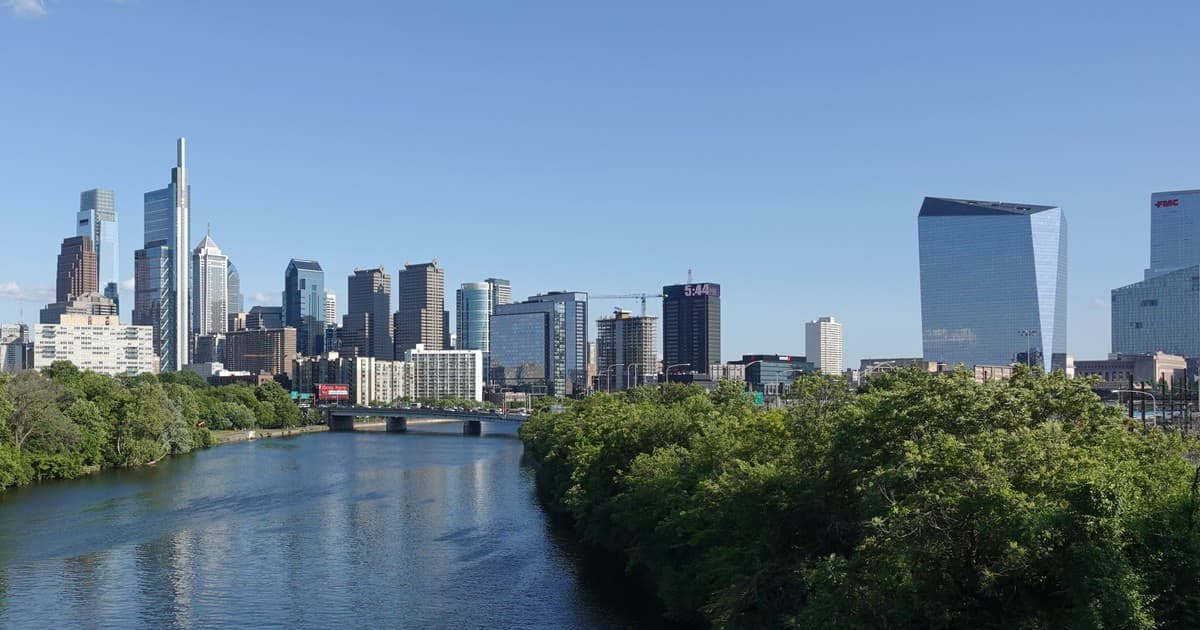
Pennsylvania is a Mid-Atlantic state with major cities, farmland, mountains, coal regions, and historic river valleys. Harrisburg is the capital, while Philadelphia and Pittsburgh are its largest cities. The state has long connected the Northeast, Midwest, and Appalachia.
The region was home to Indigenous peoples including the Lenape, Susquehannock, Shawnee, and Haudenosaunee-connected peoples before European settlement. William Penn founded Pennsylvania as a colony known for religious tolerance and planned settlement. It became one of the original thirteen states.
Pennsylvania played a central role in the American Revolution and early United States. The Declaration of Independence and Constitution were debated and signed in Philadelphia. Later, the state became a center of coal, steel, railroads, oil, and manufacturing. Gettysburg became one of the most important battlefields of the Civil War.
Today, Pennsylvania's economy includes health care, education, finance, energy, agriculture, technology, and manufacturing. Philadelphia is a major cultural and medical center, while Pittsburgh has shifted from steel toward technology, universities, and health care. The state remains rich in both founding-era history and industrial heritage.
Presidents with Pennsylvania Ties
Significant historical connection — not necessarily born here

Ask Dr. Hart about Pennsylvania
AI Historical Guide · America 250 Atlas
Dr. Abigail Hart can help you explore Pennsylvania's history, key events, role in the American story, and connections to presidents and national milestones.