Treaty of Paris — American Independence Recognized
Britain formally recognized American independence in the Treaty of Paris, ending the Revolutionary War and establishing U.S. borders from the Atlantic to the Mississippi River.
What Happened
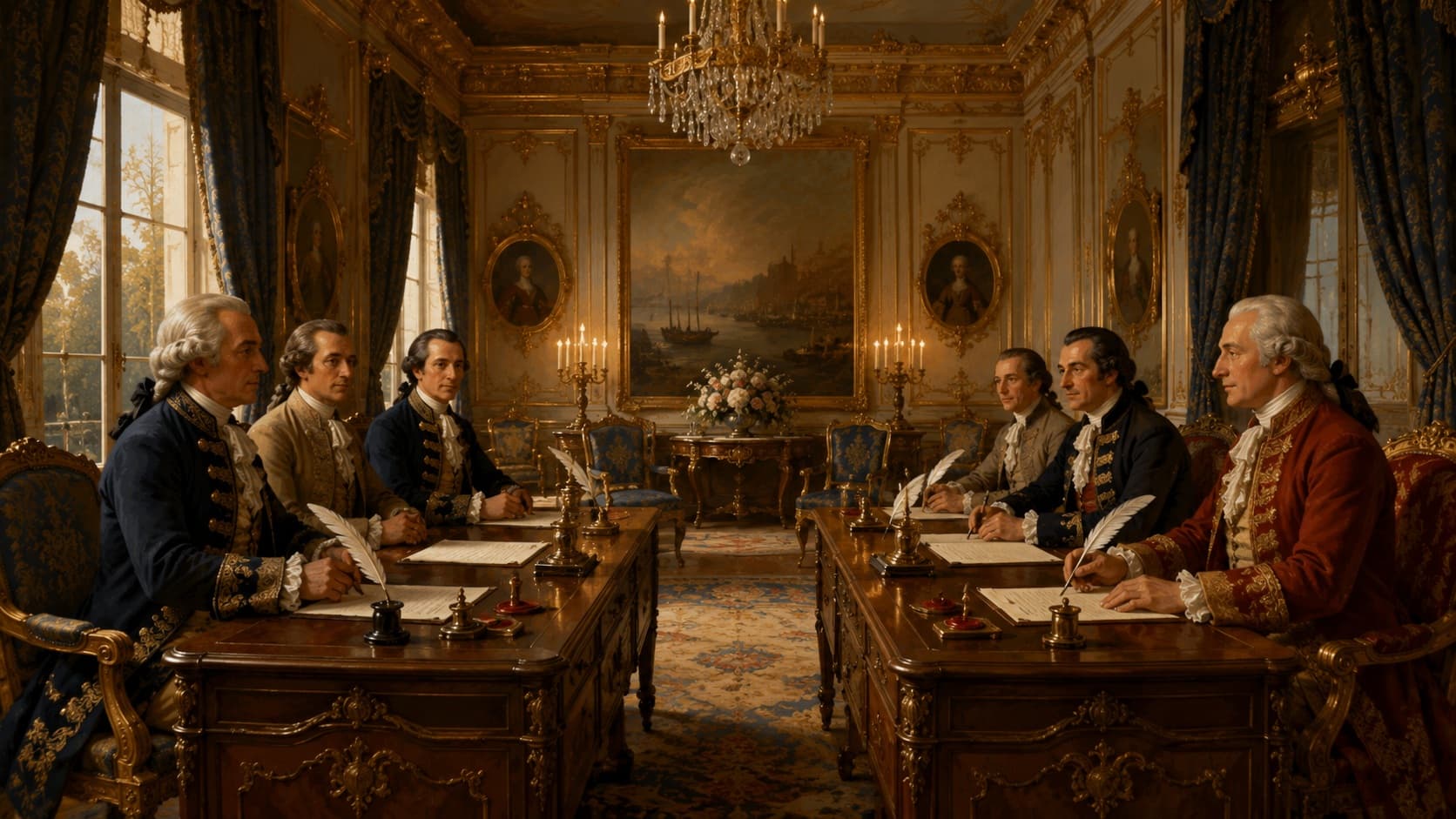
Signed on September 3, 1783, the Treaty of Paris ended the Revolutionary War. Britain recognized the United States as a fully independent nation. The treaty established borders from the Atlantic coast west to the Mississippi River, from Canada in the north to Spanish Florida in the south. The American negotiators — Benjamin Franklin, John Adams, and John Jay — negotiated directly with Britain, sidestepping France (their ally) to secure more favorable terms. Britain ceded vast western territories and agreed to withdraw its forces.
Why It Mattered Then
The Treaty of Paris transformed the United States from a collection of rebel colonies into a recognized sovereign nation with legitimate borders. It also dramatically expanded American territory, setting the stage for westward expansion.
Why It Matters Now
The Treaty of Paris established the diplomatic precedent that American sovereignty must be recognized internationally — not just declared. It also began the long process of determining what to do with the lands west of the Appalachians, a question that would shape American history for the next century.
Key Themes
This event is part of the 1776–1783: Revolution and Independence era (1776–1783).
Explore This Era →