President #15 • Democratic
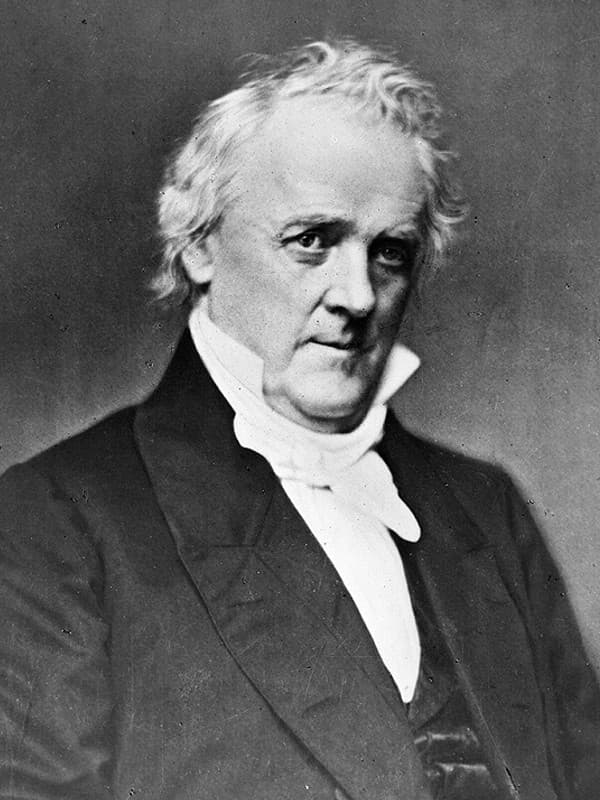
James Buchanan
1857–1861• 1848–1865: Slavery, Sectional Crisis, and Civil War
James Buchanan was born in Pennsylvania in 1791 and built one of the longest public careers of any president before entering the White House. He served in the House, Senate, diplomatic posts, as secretary of state, and as minister to Britain. Because he was abroad during the Kansas-Nebraska controversy, Democrats nominated him in 1856 as a seemingly less divisive figure. He took office in 1857 as the nation’s sectional crisis approached collapse.
Early in his presidency, Buchanan welcomed the Supreme Court’s Dred Scott decision, which denied Black citizenship and declared that Congress could not prohibit slavery in the territories. Rather than calming the country, the decision inflamed Northern opposition and strengthened the Republican argument that a pro-slavery “Slave Power” dominated the federal government.
Buchanan also mishandled Kansas. His administration supported the pro-slavery Lecompton Constitution despite evidence that many Kansas settlers opposed it. The fight divided the Democratic Party, alienated Stephen Douglas, and made compromise even harder. Economic distress from the Panic of 1857 further weakened his administration.
After Abraham Lincoln won the 1860 election, Southern states began seceding. Buchanan denied that states had a constitutional right to secede but also claimed the federal government lacked authority to coerce them back into the Union. This paralysis allowed the crisis to deepen before Lincoln took office. Buchanan retired to Pennsylvania in March 1861 and spent his remaining years reflecting on his efforts to preserve constitutional government and avoid armed conflict during one of the most difficult periods in American history.
✓ Major Achievements
- 1Brought extensive diplomatic and legislative experience to office
- 2Maintained some federal positions in the South during the secession winter
- 3Presided over the final prewar transfer of power under constitutional forms
⚑ Historical Controversies
- 1Supported or welcomed the Dred Scott decision
- 2Backed the pro-slavery Lecompton Constitution in Kansas
- 3Failed to stop the secession crisis after Lincoln’s election
- 4Denied secession’s legality while claiming limited power to resist it
- 5Allowed sectional division to worsen under weak presidential leadership
Legacy at 250 Years
Buchanan’s presidency connects America at 250 to the failure of leadership during constitutional crisis. His inability to confront slavery and secession shows that democratic institutions depend not only on written rules, but on leaders willing to defend the republic when those rules are tested.
Key Speeches & Documents
- 📜Inaugural Address
- 📜Annual Messages to Congress
- 📜Message on Secession
About James Buchanan
James Buchanan had one of the longest résumés of any president before taking office. He served as a congressman, senator, secretary of state, minister to Russia, and minister to Britain, gaining wide experience in diplomacy and government.
His presidency occurred in the final years before the Civil War, when sectional conflict over slavery and secession became increasingly severe. Buchanan hoped to avoid war and preserve the Union, but events moved beyond his ability to control them.
One of Buchanan’s significant achievements came before his presidency, especially his service as a diplomat and secretary of state. His career shows the value of experience in public life, even when the presidency itself is shaped by extraordinary national crisis.
Historical Era
Sources & Further Reading

Ask Dr. Hart about James Buchanan
AI Historical Guide · America 250 Atlas
Dr. Abigail Hart can help you understand James Buchanan's presidency, key decisions, historical significance, and place in America's 250-year story.