President #5 • Democratic-Republican
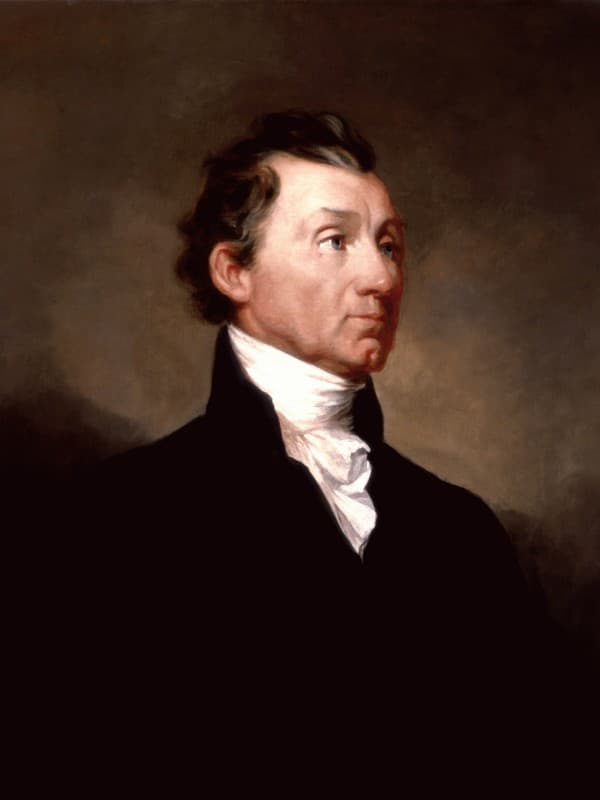
James Monroe
1817–1825• 1790s–1820s: The Early Republic
James Monroe was born in Virginia in 1758 and fought in the Revolutionary War before entering politics under the mentorship of Thomas Jefferson and James Madison. He served in the Continental Congress, as a senator, governor of Virginia, diplomat in France and Britain, and secretary of state and war under Madison. His long public career made him a natural successor, and he was elected president in 1816.
Monroe’s first term coincided with what became known as the Era of Good Feelings, a period of reduced national party conflict after the War of 1812. His administration oversaw the acquisition of Florida from Spain through the Adams-Onís Treaty of 1819. That same year, however, the Panic of 1819 exposed weaknesses in the economy and caused widespread hardship.
The Missouri Compromise of 1820 defined the central domestic crisis of his presidency. It admitted Missouri as a slave state and Maine as a free state while attempting to limit slavery’s expansion in parts of the Louisiana Purchase. The compromise temporarily preserved sectional balance but revealed the deepening national conflict over slavery.
Monroe’s most lasting foreign policy act was the Monroe Doctrine of 1823, which warned European powers against new colonization or intervention in the Western Hemisphere. He left office in 1825 and retired with financial difficulties. His presidency is remembered for national consolidation and hemispheric ambition, but also for the expansion of a republic still deeply entangled with slavery and Indigenous dispossession.
✓ Major Achievements
- 1Issued the Monroe Doctrine (1823)
- 2Oversaw the Era of Good Feelings
- 3Acquisition of Florida from Spain (1819)
- 4Missouri Compromise (1820)
⚑ Historical Controversies
- 1Enslaved people at Ash Lawn-Highland
- 2Handling of the Seminole conflict
Legacy at 250 Years
The Monroe Doctrine established the U.S. as the preeminent power in the Western Hemisphere, a posture that defined American foreign policy across 250 years.
Key Speeches & Documents
- 📜Seventh Annual Message to Congress (Monroe Doctrine, 1823)
About James Monroe
James Monroe served during a period often called the “Era of Good Feelings,” when national unity seemed stronger after the War of 1812. A Revolutionary War veteran and experienced diplomat, he brought long public experience to the presidency.
His most significant achievement was the Monroe Doctrine, announced in 1823. It warned European powers against new colonization or interference in the Western Hemisphere and became an important statement of American foreign policy.
Monroe also supported national growth as the country expanded westward and strengthened its institutions. His presidency reflected confidence in the young republic and helped define the United States’ place in the wider world.
Historical Era
Sources & Further Reading

Ask Dr. Hart about James Monroe
AI Historical Guide · America 250 Atlas
Dr. Abigail Hart can help you understand James Monroe's presidency, key decisions, historical significance, and place in America's 250-year story.