Mid-Atlantic
Washington, D.C.
“The Nation's Capital — Power, Protest, and Democracy”
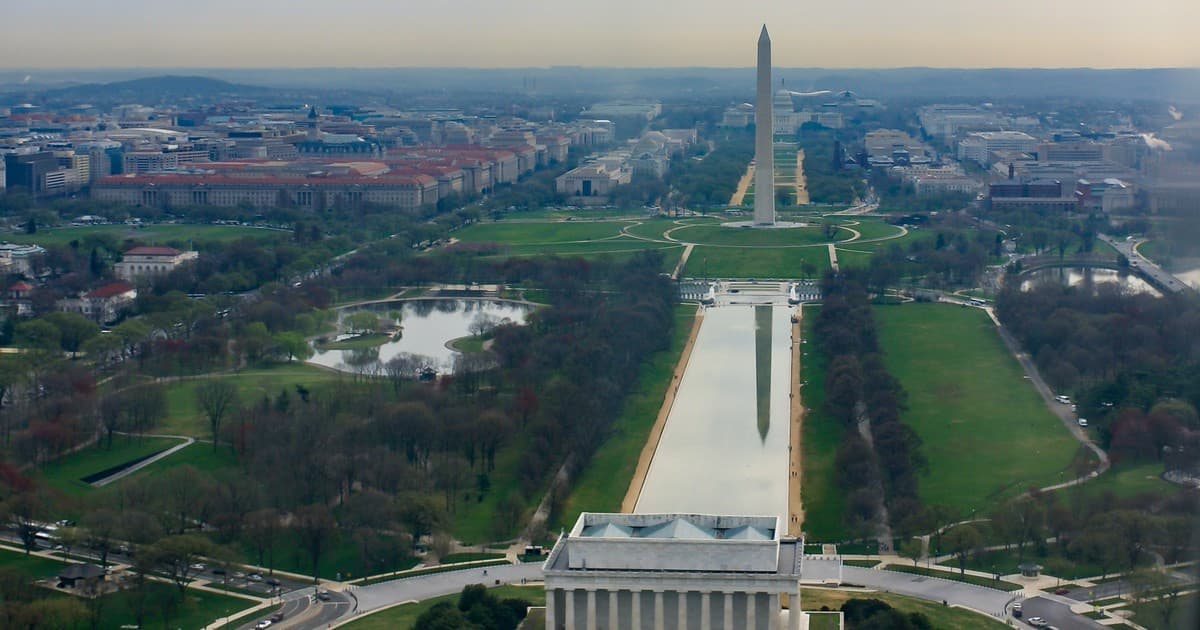
Washington, D.C. is the seat of American government and the symbolic heart of democracy. It has hosted every presidential inauguration since 1801 and witnessed the Civil War, Dr. King’s March on Washington, and the ongoing work of American self-governance. Its iconic monuments to Washington, Jefferson, Lincoln, and the fallen of America’s wars draw millions of visitors each year. The nation’s capital is home to the world’s great museums, the Library of Congress, and the institutions that sustain democratic governance. Washington, D.C. is both a living city and America’s national memorial — a place where the nation’s history, ideals, and future meet.
Role in the Founding Era
Washington, D.C. was established as the permanent capital in the Residence Act of 1790, a compromise between Northern and Southern interests. The site was chosen partly due to its location on the Potomac River near George Washington's Mount Vernon estate.
Key Historical Themes
Major Events Connected to Washington, D.C.
Civil War Begins — Fort Sumter
Confederate forces fired on Fort Sumter, beginning the Civil War — the bloodiest conflict in American history, fought over slavery and the future of the Union.
Civil Rights Act of 1964
President Johnson signed the Civil Rights Act of 1964, outlawing discrimination based on race, color, religion, sex, or national origin — the most comprehensive civil rights legislation since Reconstruction.
Voting Rights Act of 1965
The Voting Rights Act outlawed discriminatory voting practices that had disenfranchised Black voters in the South for nearly a century — giving real force to the 15th Amendment at last.
Bill of Rights Ratified
The first ten amendments to the Constitution — the Bill of Rights — were ratified, guaranteeing fundamental individual freedoms including speech, religion, press, assembly, and due process.
About Washington, D.C.
The District of Columbia is not a state, but it is the capital district of the United States and the seat of the federal government. Located along the Potomac River between Maryland and Virginia, it includes the White House, U.S. Capitol, Supreme Court, national museums, monuments, neighborhoods, universities, and parks. Washington is both the name of the city and the federal district.
The district was created after the Constitution gave Congress authority to establish a national capital. Land from Maryland and Virginia originally formed the district, though the Virginia portion was later returned. Pierre Charles L'Enfant's city plan helped shape Washington's broad avenues, public spaces, and ceremonial core.
Washington, D.C., has been the setting for major national events, including presidential inaugurations, civil rights marches, wartime decision-making, protests, and public memorials. It has also long been home to local communities with their own history, including a major African American cultural and political presence.
Today, D.C. has a diverse population and an economy based on government, law, education, tourism, health care, media, nonprofits, and international organizations. It does not have voting representation in Congress equal to the states, making local self-government and statehood a continuing political issue. Beyond the monuments, D.C. is also a living city of neighborhoods, music, food, and local identity.
Presidents with Washington, D.C. Ties
Significant historical connection — not necessarily born here

Ask Dr. Hart about Washington, D.C.
AI Historical Guide · America 250 Atlas
Dr. Abigail Hart can help you explore Washington, D.C.'s history, key events, role in the American story, and connections to presidents and national milestones.