South
Florida
“Sun, Space, and the New American South”
Florida’s history spans Spanish colonialism, the Civil War era, and the dramatic growth of the Space Age and beyond. Cape Canaveral has launched every American astronaut into orbit and to the Moon, making Florida central to America’s greatest technological achievements. Florida’s dynamic population growth transformed it from a frontier state into one of the nation’s most vibrant and diverse communities — a major hub of culture, tourism, defense, and innovation. Its warm climate, natural beauty, and spirit of reinvention have made Florida one of America’s most beloved and visited states.
Role in the Founding Era
Florida was a Spanish colony during the American Revolution and did not become a U.S. territory until 1821 (acquired through the Adams-Onis Treaty). It was the 27th state, admitted in 1845.
Key Historical Themes
Major Events Connected to Florida
Apollo 11 Moon Landing
Apollo 11 landed on the Moon and Neil Armstrong became the first human to walk on its surface — the greatest technological achievement in American history and a defining moment of the 20th century.
Attack on Pearl Harbor
Japan's surprise attack on Pearl Harbor killed 2,403 Americans and drew the United States into World War II — the largest and deadliest conflict in human history.
About Florida
Florida is a peninsula between the Atlantic Ocean and the Gulf of Mexico, known for beaches, wetlands, citrus groves, and fast-growing cities. Tallahassee is the capital, while Jacksonville, Miami, Tampa, Orlando, St. Petersburg, and Fort Lauderdale are major urban centers. The Everglades, Florida Keys, and long coastline give the state a distinctive natural character.
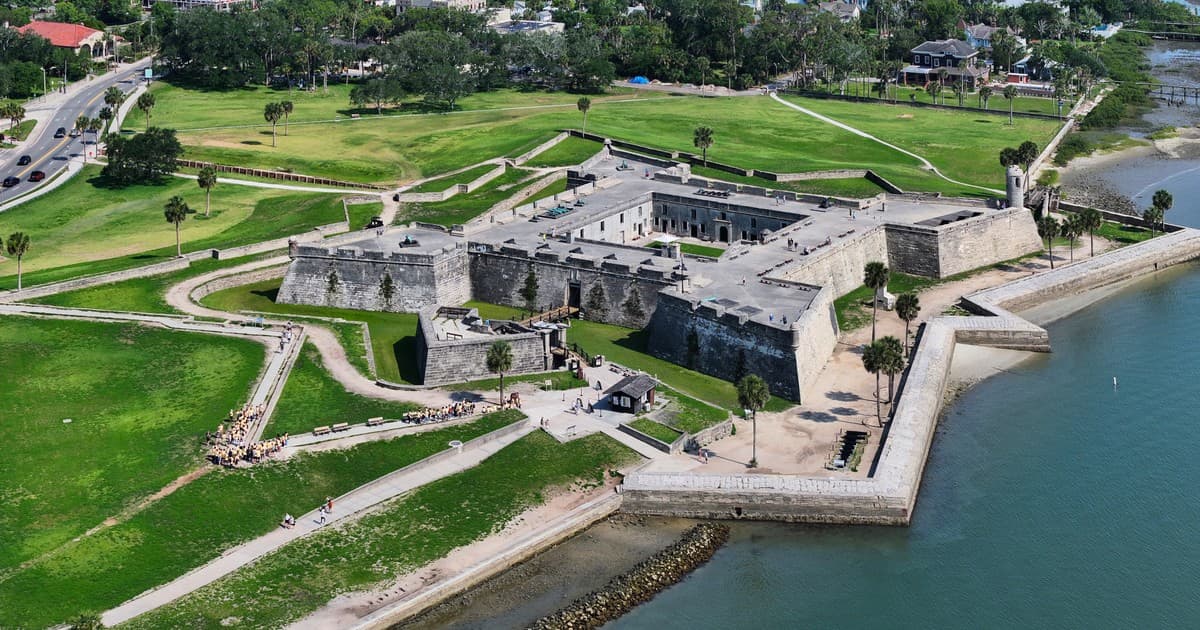
Florida's history includes Indigenous societies such as the Calusa, Apalachee, Timucua, and Seminole, as well as centuries of Spanish influence. St. Augustine, founded in 1565, is the oldest continuously occupied European-established city in what is now the continental United States. Florida became a U.S. territory in 1821 and a state in 1845.
The state's modern growth was shaped by railroads, land development, tourism, agriculture, military bases, and migration from other states and countries. Miami became a major gateway to Latin America and the Caribbean, while Orlando grew into a global center for theme parks and family tourism.
Today, Florida is one of the country's most populous states, with a diverse population and a large economy based on tourism, real estate, health care, aerospace, agriculture, international trade, and retirement communities. Current issues include hurricane risk, coastal development, water quality, Everglades restoration, and rapid population growth.
Presidents with Florida Ties
Significant historical connection — not necessarily born here

Ask Dr. Hart about Florida
AI Historical Guide · America 250 Atlas
Dr. Abigail Hart can help you explore Florida's history, key events, role in the American story, and connections to presidents and national milestones.