President #35 • Democratic
John F. Kennedy
1961–1963• 1945–1968: Cold War, Civil Rights, and Cultural Change
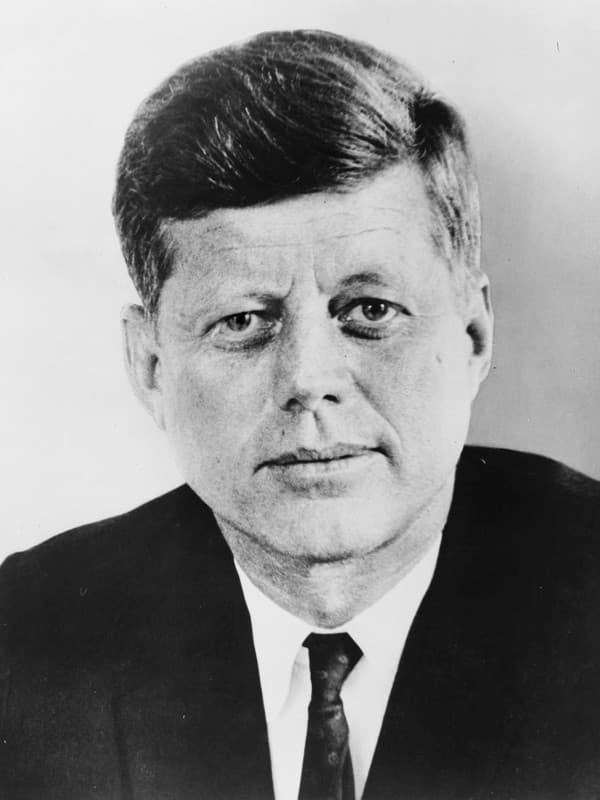
John F. Kennedy was born in Massachusetts in 1917 into a wealthy and politically ambitious family. A Navy veteran of World War II, he served in the U.S. House and Senate before narrowly defeating Richard Nixon in the 1960 presidential election. At age 43, he became the youngest person elected president and the first Catholic to hold the office.
Kennedy’s presidency unfolded under intense Cold War pressure. Early in 1961, the failed Bay of Pigs invasion embarrassed his administration and strengthened Fidel Castro’s position in Cuba. That same year, Kennedy created the Peace Corps and challenged the nation to land a man on the Moon, a goal achieved six years after his death.
The Cuban Missile Crisis of October 1962 was the defining crisis of his presidency. After discovering Soviet nuclear missiles in Cuba, Kennedy imposed a naval quarantine and negotiated a settlement that avoided nuclear war. His administration also increased U.S. involvement in Vietnam and worked to contain communist influence through a range of foreign policy tools.
On civil rights, Kennedy moved cautiously at first but increasingly supported federal action after the Birmingham campaign and violence against civil rights activists. In 1963, he proposed major civil rights legislation that Lyndon Johnson later pushed through Congress. Kennedy was assassinated in Dallas on November 22, 1963, turning a brief presidency into a symbol of lost promise and national trauma.
✓ Major Achievements
- 1Resolved Cuban Missile Crisis without nuclear war
- 2Launched Apollo program — landing on the Moon 6 years after his death
- 3Introduced landmark Civil Rights legislation (completed by LBJ)
- 4Peace Corps establishment
⚑ Historical Controversies
- 1Bay of Pigs invasion — CIA-backed attempt to overthrow Castro
- 2Early Vietnam escalation
- 3Extensive surveillance of civil rights leaders
Legacy at 250 Years
Kennedy's assassination ended a presidency before its major legislative achievements could materialize — making his legacy partly about what might have been, and partly about the enduring power of American idealism.
Key Speeches & Documents
- 📜Inaugural Address (1961)
- 📜Cuban Missile Crisis Address (1962)
- 📜Civil Rights Address (1963)
About John F. Kennedy
John F. Kennedy brought youth, eloquence, and a sense of challenge to the presidency. He called on Americans to serve their country and look toward a future shaped by science, civic duty, and global responsibility.
Kennedy’s presidency included major Cold War tests, including the Cuban Missile Crisis. His careful handling of that confrontation helped avoid nuclear war and remains an important example of crisis leadership.
One of Kennedy’s significant achievements was his strong support for the space program. His goal of landing Americans on the Moon inspired a national effort that continued after his death and became one of the great achievements of the twentieth century.
Historical Era
Sources & Further Reading

Ask Dr. Hart about John F. Kennedy
AI Historical Guide · America 250 Atlas
Dr. Abigail Hart can help you understand John F. Kennedy's presidency, key decisions, historical significance, and place in America's 250-year story.