Midwest
Illinois
“Land of Lincoln, City of Ambition”
Illinois is the Land of Lincoln — Abraham Lincoln built his law career and political life in Springfield, and the state sent him to the presidency that would hold the Union together. A century later, Chicago became a crucible of civil rights activism, the Great Migration of Black Americans from the South, and the labor movement. Barack Obama, the 44th president, represented Illinois in the U.S. Senate before making history in 2008.
Role in the Founding Era
Illinois was not a state during the founding era, admitted to the Union in 1818. It became central to American history through the Lincoln-Douglas debates of 1858 and the political career of Abraham Lincoln, who argued cases across the state before entering national politics.
Key Historical Themes
Major Events Connected to Illinois
Civil War Begins — Fort Sumter
Confederate forces fired on Fort Sumter, beginning the Civil War — the bloodiest conflict in American history, fought over slavery and the future of the Union.
Emancipation Proclamation
President Lincoln issued the Emancipation Proclamation, declaring all enslaved persons in Confederate states to be free — transforming the Civil War into an explicit war against slavery.
Gettysburg Address
President Lincoln delivered the Gettysburg Address at the dedication of the Soldiers' National Cemetery — a 272-word speech that redefined the purpose of the Civil War and the meaning of American democracy.
13th Amendment — Abolition of Slavery
The 13th Amendment to the Constitution was ratified, formally abolishing slavery throughout the United States — completing what the Emancipation Proclamation had begun.
Civil Rights Act of 1964
President Johnson signed the Civil Rights Act of 1964, outlawing discrimination based on race, color, religion, sex, or national origin — the most comprehensive civil rights legislation since Reconstruction.
About Illinois
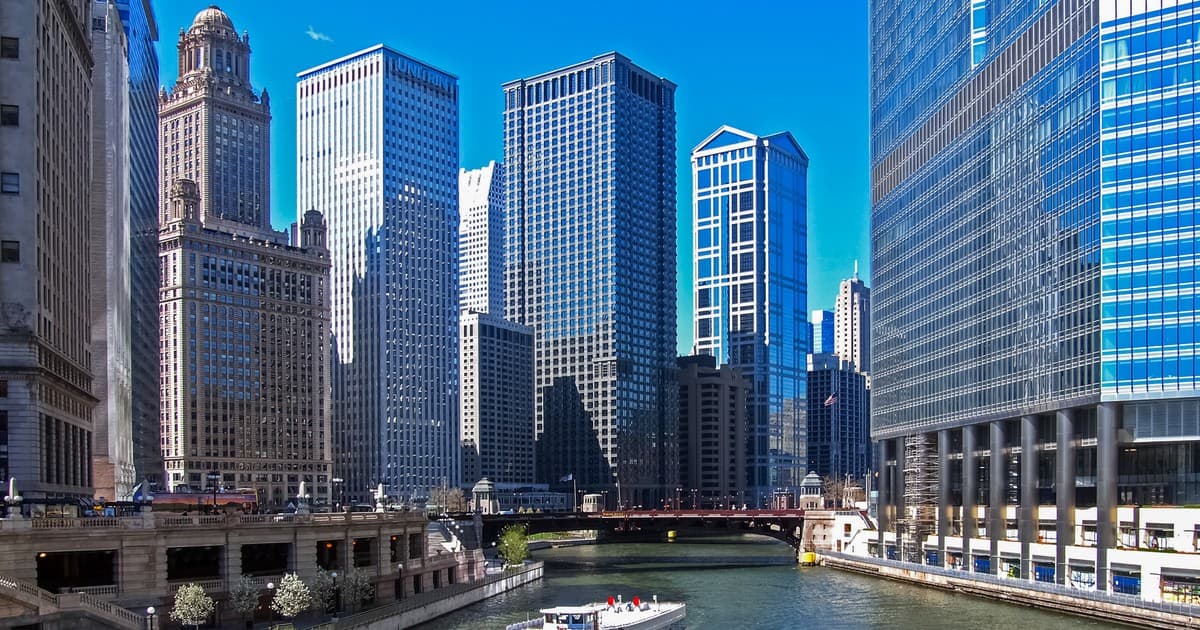
Illinois lies at the heart of the Midwest, connecting the Great Lakes, Mississippi River, and central plains. Chicago is the state's largest city and one of the nation's great urban centers, while Springfield is the capital. Other important cities include Aurora, Rockford, Peoria, Champaign, and Naperville.
The region was home to Indigenous peoples including the Illiniwek, Miami, Potawatomi, Sauk, Meskwaki, and others before French exploration and later U.S. settlement. Illinois became a state in 1818. Its location made it a crossroads for rivers, canals, railroads, highways, and trade.
Illinois is closely tied to the life of Abraham Lincoln, who built his political career in the state before becoming president. The state also became a major industrial, agricultural, and transportation powerhouse. Chicago grew rapidly in the 19th and 20th centuries, becoming a center of meatpacking, railroads, architecture, finance, journalism, and culture.
Today, Illinois has a diverse economy that includes agriculture, manufacturing, finance, health care, education, technology, and logistics. It is a major producer of corn and soybeans, while Chicago remains a global city. The state reflects both big-city energy and rural Midwestern landscapes.
Presidents with Illinois Ties
Significant historical connection — not necessarily born here

Ask Dr. Hart about Illinois
AI Historical Guide · America 250 Atlas
Dr. Abigail Hart can help you explore Illinois's history, key events, role in the American story, and connections to presidents and national milestones.