Brown v. Board of Education
The Supreme Court unanimously ruled that racial segregation in public schools was unconstitutional — overturning Plessy v. Ferguson and sparking the modern civil rights movement.
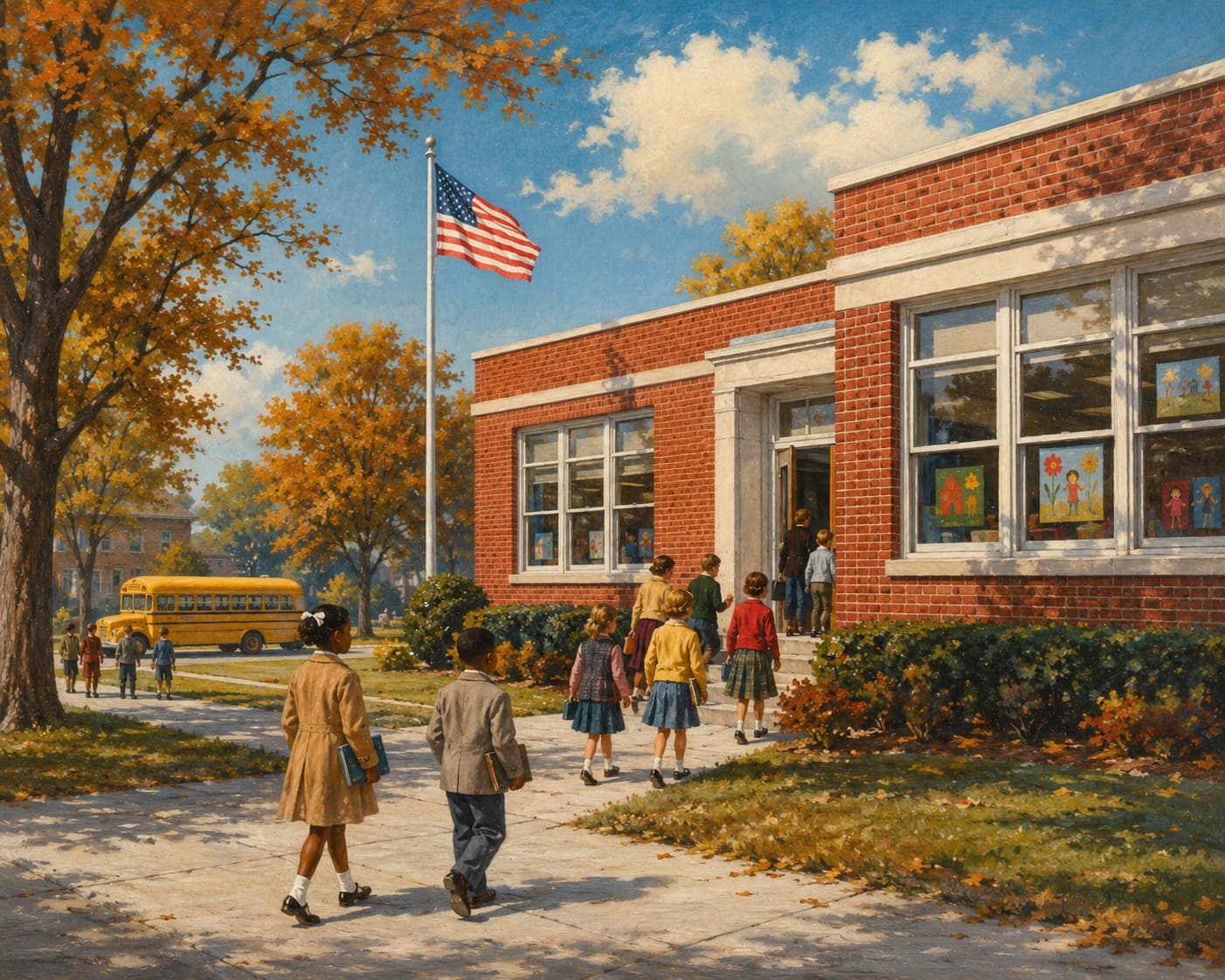
What Happened
In a unanimous 9-0 decision written by Chief Justice Earl Warren, the Supreme Court ruled that racially segregated public schools violated the 14th Amendment's equal protection clause. Chief Justice Warren wrote that 'separate educational facilities are inherently unequal.' The NAACP, led by Thurgood Marshall, had argued the case. The decision directly overturned the 'separate but equal' doctrine of Plessy v. Ferguson. Implementation was met with massive resistance in the South, including school closures and violence against Black students attempting to integrate.
Why It Mattered Then
Brown v. Board was the Supreme Court's most significant reversal of precedent in the 20th century. It declared that the legal architecture of Jim Crow was unconstitutional and gave the civil rights movement its most powerful judicial backing.
Why It Matters Now
Brown v. Board of Education remains one of the most celebrated decisions in American legal history. The question of how to achieve educational equality continues to be debated. Thurgood Marshall, who argued the case, later became the first Black Supreme Court Justice.
Key Themes
This event is part of the 1945–1968: Cold War, Civil Rights, and Cultural Change era (1945–1968).
Explore This Era →