United States Enters World War I
The United States declared war on Germany and entered World War I — marking the nation's emergence as a major world power and shaping the 20th-century international order.
What Happened
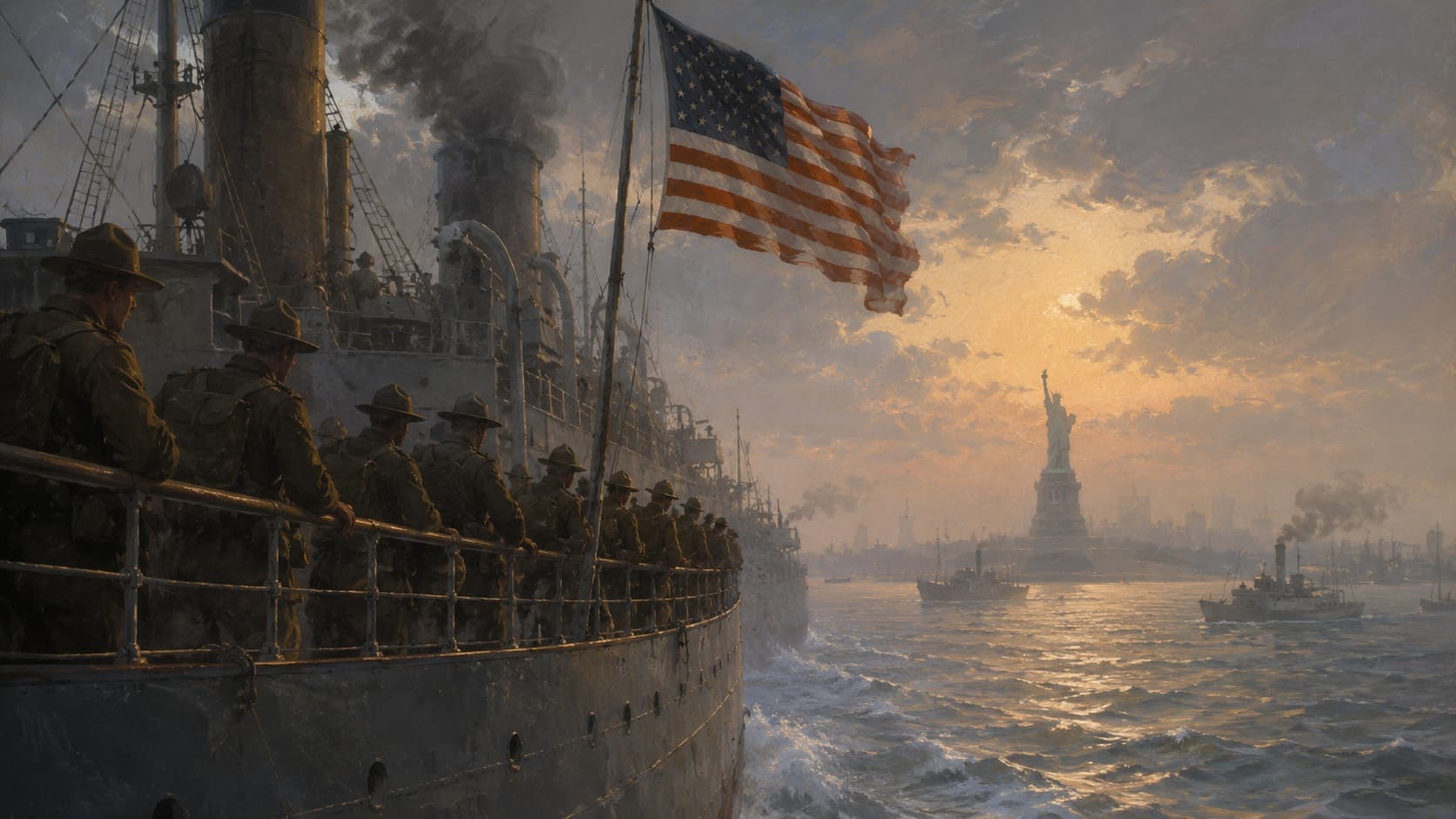
After three years of official neutrality, the United States declared war on Germany on April 6, 1917. Two key factors drove the decision: Germany's unrestricted submarine warfare (which sank American ships) and the Zimmermann Telegram (in which Germany proposed a military alliance with Mexico against the U.S.). President Wilson framed U.S. entry as a fight to 'make the world safe for democracy.' About 2 million American troops reached Europe; their arrival helped break the military stalemate. The war ended with the Armistice on November 11, 1918.
Why It Mattered Then
U.S. entry tipped the military balance on the Western Front. Wilson's vision of a liberal international order — democracy, open trade, national self-determination — established the framework for American foreign policy for the rest of the 20th century.
Why It Matters Now
World War I created the conditions for World War II: the punitive Versailles Treaty and the rise of fascism. American entry and Wilson's vision of democratic internationalism defined the debate between isolationism and global engagement that continues today.
Key Themes
This event is part of the 1914–1945: World Wars and Global Power era (1914–1945).
Explore This Era →