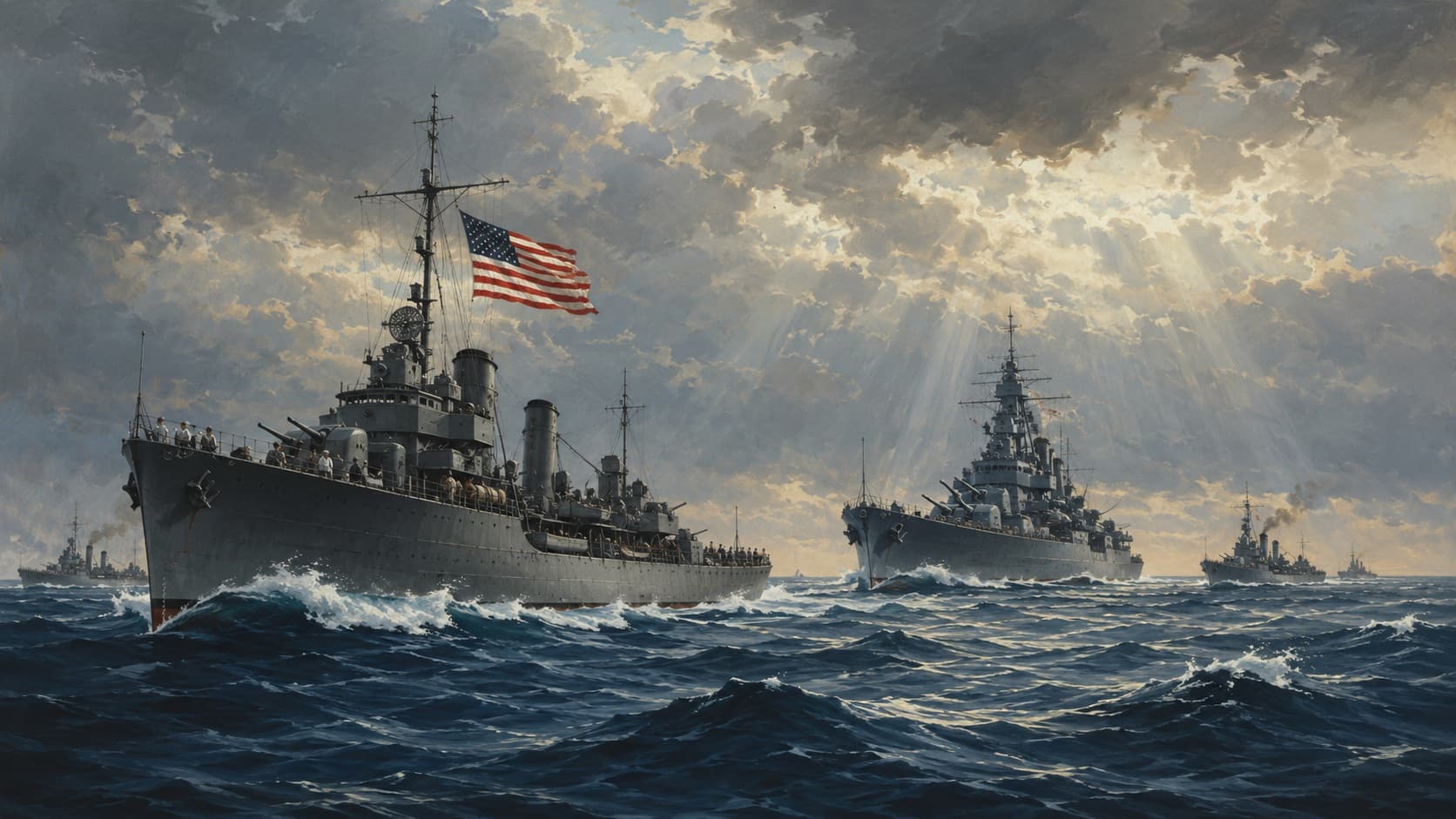
Opening Context: America Enters a Turbulent World
From 1914 to 1945, the United States moved from relative distance in world affairs to global leadership. The period opened with Europe at war and many Americans hoping to avoid entanglement. It ended with the United States victorious in World War II, economically powerful, militarily unmatched, and central to the shape of the postwar world.
This era also transformed life at home. Women won the vote through the 19th Amendment. The country experienced the prosperity and cultural change of the 1920s, the devastation of the Great Depression, and the expansion of federal power through the New Deal. Americans debated the proper role of government, the meaning of freedom in economic crisis, and the nation's responsibilities beyond its borders.
World War I and the Struggle Over Internationalism
When World War I began in 1914, President Woodrow Wilson urged neutrality. Many Americans saw the war as a European conflict rooted in old rivalries and imperial ambition. Over time, German submarine warfare, economic ties to the Allies, and the Zimmermann Telegram pushed the United States toward intervention. In 1917, America entered the war, claiming to fight for democracy and a more stable international order.
American troops helped tip the balance on the Western Front. Wilson then promoted a vision of collective security through the League of Nations. Yet many Americans remained skeptical of permanent international commitments. The Senate rejected U.S. membership in the League, reflecting a continuing tension between moral internationalism and constitutional caution about foreign entanglements.
The war also affected civil liberties. Dissent was restricted, and suspicion of radicals and immigrants increased. The tension between national security and free expression would recur throughout American history.
Suffrage, Prosperity, Depression, and the New Deal
The passage of the 19th Amendment in 1920 marked a major expansion of American democracy. Women's suffrage was the product of decades of organizing, argument, sacrifice, and persistence. It did not solve every inequality women faced, but it changed the political nation.
The 1920s brought consumer culture, automobiles, radio, jazz, mass advertising, and new forms of entertainment. It was also a period of cultural conflict over religion, immigration, prohibition, race, and modernity. The Harlem Renaissance expressed extraordinary Black creativity even as segregation and racial violence persisted.
The stock market crash of 1929 and the Great Depression shattered confidence. Banks failed, businesses closed, farms suffered, and millions lost work. Franklin D. Roosevelt's New Deal responded with relief programs, public works, financial reforms, and social insurance. Supporters saw the New Deal as saving capitalism and restoring hope. Critics worried about expanded federal power, debt, bureaucracy, and the long-term relationship between citizens and government.
This debate remains important. The New Deal did not end the Depression by itself, but it permanently changed expectations about federal responsibility in economic crisis. It also revealed limits, including unequal treatment that often disadvantaged Black Americans and agricultural or domestic workers.
World War II and the Rise of American Power
The United States entered World War II after the Japanese attack on Pearl Harbor on December 7, 1941. Unlike World War I, the cause quickly became clear to most Americans: defeat aggressive powers that threatened freedom and security across the globe. The war required massive mobilization. Industry converted to wartime production. Men entered the armed forces, while women worked in factories, offices, farms, and military support roles.
The war was fought across vast theaters. In Europe, American forces joined Allies in campaigns that included Normandy and the liberation of Western Europe. In the Pacific, the United States fought a brutal island war against Japan. The conflict demanded courage from soldiers, sailors, airmen, nurses, engineers, and families on the home front.
The war also produced grave moral questions. Japanese American internment remains a serious violation of constitutional liberty and human dignity. The use of atomic bombs against Japan remains one of the most debated decisions in American history, involving questions of military necessity, civilian suffering, and the desire to end the war swiftly.
Contradictions and Tensions
This era showed America at its best and at times at its most conflicted. The nation fought tyranny abroad while segregation continued at home. It defended freedom while restricting liberties during wartime. It expanded democracy through women's suffrage while many Black citizens remained disfranchised. It used federal power to rescue and mobilize the nation while raising enduring debates about the size and scope of government.
These contradictions do not negate America's achievements. They reveal the constant work required to align national practice with national principle.
Legacy and Connection Forward
By 1945, the United States had become a global power. Its economy was strong, its military reach vast, and its influence decisive. The war's end opened the Cold War, the nuclear age, the United Nations era, and a new American role in rebuilding and defending parts of the free world.
At home, the experiences of depression and war reshaped citizenship, government, labor, gender roles, and civil rights expectations. Veterans returned with new hopes. Black Americans who fought fascism abroad demanded justice at home. Women who had contributed to victory reconsidered their public role.
This era reminds us that American leadership was forged through hardship. The nation made mistakes, but it also helped defeat totalitarian enemies and preserve the possibility of democratic freedom. Its legacy is one of sacrifice, responsibility, and the burden of power.