President #17 • Democratic / National Union
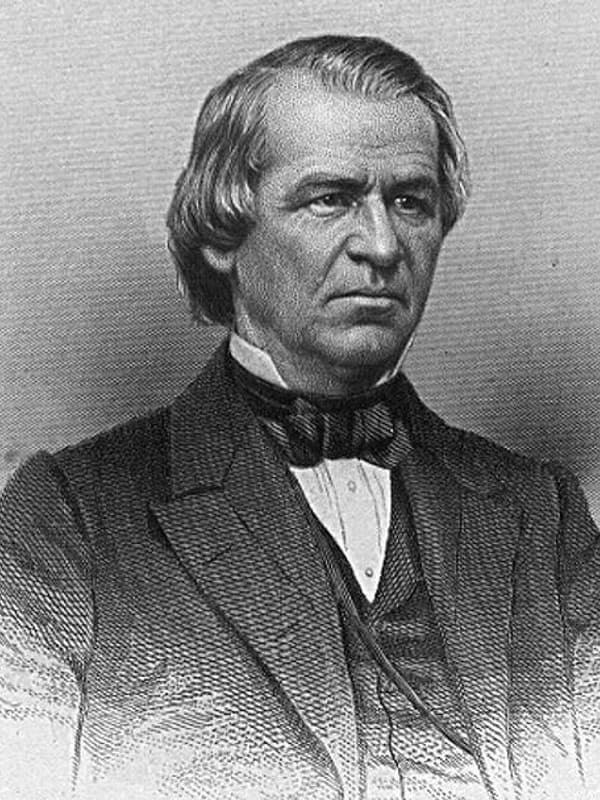
Andrew Johnson
1865–1869• 1865–1877: Reconstruction
Andrew Johnson was born in North Carolina in 1808 and grew up in poverty, apprenticed as a tailor before moving to Tennessee. He built a political career as a champion of poor white voters, serving as mayor, congressman, governor, senator, and military governor of Tennessee during the Civil War. Though a Democrat and slaveholder before the war, he remained loyal to the Union after Tennessee seceded. Abraham Lincoln chose him as his running mate in 1864 on the National Union ticket to symbolize wartime unity.
Johnson became president after Lincoln’s assassination in April 1865, inheriting the enormous task of Reconstruction. He offered rapid restoration to former Confederate states and issued broad pardons to many ex-Confederates. His plan allowed Southern governments to re-form with little protection for formerly enslaved people, and those governments enacted new laws governing labor and civil arrangements in the South.
Johnson and Congress held competing visions for Reconstruction. He vetoed the Civil Rights Act of 1866, but Congress overrode his veto and pursued its own Reconstruction program.
In 1868, Johnson became the first president impeached, following a dispute over the Tenure of Office Act. The Senate acquitted him by one vote. He left office in 1869. Johnson later returned briefly to the U.S. Senate in 1875, the only former president to do so, and died that same year.
✓ Major Achievements
- 1Preserved continuity of government after Lincoln’s assassination
- 2Oversaw the formal end of the Civil War
- 3Acquired Alaska through Secretary of State William Seward’s 1867 treaty
- 4Returned briefly to the U.S. Senate after his presidency
⚑ Historical Controversies
- 1Opposed congressional Reconstruction
- 2Vetoed civil rights legislation for formerly enslaved people
- 3Opposed the Fourteenth Amendment
- 4Allowed former Confederates to regain power quickly in Southern states
- 5Became the first president impeached
Legacy at 250 Years
Johnson’s presidency connects America at 250 to the unfinished work of emancipation and citizenship. His failures show how the meaning of victory in the Civil War depended not only on ending slavery, but on whether the nation would protect equal rights and democratic participation after slavery’s destruction.
Key Speeches & Documents
- 📜First Annual Message to Congress
- 📜Veto Message on the Civil Rights Act of 1866
- 📜Swing Around the Circle speeches
About Andrew Johnson
Andrew Johnson became president after Lincoln’s assassination, taking office at one of the most difficult moments in American history. A self-made man from Tennessee, he had built his career as a tailor, local official, congressman, governor, senator, and vice president.
Johnson’s presidency focused on Reconstruction, the challenge of bringing former Confederate states back into the Union after the Civil War. His approach created major conflicts with Congress, but the period also forced the country to confront questions of citizenship, rights, and federal authority.
One significant achievement of Johnson’s administration was the purchase of Alaska from Russia in 1867. Sometimes mocked at the time, the acquisition later proved to be a major addition to the nation’s territory, resources, and strategic position.
Historical Era
Sources & Further Reading

Ask Dr. Hart about Andrew Johnson
AI Historical Guide · America 250 Atlas
Dr. Abigail Hart can help you understand Andrew Johnson's presidency, key decisions, historical significance, and place in America's 250-year story.