President #18 • Republican
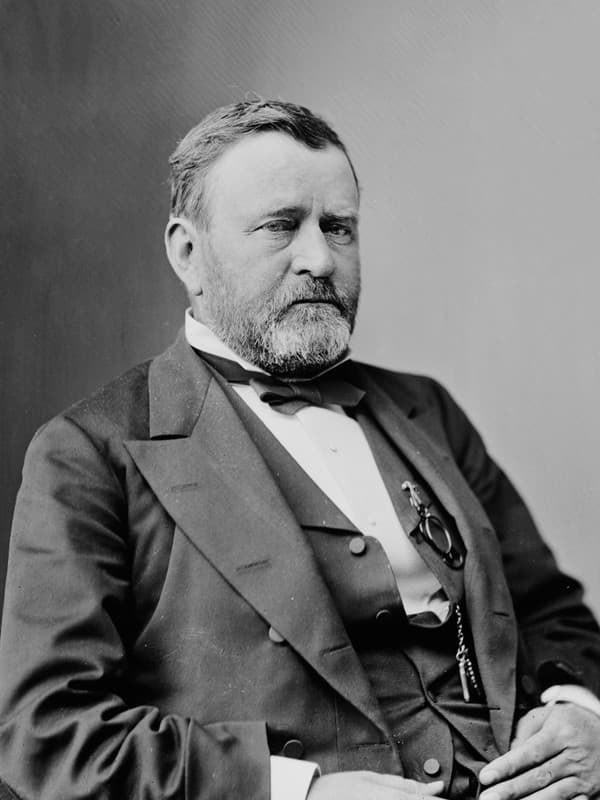
Ulysses S. Grant
1869–1877• 1865–1877: Reconstruction
Ulysses S. Grant was born in Ohio in 1822 and graduated from West Point before serving in the Mexican-American War. After leaving the army, he struggled in civilian life, but the Civil War restored his military career. His victories at Fort Donelson, Vicksburg, Chattanooga, and ultimately over Robert E. Lee made him the Union’s leading general. In 1868, Republicans nominated him as the symbol of Union victory and Reconstruction, and he won the presidency.
Grant’s first term focused on enforcing Reconstruction and protecting the rights of newly freed African Americans. He supported ratification of the Fifteenth Amendment and used federal power against the Ku Klux Klan through Enforcement Acts. His administration prosecuted white supremacist terrorism in the South more aggressively than any other nineteenth-century administration.
Grant also pursued policies of national reconciliation, western expansion, and Native policy reform, though his administration remained tied to military campaigns and land pressure against Native nations. His “Peace Policy” toward Native peoples aimed to reduce corruption and violence but still assumed assimilation and federal control. Internationally, he peacefully resolved major claims with Britain through the Treaty of Washington and the Alabama Claims arbitration.
Grant won reelection in 1872. His second term faced challenges from misconduct among some associates, though Grant himself was not personally corrupt and remained committed to Reconstruction and equal rights. He left office in 1877 as Reconstruction was collapsing. Later, after financial ruin and terminal cancer, he wrote celebrated memoirs before his death in 1885.
✓ Major Achievements
- 1Led Union armies to victory in the Civil War before becoming president
- 2Supported and enforced the Fifteenth Amendment
- 3Used federal power against the Ku Klux Klan
- 4Signed and enforced Reconstruction civil rights legislation
- 5Resolved Alabama Claims with Britain through arbitration
⚑ Historical Controversies
- 1Administration damaged by corruption scandals involving appointees and allies
- 2Native policy remained tied to assimilation and land dispossession
- 3Economic Panic of 1873 occurred during his presidency
- 4Could not prevent the eventual collapse of Reconstruction
- 5Showed excessive loyalty to corrupt subordinates
Legacy at 250 Years
Grant’s presidency connects America at 250 to the question of whether constitutional rights can survive without federal enforcement. His struggle against the Klan and defense of Reconstruction show that democracy after slavery required protection, law, and political will, not simply constitutional amendments on paper.
Key Speeches & Documents
- 📜First Inaugural Address
- 📜Second Inaugural Address
- 📜Messages on Reconstruction and civil rights
About Ulysses S. Grant
Ulysses S. Grant first became famous as the Union general whose persistence helped win the Civil War. His military leadership was marked by determination, coordination, and the ability to keep pressure on opposing forces until victory was possible.
As president, Grant supported Reconstruction and worked to protect the rights of newly freed African Americans. His administration backed enforcement laws against violent groups that tried to undermine civil rights in the South.
One of Grant’s significant achievements was his support for the Fifteenth Amendment, which protected voting rights regardless of race. He also later wrote a highly respected memoir, completed near the end of his life, that remains one of the classic works by an American president.
Historical Era
Sources & Further Reading

Ask Dr. Hart about Ulysses S. Grant
AI Historical Guide · America 250 Atlas
Dr. Abigail Hart can help you understand Ulysses S. Grant's presidency, key decisions, historical significance, and place in America's 250-year story.