President #36 • Democratic
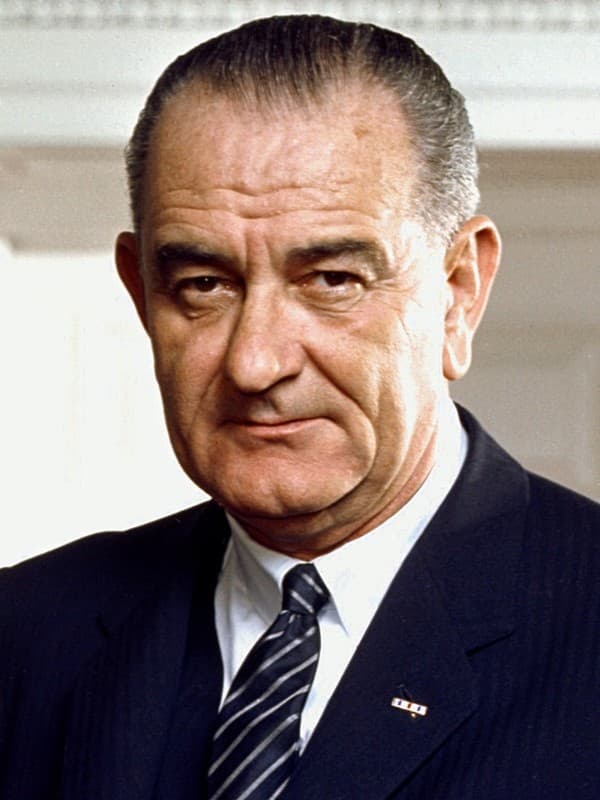
Lyndon B. Johnson
1963–1969• 1945–1968: Cold War, Civil Rights, and Cultural Change
Lyndon B. Johnson was born in rural Texas in 1908 and rose through Congress as a master of legislative power. After serving in the House and Senate, including as Senate majority leader, he became John F. Kennedy’s vice president in 1961. Johnson assumed the presidency on November 22, 1963, after Kennedy’s assassination, and used the moment to push for legislation Kennedy had proposed.
Johnson’s domestic record was one of the most consequential in American history. He secured passage of the Civil Rights Act of 1964, then won a landslide election that year over Barry Goldwater. His Great Society agenda produced Medicare, Medicaid, federal education aid, anti-poverty programs, public broadcasting support, arts and humanities endowments, and environmental and consumer protections.
The Voting Rights Act of 1965 became a landmark achievement, attacking racial discrimination in voting and reshaping American democracy. Johnson also appointed Thurgood Marshall as the first Black Supreme Court justice. Yet his domestic ambitions increasingly competed with the Vietnam War, which consumed money, attention, and public trust.
Johnson escalated U.S. involvement in Vietnam after the Gulf of Tonkin Resolution, sending more than 500,000 troops by the late 1960s. The weight of the war effort and the cost of simultaneously pursuing the most ambitious domestic agenda since the New Deal led Johnson to announce in March 1968 that he would not seek reelection. He retired to Texas and died in 1973.
✓ Major Achievements
- 1Civil Rights Act of 1964
- 2Voting Rights Act of 1965
- 3Medicare and Medicaid creation
- 4Great Society programs — Head Start, PBS, NEA, NEH
⚑ Historical Controversies
- 1Vietnam War escalation — over 58,000 Americans killed
- 2Gulf of Tonkin Resolution (deceptive justification for war)
- 3FBI surveillance of civil rights leaders
Legacy at 250 Years
LBJ's legislative achievements — Civil Rights Act, Voting Rights Act, Medicare — were the fulfillment of the 14th and 15th Amendments' promises. His Vietnam legacy remains a cautionary tale about the costs of foreign intervention.
Key Speeches & Documents
- 📜We Shall Overcome Address (1965)
- 📜Great Society Speech (1964)
- 📜Decision Not to Run (1968)
About Lyndon B. Johnson
Lyndon B. Johnson was a master of legislative politics who understood Congress as well as almost any president. Before entering the White House, he served as a representative, senator, Senate majority leader, and vice president.
As president, Johnson used his political skill to pass major domestic legislation. His Great Society programs addressed civil rights, health care, education, poverty, and the environment.
One of Johnson’s most significant achievements was signing the Civil Rights Act of 1964 and the Voting Rights Act of 1965. These laws helped transform American democracy by strengthening legal protections for equal citizenship and voting rights.
Historical Era
Sources & Further Reading

Ask Dr. Hart about Lyndon B. Johnson
AI Historical Guide · America 250 Atlas
Dr. Abigail Hart can help you understand Lyndon B. Johnson's presidency, key decisions, historical significance, and place in America's 250-year story.