President #13 • Whig
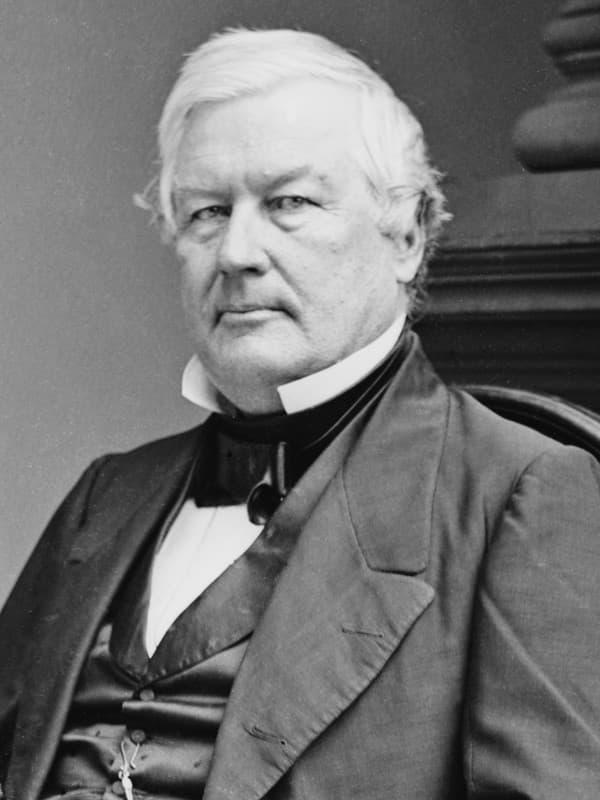
Millard Fillmore
1850–1853• 1848–1865: Slavery, Sectional Crisis, and Civil War
Millard Fillmore was born in New York in 1800 and rose from poverty through education, law, and Whig politics. He served in Congress, became comptroller of New York, and was elected vice president in 1848 on the ticket with Zachary Taylor. When Taylor died in July 1850, Fillmore became president at the height of the sectional crisis over slavery in the territories acquired from Mexico.
Fillmore supported the Compromise of 1850, a package of measures intended to preserve the Union. It admitted California as a free state, organized Utah and New Mexico without immediate restrictions on slavery, settled the Texas boundary, ended the slave trade in Washington, D.C., and strengthened the Fugitive Slave Act. Fillmore believed compromise was necessary to prevent disunion.
The question of fugitive persons was the most sensitive part of the compromise. It required federal cooperation in certain cases and generated significant debate in Northern states, while Southern leaders remained concerned about any limits on the existing social order.
Fillmore also pursued foreign and commercial goals, including sending Commodore Matthew Perry’s expedition toward Japan, which later opened formal relations. He died in 1874.
✓ Major Achievements
- 1Supported passage of the Compromise of 1850
- 2Helped temporarily delay disunion
- 3Sent the Perry expedition that later opened U.S. relations with Japan
- 4Supported federal authority during a period of sectional instability
⚑ Historical Controversies
- 1Signed and enforced the Fugitive Slave Act of 1850
- 2Alienated many Northern antislavery voters
- 3Later associated with the nativist Know-Nothing movement
- 4Failed to prevent the collapse of the Whig Party
Legacy at 250 Years
Fillmore’s presidency connects America at 250 to the danger of compromises that preserve institutions while sacrificing rights. The Fugitive Slave Act shows how constitutional conflict over slavery reached into courts, communities, and individual conscience across the nation.
Key Speeches & Documents
- 📜First Annual Message to Congress
- 📜Messages on the Compromise of 1850
- 📜Messages on foreign commerce
About Millard Fillmore
Millard Fillmore rose from poverty to become a lawyer, congressman, vice president, and president. His life reflected the possibility of advancement through education, work, and public service.
As president, Fillmore supported the Compromise of 1850, a group of laws intended to reduce sectional tension between North and South. While parts of the compromise remain controversial, at the time Fillmore believed it could help preserve the Union.
One of Fillmore’s significant achievements was sending Commodore Matthew Perry’s expedition to Japan, which helped open diplomatic and trade relations between Japan and the United States. His presidency also showed the challenges of leading a divided country in the years before the Civil War.
Historical Era
Sources & Further Reading

Ask Dr. Hart about Millard Fillmore
AI Historical Guide · America 250 Atlas
Dr. Abigail Hart can help you understand Millard Fillmore's presidency, key decisions, historical significance, and place in America's 250-year story.