Cross-Era Theme
Westward Expansion
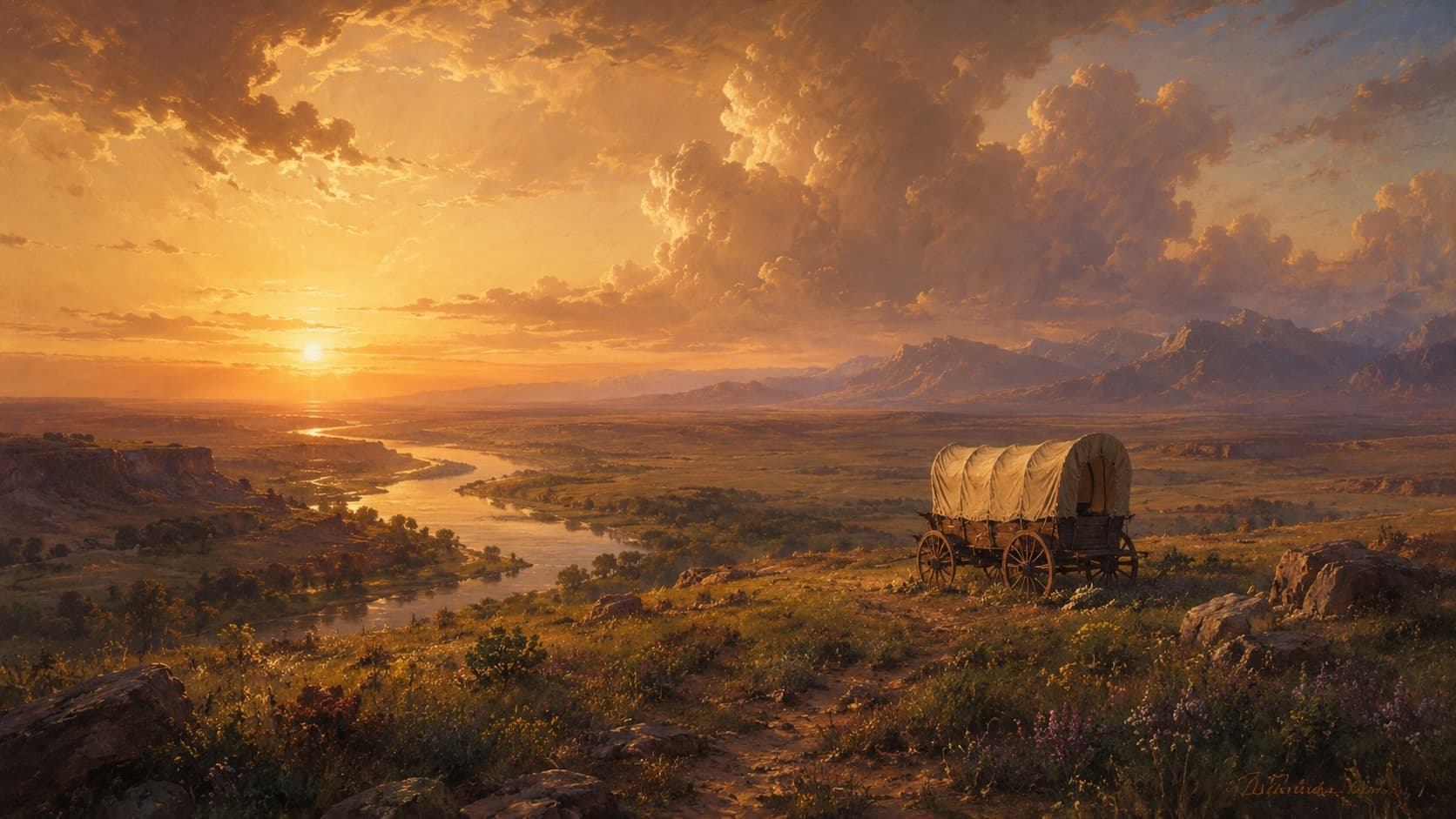
From the Louisiana Purchase to the Pacific coast, the 19th-century expansion of the United States reshaped a continent — bringing land, resources, and opportunity to millions of Americans while displacing Native nations and fueling the sectional crisis over slavery that led to civil war.
Key Events
Louisiana Purchase
President Jefferson completed the Louisiana Purchase, doubling the size of the United States by acquiring 828,000 square miles from France for approximately $15 million.
War of 1812
The United States declared war on Britain over trade restrictions and the impressment of American sailors — a conflict that tested national sovereignty and produced the 'Star-Spangled Banner.'
Monroe Doctrine
President Monroe declared that the Western Hemisphere was closed to further European colonization — a foundational statement of American foreign policy that shaped U.S. foreign relations for two centuries.
Seneca Falls Convention
The first women's rights convention in U.S. history produced the Declaration of Sentiments, modeled on the Declaration of Independence, demanding equal rights for women including the right to vote.
Civil War Begins — Fort Sumter
Confederate forces fired on Fort Sumter, beginning the Civil War — the bloodiest conflict in American history, fought over slavery and the future of the Union.
About Westward Expansion
Westward Expansion reshaped the United States from an Atlantic republic into a continental nation. It brought farms, towns, railroads, states, markets, and new opportunities to millions of Americans. It also brought conflict, displacement, and deep moral questions, especially involving Native nations, slavery, and federal power.
The Louisiana Purchase of 1803 was one of the most important land acquisitions in world history. Thomas Jefferson, despite constitutional doubts, seized a strategic opportunity that doubled the size of the nation and opened the Mississippi River system to American development. This expansion demonstrated vision, prudence, and confidence in the future of a free people.
Pioneers moved west for many reasons: land ownership, religious freedom, trade, mining, farming, and the hope of independence. The frontier rewarded courage, self-reliance, family labor, and community cooperation. Churches, schools, local courts, newspapers, and town governments often followed settlers, carrying American institutions into new territories.
Yet westward expansion came at a severe cost to Native peoples whose homelands, economies, and sovereignty were repeatedly broken by treaty violations, warfare, disease, and federal removal policies. A serious conservative account should not romanticize every act of expansion. Respect for property, local attachment, and inherited community should make Americans especially aware of what Native nations lost.
Expansion also intensified the slavery crisis. Each new territory raised the question of whether slavery would spread or be contained. Conflicts over Missouri, Texas, Kansas, and the Mexican Cession pushed the nation toward civil war. The dream of opportunity in the West could not remain separate from the moral contradiction of slavery.
In the long run, westward expansion created a continental power with vast resources, agricultural strength, energy reserves, ports on two oceans, and a national imagination shaped by space and possibility. Its legacy is both heroic and sobering. It shows what free people can build, but also why power must be guided by justice, law, and humility.
Related Presidents
Related States
Related Sites in the Network

Ask Dr. Hart about Westward Expansion
AI Historical Guide · America 250 Atlas
Dr. Abigail Hart can help you explore the history of Westward Expansion, its evolution over 250 years, key figures, and meaning for American democracy.