President #20 • Republican
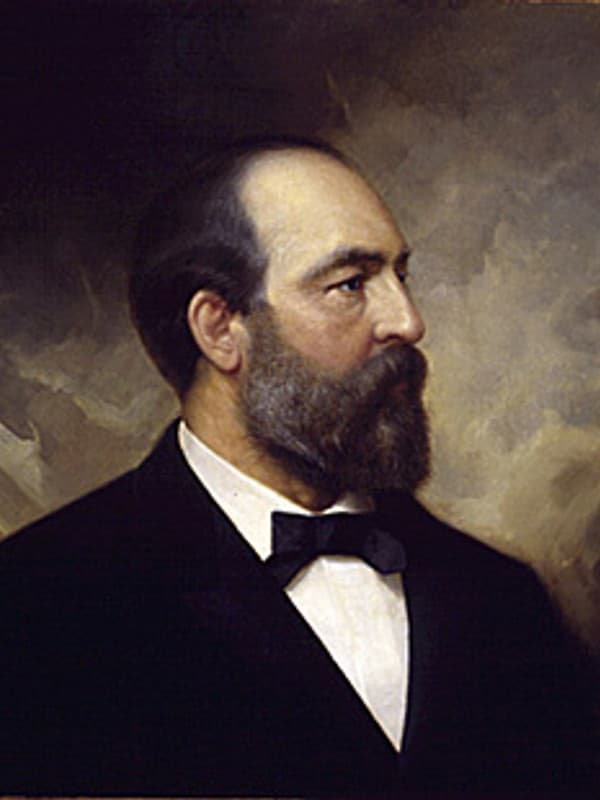
James A. Garfield
1881• 1877–1914: Industrial America and Reform
James A. Garfield was born in Ohio in 1831 and rose from poverty through education, teaching, and public service. He became a professor and college president before entering the Union Army during the Civil War, where he rose to the rank of major general. Elected to Congress in 1862, he became a leading Republican legislator with a reputation for intelligence, antislavery convictions, and interest in finance and civil service reform.
Garfield emerged as the Republican presidential nominee in 1880 after a divided convention deadlocked between party factions. He won a close election against Democrat Winfield Scott Hancock. His presidency began amid conflict between reform-minded Republicans and Stalwarts who defended the patronage system, especially the power to distribute federal jobs.
In office, Garfield challenged Senator Roscoe Conkling’s New York political machine by asserting presidential authority over appointments. Though his term was brief, this confrontation suggested a stronger commitment to civil service reform and a more independent executive. He also supported education and civil rights for African Americans, though he had little time to act.
On July 2, 1881, Garfield was shot by Charles Guiteau, a disappointed office seeker who believed he deserved a government post. Garfield lingered for weeks under poor medical care before dying on September 19. His assassination shocked the nation and helped build support for civil service reform. Chester A. Arthur succeeded him and later signed the Pendleton Civil Service Act, which addressed the patronage abuses dramatized by Garfield’s death.
✓ Major Achievements
- 1Rose from poverty to the presidency through education and public service
- 2Served as a Union general during the Civil War
- 3Supported civil service reform
- 4Challenged entrenched patronage politics
- 5His assassination helped spur momentum for the Pendleton Civil Service Act
⚑ Historical Controversies
- 1Had little time to govern before assassination
- 2Presidency was caught in Republican factional conflict
- 3Could not enact major reforms before his death
- 4His medical treatment after the shooting became a subject of historical criticism
Legacy at 250 Years
Garfield’s presidency connects America at 250 to public service, political reform, and the need for institutions stronger than patronage. His assassination reminds Americans that democratic government depends on rules, professionalism, and peaceful acceptance of public office as a trust rather than a prize.
Key Speeches & Documents
- 📜Inaugural Address
- 📜Congressional speeches on Reconstruction and finance
- 📜Messages on appointments and reform
About James A. Garfield
James A. Garfield had a remarkable rise from poverty to national leadership. He worked as a teacher, became a college president, served as a Union officer during the Civil War, and then built a long career in Congress.
Garfield’s presidency lasted only a few months before he was assassinated, so he had little time to carry out his plans. Still, he supported civil service reform and wanted to reduce corruption in government appointments.
A significant achievement of Garfield’s life was his dedication to education and self-improvement. His journey from a humble background to the White House made him a powerful example of talent, learning, and public ambition in the post-Civil War era.
Historical Era
Sources & Further Reading

Ask Dr. Hart about James A. Garfield
AI Historical Guide · America 250 Atlas
Dr. Abigail Hart can help you understand James A. Garfield's presidency, key decisions, historical significance, and place in America's 250-year story.