Cross-Era Theme
Labor, Industry, and Economic Growth
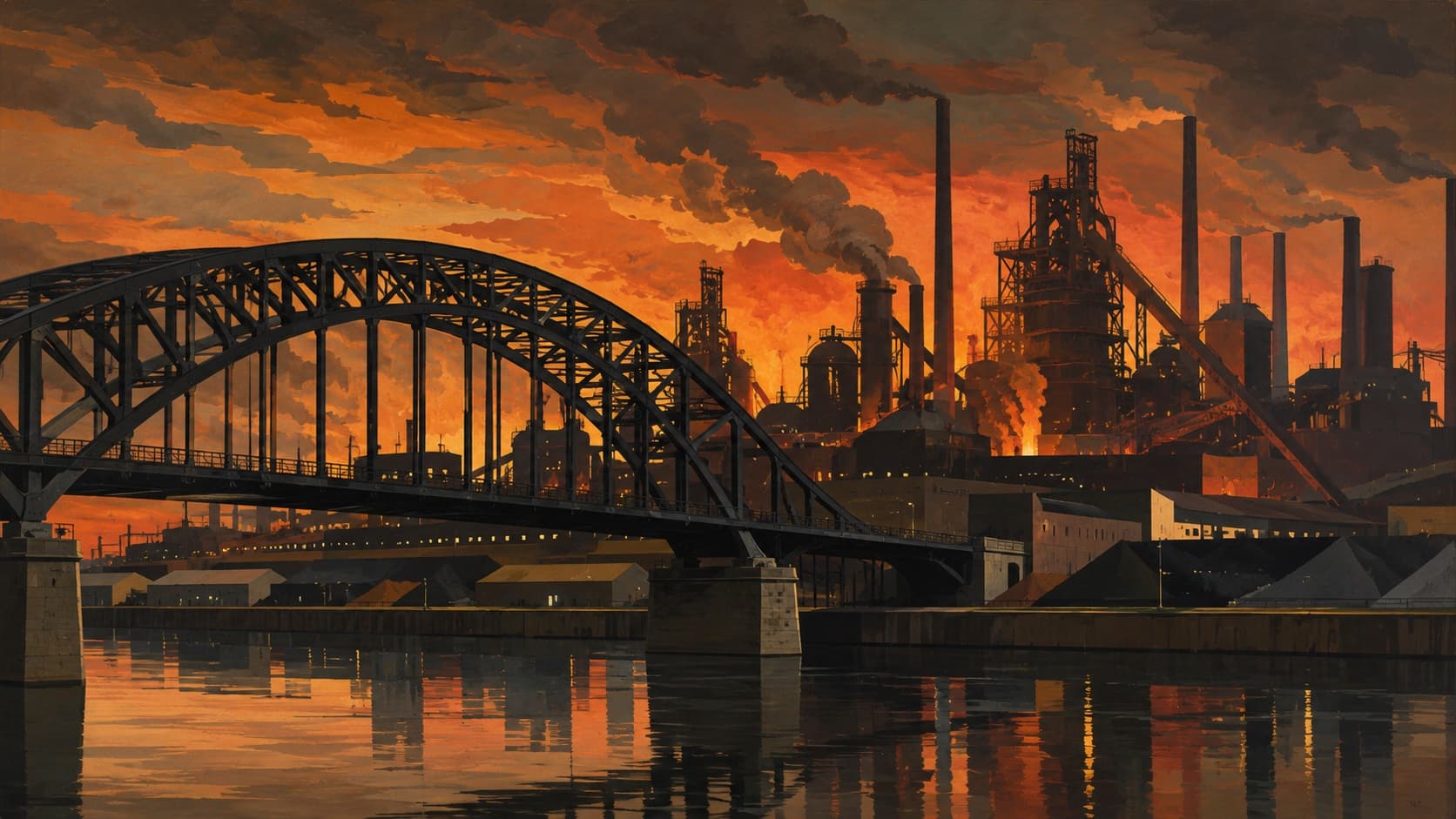
The transformation of America from an agrarian republic to the world's largest industrial and then digital economy — and the workers, inventors, and crises that drove it. From the mills of New England and the steel furnaces of Pittsburgh through the New Deal, the postwar boom, and the information age.
Key Events
Louisiana Purchase
President Jefferson completed the Louisiana Purchase, doubling the size of the United States by acquiring 828,000 square miles from France for approximately $15 million.
Civil War Begins — Fort Sumter
Confederate forces fired on Fort Sumter, beginning the Civil War — the bloodiest conflict in American history, fought over slavery and the future of the Union.
United States Enters World War I
The United States declared war on Germany and entered World War I — marking the nation's emergence as a major world power and shaping the 20th-century international order.
Attack on Pearl Harbor
Japan's surprise attack on Pearl Harbor killed 2,403 Americans and drew the United States into World War II — the largest and deadliest conflict in human history.
Apollo 11 Moon Landing
Apollo 11 landed on the Moon and Neil Armstrong became the first human to walk on its surface — the greatest technological achievement in American history and a defining moment of the 20th century.
About Labor, Industry, and Economic Growth
Labor, Industry, and Economic Growth tell how the United States became one of the most productive nations in history. From farms and small workshops to factories, railroads, steel mills, automobiles, aerospace, computers, and artificial intelligence, American growth has depended on invention, risk-taking, property rights, labor, capital, and the freedom to build.
In the early republic, most Americans lived close to agriculture, trade, and local craft production. Over time, canals, steamboats, railroads, and factories connected markets and changed daily life. Industrialization created new wealth and new opportunities, but also difficult working conditions, crowded cities, child labor, and conflict between workers and owners.
A conservative historian should recognize both the achievements and the strains of industrial capitalism. Entrepreneurs such as Andrew Carnegie, John D. Rockefeller, Henry Ford, and many lesser-known builders created industries that transformed the world. At the same time, workers, immigrants, miners, farmers, and skilled tradesmen carried much of the burden. The American economy grew because millions of people worked hard, not because progress happened automatically.
The Progressive Era and New Deal brought new regulations, labor protections, and federal programs. Supporters saw these measures as necessary responses to abuse and crisis. Conservatives have often warned that reforms should protect workers and fair competition without smothering enterprise, local responsibility, and private initiative. The enduring challenge is to balance justice with growth.
After World War II, the United States enjoyed a remarkable economic boom. Suburbs expanded, highways connected regions, higher education grew, and American manufacturing led much of the world. Later decades saw deindustrialization in some regions, the rise of finance and technology, globalization, and a shift toward a digital economy. These changes created winners and losers, often reshaping communities that had depended on mills, mines, and factories.
The American economic story is ultimately a story of freedom under law. Secure property, enforceable contracts, open markets, innovation, family ambition, and civic trust allowed the United States to generate extraordinary prosperity. The conservative insight is that wealth creation matters because it supports independence, opportunity, charity, national defense, and the dignity of work.
Related Presidents
Related States
Related Sites in the Network

Ask Dr. Hart about Labor, Industry, and Economic Growth
AI Historical Guide · America 250 Atlas
Dr. Abigail Hart can help you explore the history of Labor, Industry, and Economic Growth, its evolution over 250 years, key figures, and meaning for American democracy.