Midwest
South Dakota
“Black Hills, Plains, and Memory”
South Dakota’s history is shaped by the Great Plains, Lakota and other Native nations, settler expansion, and enduring symbols of American achievement. The Black Hills hold deep spiritual and cultural significance for the Lakota people, whose traditions and sovereignty remain central to the state’s identity. The nineteenth century brought homesteaders and enterprise to the Great Plains, transforming the landscape. Mount Rushmore, carved into the Black Hills, became one of the most recognized symbols of American achievement, honoring four presidents who shaped the nation. South Dakota’s plains farming heritage, represented through writers like Laura Ingalls Wilder, captures the pioneering spirit of the American frontier. The Crazy Horse Memorial continues to grow as a monument to Native American heritage and endurance. Today, South Dakota is known for its natural wonders, agricultural strength, and the living intersection of Western and Native American cultures.
Role in the Founding Era
During the founding era, present-day South Dakota lay beyond the original United States in Indigenous homelands tied to Plains trade, diplomacy, and seasonal movement. U.S. claims followed the Louisiana Purchase, but the region’s later incorporation depended on military power, treaties, broken agreements, and settlement. Its history shows how continental expansion extended far beyond the founding documents.
Key Historical Themes
Major Events Connected to South Dakota
Louisiana Purchase
President Jefferson completed the Louisiana Purchase, doubling the size of the United States by acquiring 828,000 square miles from France for approximately $15 million.
Civil War Begins — Fort Sumter
Confederate forces fired on Fort Sumter, beginning the Civil War — the bloodiest conflict in American history, fought over slavery and the future of the Union.
13th Amendment — Abolition of Slavery
The 13th Amendment to the Constitution was ratified, formally abolishing slavery throughout the United States — completing what the Emancipation Proclamation had begun.
14th Amendment — Equal Protection and Citizenship
The 14th Amendment granted citizenship to all persons born or naturalized in the United States and established equal protection under the law — overturning Dred Scott and laying the foundation for modern civil rights law.
America at 250 — The Semiquincentennial
The United States marks the 250th anniversary of the Declaration of Independence — a moment to reflect on what the nation has achieved, where it has fallen short, and what comes next.
About South Dakota
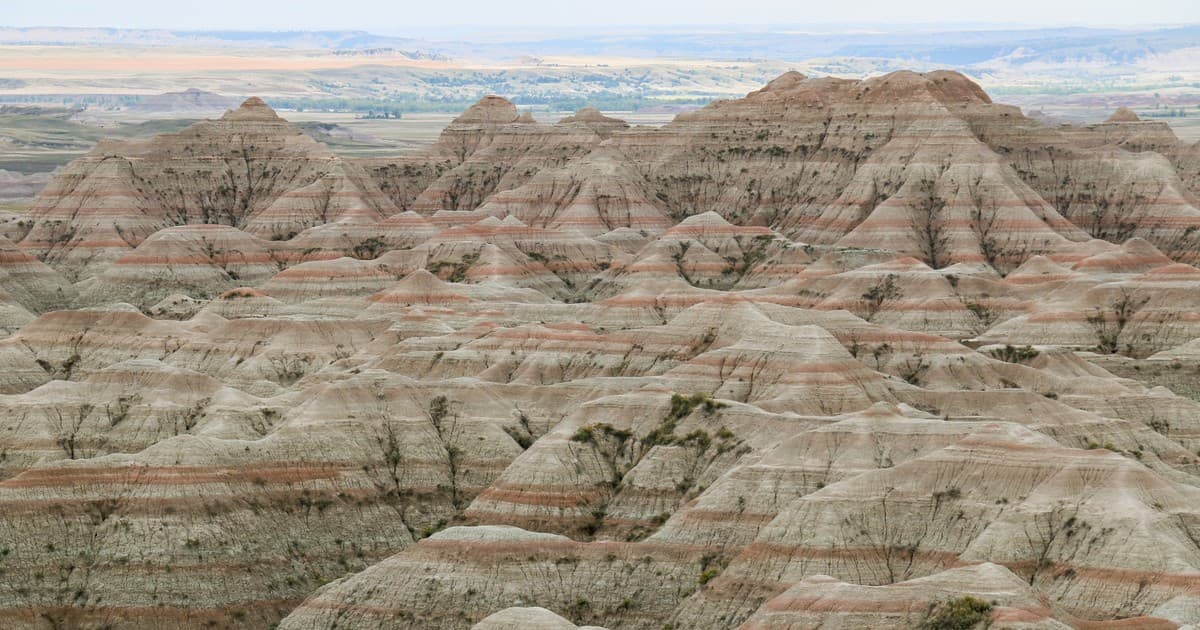
South Dakota is a Great Plains state with prairies, badlands, ranches, lakes, and the Black Hills. Pierre is the capital, while Sioux Falls is the largest city. Rapid City, Aberdeen, and Brookings are also important communities.
The region is central to the history of Lakota, Dakota, and Nakota peoples, as well as other Native communities. The Black Hills are especially sacred to the Lakota. U.S. expansion, treaties, broken agreements, and conflicts over land are essential parts of the state's history.
South Dakota became a state in 1889. Farming, ranching, railroads, and mining shaped its early development. The Homestake Mine in the Black Hills was one of the largest gold mines in North America, while Mount Rushmore became a famous but debated national monument.
Today, South Dakota's economy includes agriculture, tourism, finance, health care, manufacturing, and energy. Visitors come for Badlands National Park, the Black Hills, Custer State Park, and Native cultural sites. The state continues to balance rural life, tourism, Native sovereignty, and conservation.
Presidents with South Dakota Ties
Significant historical connection — not necessarily born here

Ask Dr. Hart about South Dakota
AI Historical Guide · America 250 Atlas
Dr. Abigail Hart can help you explore South Dakota's history, key events, role in the American story, and connections to presidents and national milestones.