Cross-Era Theme
War and Foreign Policy
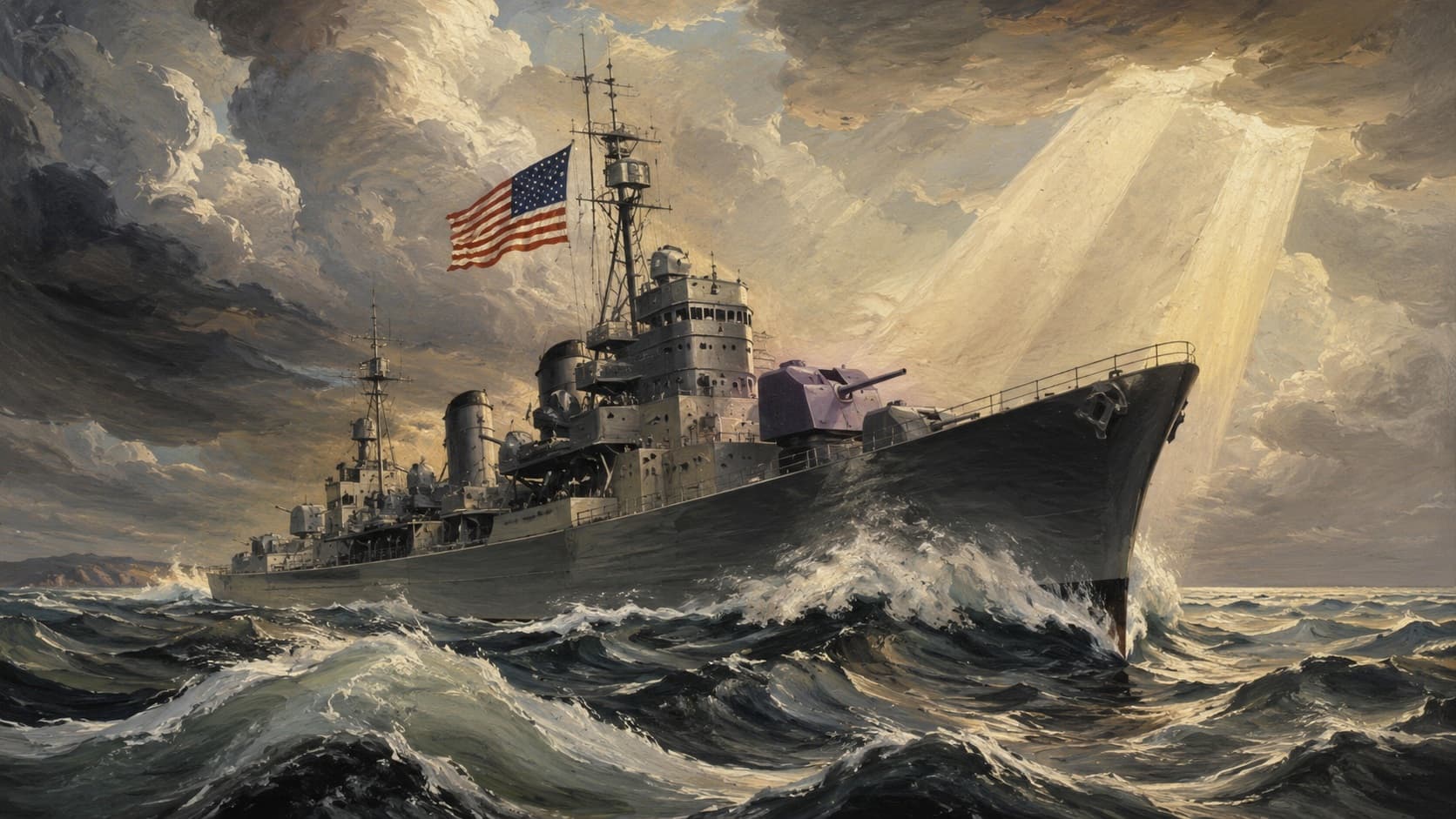
From Washington's Farewell Address warning against foreign entanglements to the Monroe Doctrine, the World Wars, the Cold War, and the War on Terror — America's relationship with the wider world has defined its character and tested its ideals for 250 years.
Key Events
War of 1812
The United States declared war on Britain over trade restrictions and the impressment of American sailors — a conflict that tested national sovereignty and produced the 'Star-Spangled Banner.'
Monroe Doctrine
President Monroe declared that the Western Hemisphere was closed to further European colonization — a foundational statement of American foreign policy that shaped U.S. foreign relations for two centuries.
United States Enters World War I
The United States declared war on Germany and entered World War I — marking the nation's emergence as a major world power and shaping the 20th-century international order.
Attack on Pearl Harbor
Japan's surprise attack on Pearl Harbor killed 2,403 Americans and drew the United States into World War II — the largest and deadliest conflict in human history.
Apollo 11 Moon Landing
Apollo 11 landed on the Moon and Neil Armstrong became the first human to walk on its surface — the greatest technological achievement in American history and a defining moment of the 20th century.
September 11 Attacks
Al-Qaeda terrorists hijacked four commercial aircraft and killed nearly 3,000 Americans in simultaneous attacks on the World Trade Center and Pentagon — transforming American security policy, civil liberties, and foreign policy.
About War and Foreign Policy
War and Foreign Policy trace America’s changing role from a young republic on the edge of empires to a global power. The United States began with a strong desire to avoid permanent foreign entanglements, but geography, commerce, ideology, security threats, and world events repeatedly forced Americans to decide what role their nation should play abroad.
George Washington’s Farewell Address warned against permanent alliances and excessive foreign influence. That advice reflected the vulnerability of the early republic. The nation needed time to grow, trade, defend its borders, and avoid being pulled into European wars. A conservative historian can see in this early restraint a wise concern for national interest and constitutional self-government.
The Monroe Doctrine marked a more confident phase. It warned European powers against new colonization in the Western Hemisphere and declared that the Americas had a distinct political future. Over time, the United States expanded its influence, sometimes defensively and sometimes ambitiously. The tension between liberty and power has been present throughout American foreign policy.
The 20th century transformed America’s role. World War I raised questions about democracy and international order. World War II made the United States the central defender of the free world against fascist aggression. The Cold War then required a long struggle against Soviet communism, combining military strength, alliances, intelligence, diplomacy, economic pressure, and moral confidence.
After September 11, 2001, foreign policy focused heavily on terrorism, homeland security, and military action in the Middle East. These years produced heroism and sacrifice, but also debate over nation-building, intelligence failures, executive power, and the costs of extended war. Conservatives themselves have argued over whether America should act as an active global leader or pursue a more restrained nationalism.
A pro-America view of foreign policy begins with the safety, liberty, and prosperity of the American people. It respects military strength, honors service members, and recognizes that weakness can invite danger. But it also remembers that war is grave, constitutional accountability matters, and American power should be used with prudence, purpose, and realism.
Related Presidents
George Washington
#1 • 1789–1797
James Monroe
#5 • 1817–1825
Woodrow Wilson
#28 • 1913–1921
Franklin D. Roosevelt
#32 • 1933–1945
Dwight D. Eisenhower
#34 • 1953–1961
John F. Kennedy
#35 • 1961–1963
Richard Nixon
#37 • 1969–1974
George W. Bush
#43 • 2001–2009
Related States
Related Sites in the Network

Ask Dr. Hart about War and Foreign Policy
AI Historical Guide · America 250 Atlas
Dr. Abigail Hart can help you explore the history of War and Foreign Policy, its evolution over 250 years, key figures, and meaning for American democracy.