President #30 • Republican
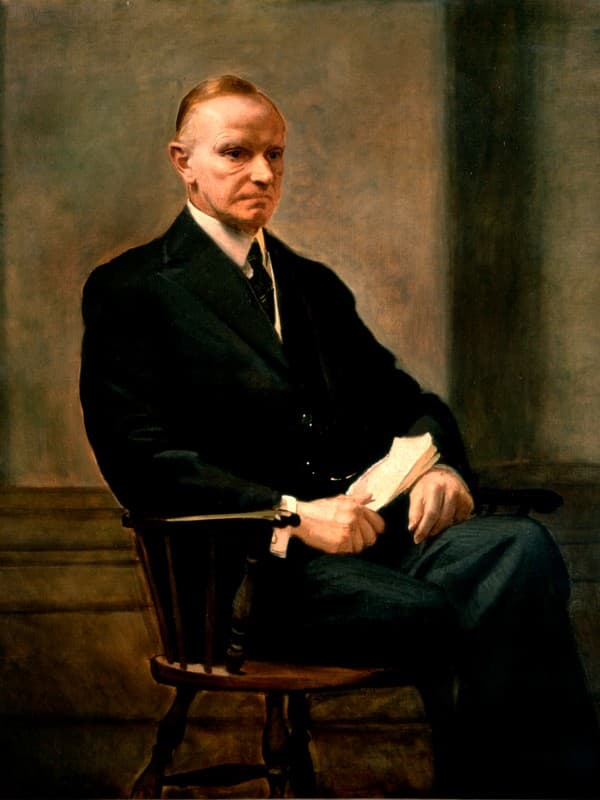
Calvin Coolidge
1923–1929• 1914–1945: World Wars and Global Power
Calvin Coolidge was born in Vermont in 1872 and built his career in Massachusetts as a lawyer, local official, state legislator, lieutenant governor, and governor. He gained national attention during the Boston Police Strike of 1919, when he defended public order and opposed a police walkout. Warren Harding chose him as his running mate in 1920. Coolidge became president in August 1923 after Harding died in office.
Coolidge restored a sense of personal integrity after the scandals associated with Harding’s administration. He embraced limited government, low taxes, reduced federal spending, and close cooperation with business. His quiet style and belief in restraint suited the economic optimism of the 1920s. He won election in his own right in 1924 with the slogan “Keep Cool with Coolidge.”
His administration supported tax cuts under Treasury Secretary Andrew Mellon and maintained a high-tariff, pro-business economic order. Coolidge also signed the Indian Citizenship Act of 1924, which granted U.S. citizenship to Native Americans. He opposed major federal intervention in agriculture despite rural economic distress.
Coolidge chose not to run in 1928 and left office with the nation prosperous and at peace. He retired to Massachusetts and died in 1933, leaving a legacy of fiscal discipline, quiet leadership, and respect for constitutional limits.
✓ Major Achievements
- 1Restored public confidence after Harding-era scandals
- 2Won the 1924 election decisively
- 3Supported tax reduction and federal budget restraint
- 4Signed the Indian Citizenship Act of 1924
- 5Maintained political stability during much of the 1920s
⚑ Historical Controversies
- 1Opposed broad federal aid for struggling farmers
- 2Supported economic policies later criticized as permissive toward speculation and inequality
- 3Did little to challenge Jim Crow or racial violence
- 4Presided over restrictive immigration policy
- 5Limited government philosophy left few tools for emerging economic problems
Legacy at 250 Years
Coolidge’s presidency connects America at 250 to the enduring debate over limited government, markets, citizenship, and public responsibility. His era reminds Americans that prosperity can mask unequal access to rights, economic fragility, and social problems left outside federal action.
Key Speeches & Documents
- 📜First Address to Congress
- 📜Inaugural Address
- 📜Speech on the Declaration of Independence
About Calvin Coolidge
Calvin Coolidge was known for his quiet manner, personal discipline, and belief in limited government. Before becoming president, he served as governor of Massachusetts and became nationally known for his firm handling of a police strike in Boston.
As president, Coolidge presided over much of the economic growth of the 1920s. He supported tax reductions, balanced budgets, and a restrained role for the federal government in business affairs.
One of Coolidge’s significant achievements was restoring public confidence after scandals from the previous administration. His simple style and reputation for honesty helped reassure many Americans during a decade of rapid change.
Historical Era
Sources & Further Reading

Ask Dr. Hart about Calvin Coolidge
AI Historical Guide · America 250 Atlas
Dr. Abigail Hart can help you understand Calvin Coolidge's presidency, key decisions, historical significance, and place in America's 250-year story.