President #29 • Republican
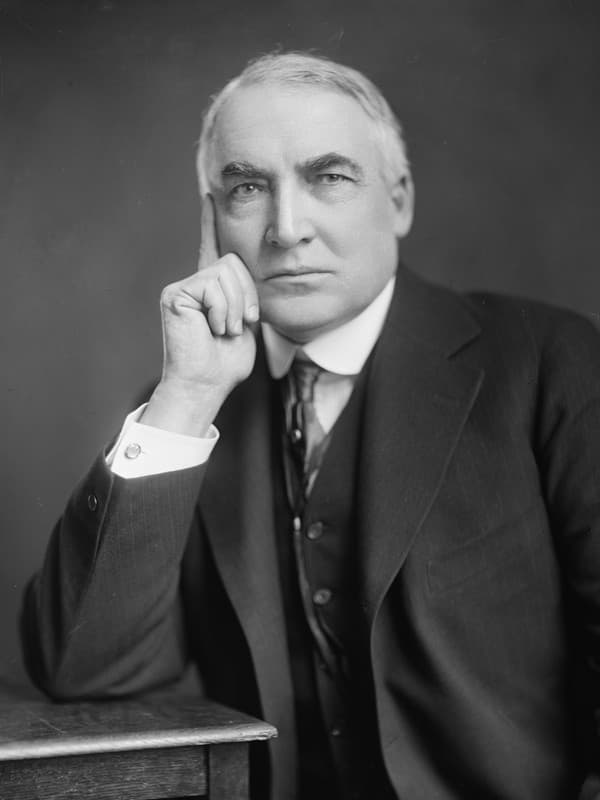
Warren G. Harding
1921–1923• 1914–1945: World Wars and Global Power
Warren G. Harding was born in Ohio in 1865 and built his career as a newspaper publisher, state legislator, lieutenant governor, and U.S. senator. Personally genial and politically cautious, he became the Republican presidential nominee in 1920 as a compromise candidate after the party convention deadlocked. Campaigning for a “return to normalcy” after World War I, the influenza pandemic, labor unrest, and the Red Scare, Harding won a landslide victory over Democrat James M. Cox.
Harding’s administration sought to reduce wartime tensions and restore business confidence. He supported tax reductions, budget reform, and the creation of the Bureau of the Budget. His administration also convened the Washington Naval Conference, which produced major arms limitation agreements and reflected postwar efforts to avoid another global conflict through naval disarmament and diplomacy.
At home, Harding spoke against lynching and addressed segregated audiences in Birmingham in 1921 with unusually direct language for a president of his era about political equality for Black Americans. Yet federal anti-lynching legislation failed, and his administration did not fundamentally challenge Jim Crow. Immigration restriction also hardened during this period, including the Emergency Quota Act of 1921.
Harding’s presidency was cut short when he died in San Francisco in August 1923 during a western speaking tour, and the nation mourned a leader who had sincerely sought to restore prosperity and national unity after the upheavals of World War I.
✓ Major Achievements
- 1Won the 1920 election on a promise of postwar normalcy
- 2Created the Bureau of the Budget
- 3Hosted the Washington Naval Conference
- 4Supported tax reduction and pro-business economic policy
- 5Spoke publicly against lynching and for limited Black political rights
⚑ Historical Controversies
- 1Administration tainted by Teapot Dome and other corruption scandals
- 2Appointed unqualified or corrupt associates to important offices
- 3Failed to secure federal anti-lynching legislation
- 4Presided over restrictive immigration policy
- 5Offered limited response to racial violence and Jim Crow
Legacy at 250 Years
Harding’s presidency connects America at 250 to post-crisis politics, public trust, and the importance of ethical government. His record shows how a desire for normalcy can coexist with unresolved racial injustice, immigration restriction, and the risks of corruption when appointments are treated as political rewards.
Key Speeches & Documents
- 📜Inaugural Address
- 📜Birmingham Address on Race
- 📜Address to Congress on Naval Disarmament
About Warren G. Harding
Warren G. Harding was a newspaper publisher and senator from Ohio who appealed to many voters with a message of “normalcy” after World War I. He promised a calmer period after years of war, reform, and social strain.
As president, Harding supported business recovery, reduced wartime controls, and encouraged international arms limitation. His administration hosted the Washington Naval Conference, which produced agreements intended to reduce naval competition among major powers.
One of Harding’s significant achievements was helping guide the country from wartime conditions toward peace and economic growth. Though his administration later faced scandals involving some officials, Harding himself was widely liked for his warmth and approachable style.
Historical Era
Sources & Further Reading

Ask Dr. Hart about Warren G. Harding
AI Historical Guide · America 250 Atlas
Dr. Abigail Hart can help you understand Warren G. Harding's presidency, key decisions, historical significance, and place in America's 250-year story.