President #41 • Republican
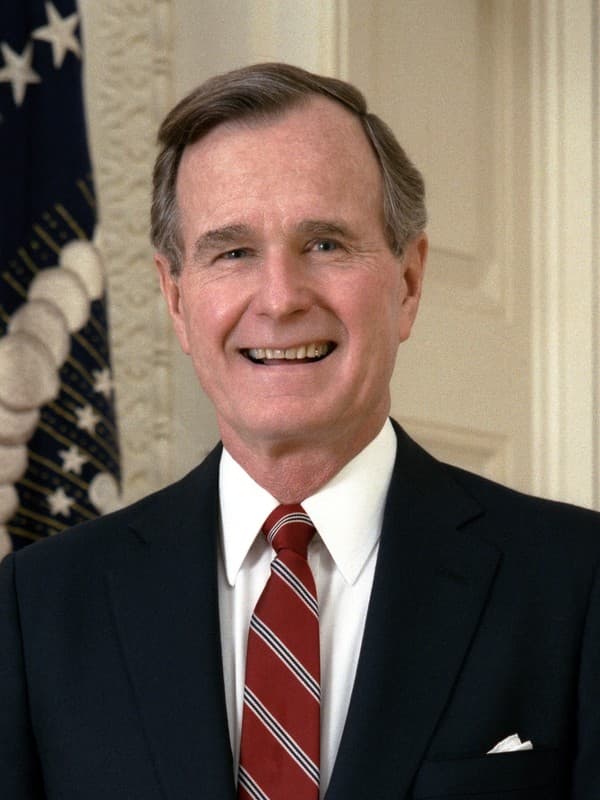
George H.W. Bush
1989–1993• 1968–2001: Modern Politics, Technology, and Globalization
George H.W. Bush was born in Massachusetts in 1924 and became one of the youngest Navy pilots in World War II. After the war, he moved to Texas, entered the oil business, and built a long public career as congressman, ambassador to the United Nations, envoy to China, CIA director, and vice president under Ronald Reagan. In 1988, he defeated Michael Dukakis and became president promising continuity with Reagan along with a “kinder, gentler” politics.
Bush’s presidency opened at a turning point in world history. Communist governments collapsed across Eastern Europe in 1989, the Berlin Wall fell, and the Soviet Union dissolved in 1991. Bush managed the end of the Cold War with caution, working with allies and Soviet leader Mikhail Gorbachev to avoid humiliation, instability, or war during a historic transition.
His major military crisis came when Iraq invaded Kuwait in 1990. Bush built a broad international coalition, secured United Nations support, and launched Operation Desert Storm in 1991. The war quickly expelled Iraqi forces from Kuwait, though Bush chose not to remove Saddam Hussein from power. His administration also intervened in Panama and signed major legislation including the Americans with Disabilities Act and the Clean Air Act Amendments of 1990.
Domestically, Bush faced recession, deficits, and pressure to compromise on taxes after his “no new taxes” campaign pledge. His 1990 budget deal angered conservatives but addressed fiscal concerns. Economic frustration and a third-party challenge from Ross Perot contributed to his 1992 defeat by Bill Clinton. Bush left office with a strong foreign policy reputation and later became widely respected for public service and restraint. He died in 2018.
✓ Major Achievements
- 1Managed the end of the Cold War
- 2Built the international coalition for the Gulf War
- 3Signed the Americans with Disabilities Act
- 4Signed the Clean Air Act Amendments of 1990
- 5Oversaw German reunification diplomacy
⚑ Historical Controversies
- 1Broke his “no new taxes” pledge
- 2Faced recession and economic dissatisfaction
- 3Gulf War left Saddam Hussein in power
- 4Willie Horton campaign messaging in 1988 drew criticism for racial politics
- 5Response to domestic economic concerns appeared less effective than foreign policy leadership
Legacy at 250 Years
Bush’s presidency connects America at 250 to the nation’s role after the Cold War and the challenge of using power with restraint. His record also highlights how civil rights expanded through disability law and how domestic economic confidence can determine political fate even after major foreign policy success.
Key Speeches & Documents
- 📜Inaugural Address
- 📜Address on the Invasion of Kuwait
- 📜Address Announcing Operation Desert Storm
- 📜Address on the Americans with Disabilities Act
About George H.W. Bush
George H. W. Bush brought unusually broad experience to the presidency. He had served as a Navy pilot, congressman, ambassador to the United Nations, envoy to China, CIA director, and vice president.
As president, Bush managed a changing world as the Cold War ended. His steady diplomacy helped guide relations with the Soviet Union and supported German reunification within a peaceful European framework.
One of Bush’s most significant achievements was leading the international coalition during the Gulf War in 1991. The operation showed careful alliance-building and a limited military objective, restoring Kuwait’s sovereignty while avoiding a wider war.
Historical Era
Sources & Further Reading

Ask Dr. Hart about George H.W. Bush
AI Historical Guide · America 250 Atlas
Dr. Abigail Hart can help you understand George H.W. Bush's presidency, key decisions, historical significance, and place in America's 250-year story.