President #38 • Republican
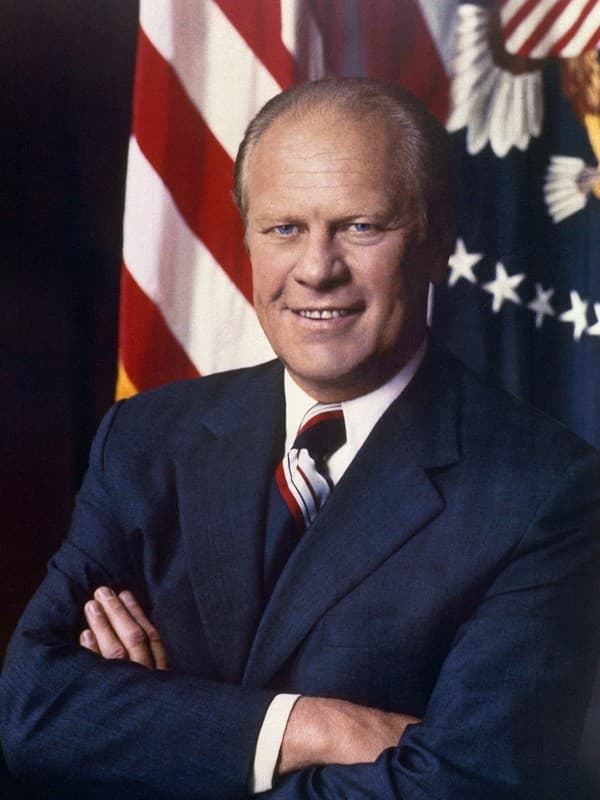
Gerald Ford
1974–1977• 1968–2001: Modern Politics, Technology, and Globalization
Gerald Ford was born Leslie Lynch King Jr. in Omaha, Nebraska, in 1913 and raised in Grand Rapids, Michigan. A football standout at the University of Michigan, he later became a lawyer, Navy officer in World War II, and Republican congressman. He served in the House for nearly twenty-five years and became minority leader. In 1973, after Vice President Spiro Agnew resigned, Richard Nixon appointed Ford vice president under the Twenty-Fifth Amendment.
Ford became president on August 9, 1974, when Nixon resigned during the Watergate scandal. He was the only person to become president without being elected either president or vice president. In his first address, he told Americans that “our long national nightmare is over,” signaling a desire to restore trust and stability after constitutional crisis.
His most consequential decision came one month later, when he granted Nixon a full pardon for federal crimes he may have committed as president. Ford argued that the pardon was necessary to move the country forward, and Ford believed the pardon was necessary to allow the country to move forward and heal.
Ford’s presidency also faced inflation, recession, energy problems, and the aftermath of the Vietnam War. In 1975, Saigon fell to North Vietnamese forces, marking the final collapse of South Vietnam. Ford signed the Helsinki Accords, continued détente with the Soviet Union, and restored a measure of normal constitutional process. He lost the 1976 election to Jimmy Carter and later became a respected elder statesman. He died in 2006.
✓ Major Achievements
- 1Restored constitutional continuity after Watergate
- 2Became president through the Twenty-Fifth Amendment process
- 3Signed the Helsinki Accords
- 4Helped stabilize public trust after Nixon’s resignation
- 5Maintained a reputation for personal honesty
⚑ Historical Controversies
- 1Pardoned Richard Nixon
- 2Presided over inflation and economic weakness
- 3Oversaw the final collapse of South Vietnam
- 4Faced criticism for limited policy vision
- 5Lost the 1976 election after a short unelected presidency
Legacy at 250 Years
Ford’s presidency connects America at 250 to the resilience of constitutional transfer after scandal and resignation. His record asks whether national healing requires punishment, forgiveness, transparency, or some uneasy combination of all three.
Key Speeches & Documents
- 📜Address Upon Taking the Oath of Office
- 📜Proclamation Pardoning Richard Nixon
- 📜State of the Union Address
- 📜Remarks on the Helsinki Accords
About Gerald Ford
Gerald Ford became president after Richard Nixon’s resignation, at a time when trust in government had been badly shaken. Ford had served many years in Congress and was respected for his honesty, friendliness, and steady character.
His presidency focused on healing the country after Watergate, managing economic troubles, and restoring a sense of normal constitutional order. He often spoke about openness and calm leadership.
One of Ford’s most significant achievements was helping the nation move through a peaceful transition after a major political crisis. His example reinforced the strength of constitutional government and the importance of personal integrity in public office.
Historical Era
Sources & Further Reading

Ask Dr. Hart about Gerald Ford
AI Historical Guide · America 250 Atlas
Dr. Abigail Hart can help you understand Gerald Ford's presidency, key decisions, historical significance, and place in America's 250-year story.