President #8 • Democratic
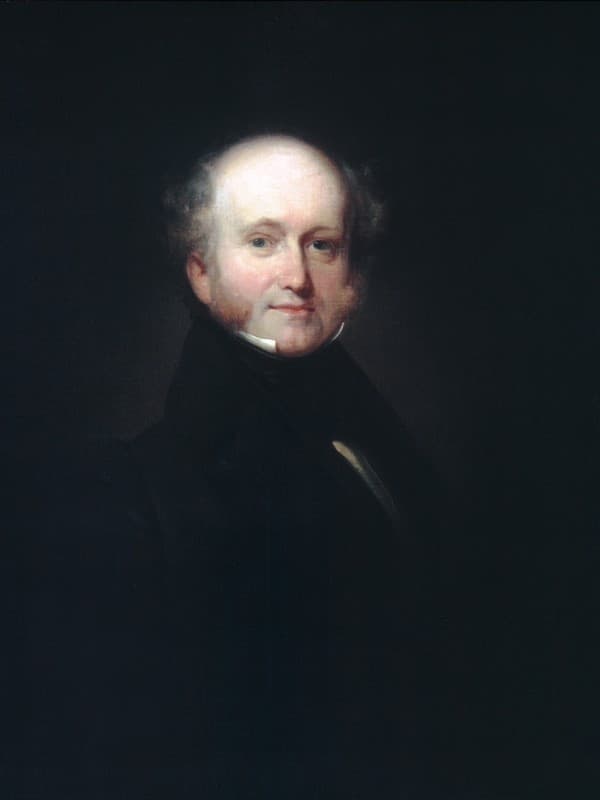
Martin Van Buren
1837–1841• 1803–1848: Expansion, Democracy, and Conflict
Martin Van Buren was born in Kinderhook, New York, in 1782, making him the first president born after American independence. A skilled lawyer and political organizer, he rose through New York politics and became one of the architects of the Democratic Party. He served as senator, governor of New York, secretary of state, minister to Britain, and vice president under Andrew Jackson. Jackson’s support helped Van Buren win the presidency in 1836.
Van Buren took office just as the Panic of 1837 triggered one of the worst economic crises in early American history. Bank failures, unemployment, falling land prices, and collapsing credit defined his presidency. Critics blamed Jacksonian banking policies and Van Buren’s refusal to use expansive federal relief. Van Buren argued that the federal government should not directly manage the economy and supported an Independent Treasury system to separate federal funds from private banks.
His presidency navigated difficult questions of expansion and national unity. Van Buren exercised careful judgment on the annexation of Texas, prioritizing stability and measured diplomacy.
The economic depression destroyed Van Buren’s popularity, and he lost the 1840 election to William Henry Harrison after a highly organized Whig campaign. He later broke with pro-slavery Democrats over the expansion of slavery and ran for president in 1848 as the Free Soil Party candidate. He died in New York in 1862, after the Civil War had begun.
✓ Major Achievements
- 1Helped build the modern Democratic Party
- 2Created the Independent Treasury system
- 3Resisted immediate annexation of Texas to avoid war and sectional crisis
- 4Later opposed slavery’s expansion as a Free Soil candidate
⚑ Historical Controversies
- 1Presided over the Panic of 1837 and a severe depression
- 2Opposed broad federal economic relief
- 3Continued Indian removal policies
- 4Failed to maintain the Jacksonian coalition in power
Legacy at 250 Years
Van Buren’s career connects America at 250 to the rise of organized mass politics and the recurring debate over government’s role in economic crisis. His presidency also shows how expansion and slavery increasingly shaped every major national question before the Civil War.
Key Speeches & Documents
- 📜Inaugural Address
- 📜Special Session Message on the Financial Crisis
- 📜Annual Messages to Congress
About Martin Van Buren
Martin Van Buren was a skilled political organizer who helped build the modern Democratic Party. Before becoming president, he served as governor of New York, senator, secretary of state, and vice president.
His presidency was dominated by the Panic of 1837, a severe economic crisis that began soon after he took office. Van Buren responded by supporting the Independent Treasury system, which aimed to separate federal money from private banks and create a more stable way to manage public funds.
Van Buren’s most significant achievement was his role in developing organized political parties as a regular part of American democracy. He understood that parties could connect voters, candidates, and ideas across a large and growing nation.
Historical Era
Sources & Further Reading

Ask Dr. Hart about Martin Van Buren
AI Historical Guide · America 250 Atlas
Dr. Abigail Hart can help you understand Martin Van Buren's presidency, key decisions, historical significance, and place in America's 250-year story.