Midwest
North Dakota
“Northern Plains of Nations and Energy”
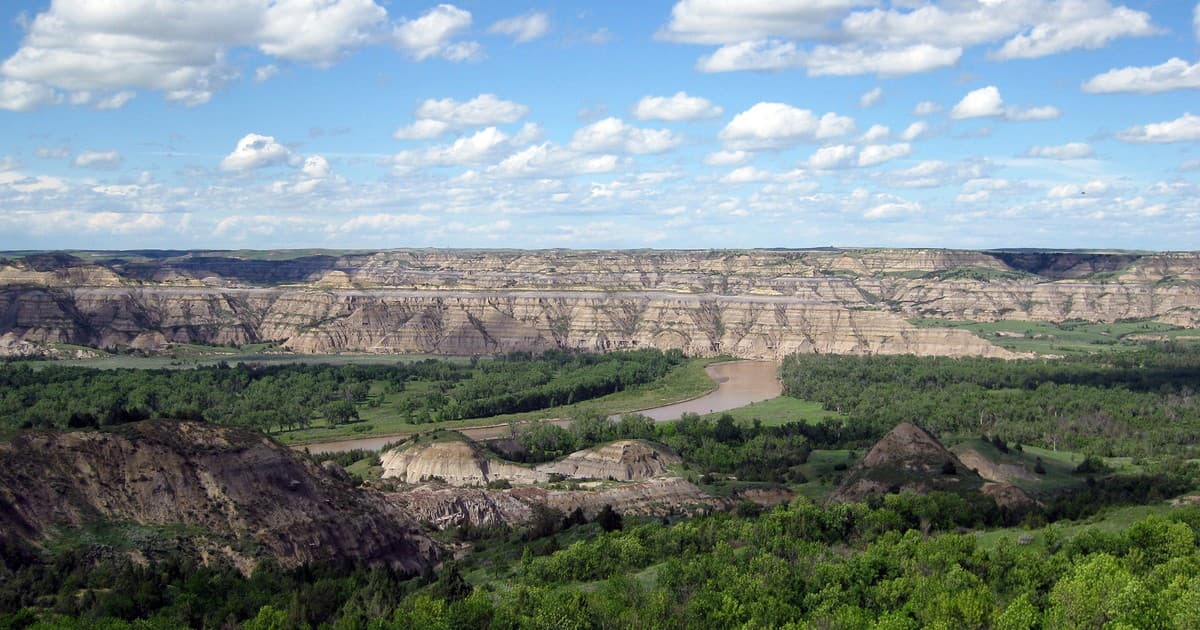
North Dakota’s history centers on the northern Great Plains, Native nations, fur trade, farming, ranching, and energy. Mandan, Hidatsa, Arikara, Lakota, Dakota, and other peoples shaped the region long before U.S. expansion. Lewis and Clark wintered at Fort Mandan in 1804–1805, relying on Native diplomacy and knowledge as they moved west. Later settlement brought railroads, wheat farming, and immigration from Scandinavia and Germany, building communities on the values of hard work and self-reliance. Theodore Roosevelt’s ranching years in the Badlands shaped his conservation vision and national legacy. In recent decades, oil development in the Bakken formation has made North Dakota a national energy leader, while its agricultural traditions and wide-open landscapes remain central to its identity and pride.
Role in the Founding Era
During the founding era, present-day North Dakota remained outside the original United States and was shaped by Native nations and northern Plains trade networks. The Louisiana Purchase brought U.S. claims to the region, but Lewis and Clark’s expedition revealed that American expansion depended on Indigenous diplomacy, geography, and knowledge rather than simple possession on paper.
Key Historical Themes
Major Events Connected to North Dakota
Louisiana Purchase
President Jefferson completed the Louisiana Purchase, doubling the size of the United States by acquiring 828,000 square miles from France for approximately $15 million.
Civil War Begins — Fort Sumter
Confederate forces fired on Fort Sumter, beginning the Civil War — the bloodiest conflict in American history, fought over slavery and the future of the Union.
United States Enters World War I
The United States declared war on Germany and entered World War I — marking the nation's emergence as a major world power and shaping the 20th-century international order.
America at 250 — The Semiquincentennial
The United States marks the 250th anniversary of the Declaration of Independence — a moment to reflect on what the nation has achieved, where it has fallen short, and what comes next.
About North Dakota
North Dakota is a northern Great Plains state with prairies, badlands, farms, and energy fields. Bismarck is the capital, while Fargo is the largest city. Grand Forks, Minot, and Williston are also important communities.
The region has long been home to Native nations including the Mandan, Hidatsa, Arikara, Lakota, Dakota, and others. The Missouri River and northern plains supported trade, agriculture, hunting, and village life before U.S. expansion. North Dakota became a state in 1889.
Farming, railroads, and homesteading shaped much of the state's development. Wheat, cattle, and small towns became central to North Dakota's identity. The state also became known for Theodore Roosevelt's ranching years in the Badlands, which helped influence his conservation views.
Today, North Dakota's economy includes agriculture, oil and gas, wind energy, education, health care, and transportation. The Bakken oil boom brought rapid growth and change to western areas. The state remains known for open landscapes, harsh winters, strong rural communities, and Native nations with deep historical roots.
Presidents with North Dakota Ties
Significant historical connection — not necessarily born here

Ask Dr. Hart about North Dakota
AI Historical Guide · America 250 Atlas
Dr. Abigail Hart can help you explore North Dakota's history, key events, role in the American story, and connections to presidents and national milestones.