Midwest
Nebraska
“Great Plains of Trails and Populism”
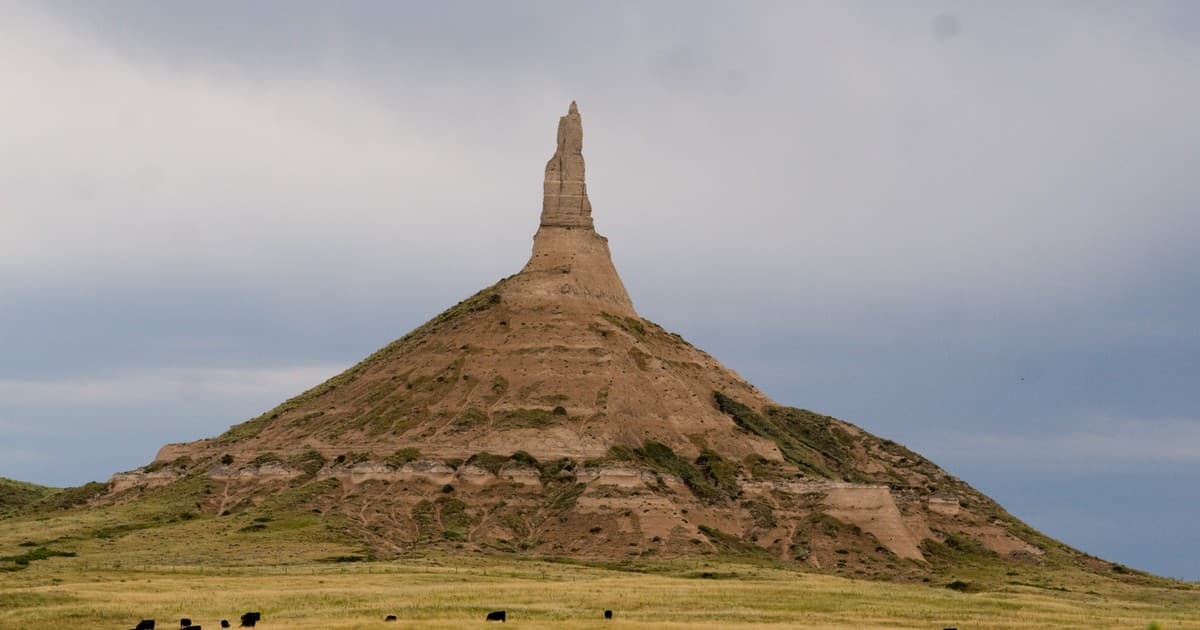
Nebraska’s history is tied to the Great Plains, Indigenous nations, overland migration, homesteading, railroads, and agrarian democracy. Long before statehood, the region was home to Native peoples including the Omaha, Pawnee, Ponca, Otoe, Lakota, and others. In the nineteenth century, trails to Oregon, California, and Utah crossed Nebraska, with landmarks such as Chimney Rock symbolizing the promise of westward migration. Federal homestead policy and railroads opened the Plains to settlement and farming, connecting Nebraska to national markets. Nebraska became a center of agricultural abundance and Populist reform politics, including the Omaha Platform of 1892, which championed farmers and working people. Omaha also became the birthplace of Gerald Ford, connecting the state to the nation’s highest office.
Role in the Founding Era
During the founding era, present-day Nebraska was beyond the original United States and within Indigenous homelands connected to Plains trade and diplomacy. U.S. claims arrived through the Louisiana Purchase, but actual control came much later through treaties, military force, trails, and settlement. Nebraska’s later history shows the long consequences of the early republic’s continental ambitions.
Key Historical Themes
Major Events Connected to Nebraska
Louisiana Purchase
President Jefferson completed the Louisiana Purchase, doubling the size of the United States by acquiring 828,000 square miles from France for approximately $15 million.
Civil War Begins — Fort Sumter
Confederate forces fired on Fort Sumter, beginning the Civil War — the bloodiest conflict in American history, fought over slavery and the future of the Union.
13th Amendment — Abolition of Slavery
The 13th Amendment to the Constitution was ratified, formally abolishing slavery throughout the United States — completing what the Emancipation Proclamation had begun.
14th Amendment — Equal Protection and Citizenship
The 14th Amendment granted citizenship to all persons born or naturalized in the United States and established equal protection under the law — overturning Dred Scott and laying the foundation for modern civil rights law.
15th Amendment — Black Male Voting Rights
The 15th Amendment prohibited denying the right to vote based on race, color, or previous condition of servitude — granting Black men the formal right to vote, though it would be systematically suppressed for nearly a century.
United States Enters World War I
The United States declared war on Germany and entered World War I — marking the nation's emergence as a major world power and shaping the 20th-century international order.
America at 250 — The Semiquincentennial
The United States marks the 250th anniversary of the Declaration of Independence — a moment to reflect on what the nation has achieved, where it has fallen short, and what comes next.
About Nebraska
Nebraska is a Great Plains state of prairies, river valleys, farms, ranches, and small cities. Lincoln is the capital, while Omaha is the largest city. The Platte River has long served as a natural pathway across the region.
Indigenous peoples, including the Omaha, Ponca, Pawnee, Otoe-Missouria, Lakota, and others, lived in the region before U.S. expansion. Nebraska became important to westward migration through the Oregon, California, Mormon, and Pony Express trails. It became a state in 1867.
Nebraska's history is closely tied to railroads, homesteading, cattle, corn, wheat, and irrigation. Omaha became a major meatpacking, railroad, and business center, while rural areas developed around farming and ranching. The Homestead Act strongly shaped settlement patterns.
Today, Nebraska's economy includes agriculture, food processing, insurance, transportation, manufacturing, health care, and finance. It remains a major producer of corn, beef, soybeans, and ethanol. The state combines rural agricultural identity with growing urban centers and a reputation for practical civic culture.
Presidents from Nebraska
Born or politically rooted in Nebraska
Presidents with Nebraska Ties
Significant historical connection — not necessarily born here

Ask Dr. Hart about Nebraska
AI Historical Guide · America 250 Atlas
Dr. Abigail Hart can help you explore Nebraska's history, key events, role in the American story, and connections to presidents and national milestones.