South
Louisiana
“Creole Crossroads of Empire and Nation”
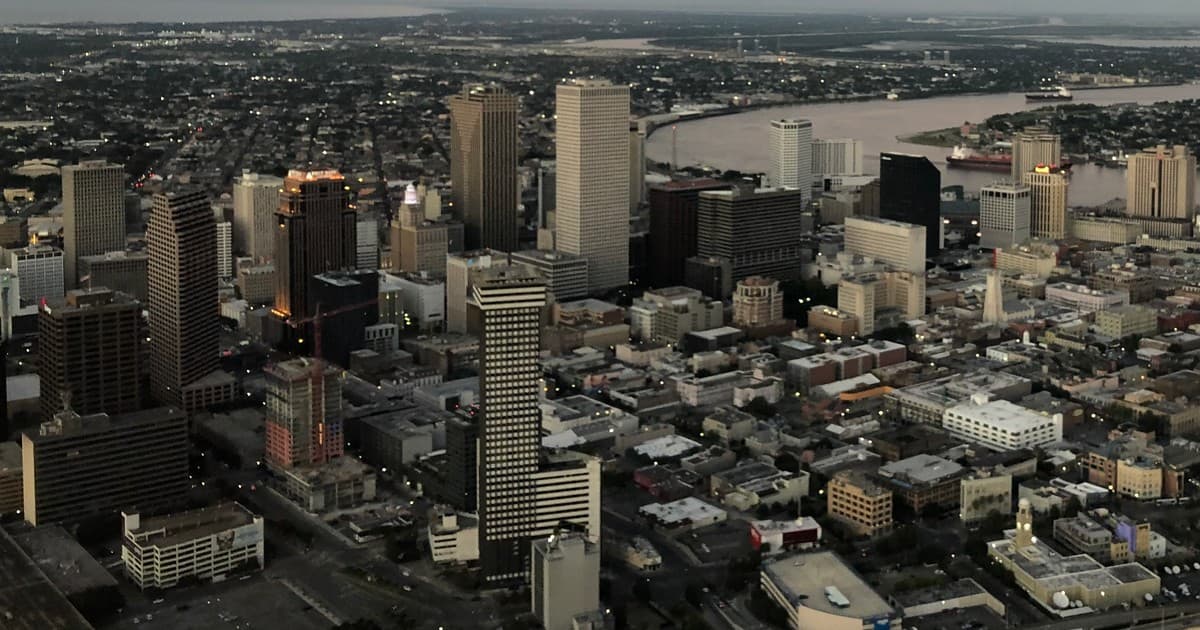
Louisiana’s history is one of the most culturally rich in North America, shaped by French and Spanish heritage, river commerce, the transformative Louisiana Purchase, and extraordinary artistic creation. French and Spanish colonial rule left deep marks on law, religion, language, architecture, and identity, especially in New Orleans — one of the most distinctive and vibrant cities in the world. The Louisiana Purchase of 1803 doubled the size of the United States, opening a vast continental interior to American growth and opportunity. New Orleans became a critical port city and the birthplace of jazz, America’s great original art form, whose influence spread across the world. Louisiana’s Creole and Cajun cultures have enriched American life through music, food, and enduring tradition. Louisiana’s people have shown remarkable resilience and renewal in every era, celebrating a unique heritage that makes the state a cultural treasure of the nation.
Role in the Founding Era
During the founding era, Louisiana remained outside the original United States, first under Spanish authority and later briefly returned to France. Its location at the mouth of the Mississippi made it essential to western trade. American concern over access to New Orleans helped lead to the Louisiana Purchase in 1803, one of the most consequential expansions of the early republic.
Key Historical Themes
Major Events Connected to Louisiana
Treaty of Paris — American Independence Recognized
Britain formally recognized American independence in the Treaty of Paris, ending the Revolutionary War and establishing U.S. borders from the Atlantic to the Mississippi River.
Louisiana Purchase
President Jefferson completed the Louisiana Purchase, doubling the size of the United States by acquiring 828,000 square miles from France for approximately $15 million.
War of 1812
The United States declared war on Britain over trade restrictions and the impressment of American sailors — a conflict that tested national sovereignty and produced the 'Star-Spangled Banner.'
Civil War Begins — Fort Sumter
Confederate forces fired on Fort Sumter, beginning the Civil War — the bloodiest conflict in American history, fought over slavery and the future of the Union.
13th Amendment — Abolition of Slavery
The 13th Amendment to the Constitution was ratified, formally abolishing slavery throughout the United States — completing what the Emancipation Proclamation had begun.
Civil Rights Act of 1964
President Johnson signed the Civil Rights Act of 1964, outlawing discrimination based on race, color, religion, sex, or national origin — the most comprehensive civil rights legislation since Reconstruction.
About Louisiana
Louisiana is a Gulf Coast state shaped by rivers, wetlands, music, food, and cultural mixing. Baton Rouge is the capital, while New Orleans is its most famous city. The Mississippi River, bayous, coastal marshes, and the Gulf of Mexico have all shaped the state's history and economy.
Indigenous peoples lived in the region long before French and Spanish colonization. Louisiana's colonial past gave it a distinctive blend of French, Spanish, African, Caribbean, Native, and American influences. The United States acquired the region through the Louisiana Purchase in 1803, and Louisiana became a state in 1812.
New Orleans became one of North America's most important port cities and a center of jazz, Creole culture, Mardi Gras traditions, and culinary innovation. Plantation agriculture, slavery, the Civil War, Reconstruction, and coastal trade all shaped Louisiana's history in powerful ways.
Today, Louisiana's economy includes energy, petrochemicals, shipping, fishing, tourism, agriculture, and film production. The Port of South Louisiana and New Orleans-area facilities are major parts of national trade. Current challenges include hurricane risk, coastal erosion, wetland loss, and rebuilding after disasters, but the state's cultural influence remains enormous.
Presidents with Louisiana Ties
Significant historical connection — not necessarily born here

Ask Dr. Hart about Louisiana
AI Historical Guide · America 250 Atlas
Dr. Abigail Hart can help you explore Louisiana's history, key events, role in the American story, and connections to presidents and national milestones.