South
Mississippi
“Cotton Kingdom and Civil Rights Battleground”
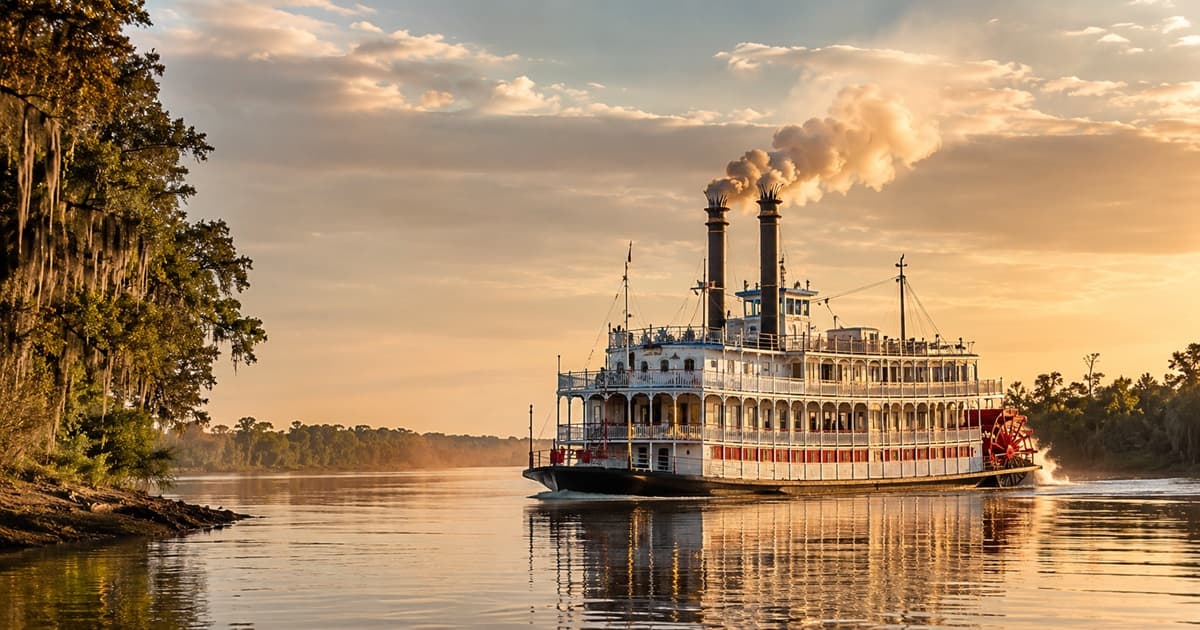
Mississippi’s history is woven into the fabric of American music, culture, agriculture, and resilience. The state’s fertile Delta and strategic river position made it agriculturally and commercially vital, and its people developed extraordinary traditions in literature, blues music, and storytelling that shaped American culture worldwide. During the Civil War, the Union’s victory at Vicksburg in 1863 secured control of the Mississippi River, a strategic turning point in preserving the nation. In the twentieth century, courageous leaders and ordinary citizens worked through the civil rights movement to secure voting rights and equal dignity, demonstrating the power of peaceful determination. Today, Mississippi celebrates its cultural richness, from the blues heritage of the Delta to its growing communities and enduring traditions of faith and resilience.
Role in the Founding Era
During the founding era, Mississippi was a contested borderland shaped by Indigenous nations, Spanish claims, British imperial legacies, and American expansion. The lower Mississippi Valley’s strategic importance grew after independence as settlers, planters, and federal officials sought control of river commerce and land. Mississippi’s later development showed how the early republic’s expansion carried slavery into the Deep South.
Key Historical Themes
Major Events Connected to Mississippi
Treaty of Paris — American Independence Recognized
Britain formally recognized American independence in the Treaty of Paris, ending the Revolutionary War and establishing U.S. borders from the Atlantic to the Mississippi River.
Louisiana Purchase
President Jefferson completed the Louisiana Purchase, doubling the size of the United States by acquiring 828,000 square miles from France for approximately $15 million.
Civil War Begins — Fort Sumter
Confederate forces fired on Fort Sumter, beginning the Civil War — the bloodiest conflict in American history, fought over slavery and the future of the Union.
Emancipation Proclamation
President Lincoln issued the Emancipation Proclamation, declaring all enslaved persons in Confederate states to be free — transforming the Civil War into an explicit war against slavery.
13th Amendment — Abolition of Slavery
The 13th Amendment to the Constitution was ratified, formally abolishing slavery throughout the United States — completing what the Emancipation Proclamation had begun.
14th Amendment — Equal Protection and Citizenship
The 14th Amendment granted citizenship to all persons born or naturalized in the United States and established equal protection under the law — overturning Dred Scott and laying the foundation for modern civil rights law.
15th Amendment — Black Male Voting Rights
The 15th Amendment prohibited denying the right to vote based on race, color, or previous condition of servitude — granting Black men the formal right to vote, though it would be systematically suppressed for nearly a century.
Civil Rights Act of 1964
President Johnson signed the Civil Rights Act of 1964, outlawing discrimination based on race, color, religion, sex, or national origin — the most comprehensive civil rights legislation since Reconstruction.
Voting Rights Act of 1965
The Voting Rights Act outlawed discriminatory voting practices that had disenfranchised Black voters in the South for nearly a century — giving real force to the 15th Amendment at last.
About Mississippi
Mississippi lies along the lower Mississippi River and the Gulf Coast, with rich delta farmland, pine forests, small towns, and historic river cities. Jackson is the capital and largest city, while Gulfport, Biloxi, Hattiesburg, and Oxford are also well known.
The region was home to Indigenous peoples including the Choctaw, Chickasaw, Natchez, and others before European colonization and U.S. expansion. Mississippi became a state in 1817. Cotton agriculture, slavery, river trade, the Civil War, and Reconstruction deeply shaped its history.
Mississippi has had a major influence on American music and literature. The Mississippi Delta is often called one of the birthplaces of the blues, and writers such as William Faulkner, Eudora Welty, and Richard Wright helped make the state important in American letters. It was also a central setting in the civil rights movement.
Today, Mississippi's economy includes agriculture, manufacturing, shipbuilding, health care, education, tourism, and energy-related industries. The Gulf Coast is important for shipping, seafood, casinos, and military activity. The state continues to work through challenges involving poverty, education, health, and economic development while preserving a powerful cultural legacy.
Presidents with Mississippi Ties
Significant historical connection — not necessarily born here

Ask Dr. Hart about Mississippi
AI Historical Guide · America 250 Atlas
Dr. Abigail Hart can help you explore Mississippi's history, key events, role in the American story, and connections to presidents and national milestones.