President #23 • Republican
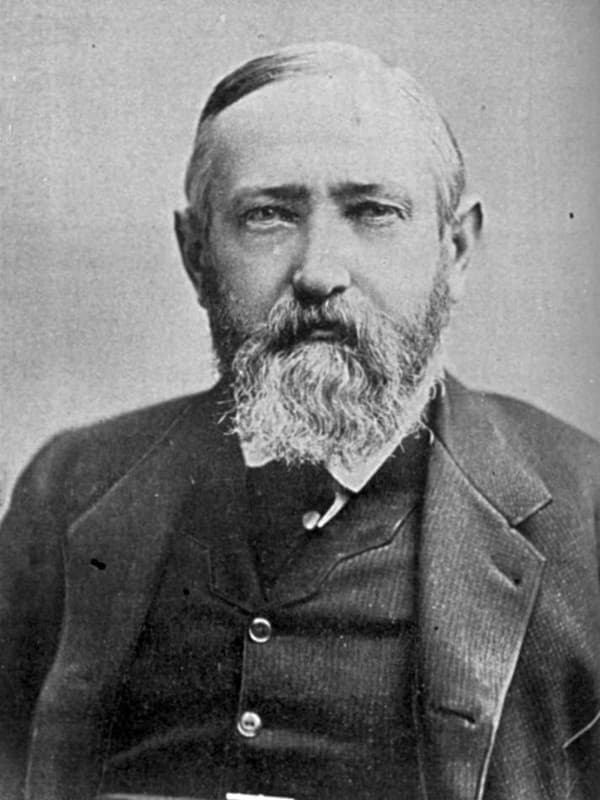
Benjamin Harrison
1889–1893• 1877–1914: Industrial America and Reform
Benjamin Harrison was born in Ohio in 1833, the grandson of President William Henry Harrison. He became an Indiana lawyer, Civil War officer, and U.S. senator. In 1888, he won the presidency by defeating Grover Cleveland in the Electoral College. His victory reflected Republican strength in the North and support for protective tariffs, veterans’ pensions, and an active federal government.
Harrison’s administration was unusually legislative for the Gilded Age. The McKinley Tariff of 1890 raised protective duties, while the Sherman Antitrust Act of 1890 marked the first major federal law aimed at restraining monopolies and combinations in restraint of trade. The Sherman Silver Purchase Act attempted to address demands for expanded silver currency, though it later contributed to financial instability.
Harrison also supported voting rights enforcement for Black citizens in the South. The proposed Federal Elections Bill, sometimes called the Lodge Bill, would have strengthened federal oversight of elections, but it failed in the Senate. Its defeat marked one of the last major nineteenth-century federal efforts to protect Black voting rights before Jim Crow disfranchisement hardened across the South.
His presidency also saw the admission of several western states and a more assertive foreign policy, including the first Pan-American Conference and growing naval power. Harrison lost reelection to Cleveland in 1892 as voters reacted against high tariffs and economic concerns. He returned to law and public life, later representing Venezuela in a boundary dispute, and died in 1901.
✓ Major Achievements
- 1Signed the Sherman Antitrust Act
- 2Supported federal protection for Black voting rights
- 3Presided over admission of multiple western states
- 4Expanded U.S. naval and diplomatic activity
- 5Hosted the first Pan-American Conference
⚑ Historical Controversies
- 1Won the presidency while losing the popular vote
- 2Signed the high McKinley Tariff
- 3Failed to secure passage of federal voting rights enforcement
- 4Sherman Silver Purchase Act contributed to monetary instability
- 5Federal spending rose sharply during his administration
Legacy at 250 Years
Harrison’s presidency connects America at 250 to enduring debates over fair elections, corporate power, and federal responsibility. His unsuccessful voting rights effort shows how the retreat from Reconstruction continued to shape American democracy long after the Civil War ended.
Key Speeches & Documents
- 📜Inaugural Address
- 📜Annual Messages to Congress
- 📜Messages on Federal Elections legislation
About Benjamin Harrison
Benjamin Harrison came from a family with deep roots in American politics, but he built his own career as a lawyer, Civil War officer, senator, and president. He was known for careful preparation and a strong command of public issues.
During his presidency, Congress passed the Sherman Antitrust Act, an important early step toward regulating large business combinations. Harrison also supported a more active foreign policy and the modernization of the Navy.
One of Harrison’s significant achievements was helping move the United States toward a more modern national government. His administration dealt with issues of industry, trade, veterans’ benefits, and international influence at a time when the country was rapidly changing.
Historical Era
Sources & Further Reading

Ask Dr. Hart about Benjamin Harrison
AI Historical Guide · America 250 Atlas
Dr. Abigail Hart can help you understand Benjamin Harrison's presidency, key decisions, historical significance, and place in America's 250-year story.