Northeast
Maine
“Maritime Frontier of Union and Freedom”
Maine’s history is shaped by Wabanaki homelands, Atlantic fisheries, shipbuilding, frontier conflict, statehood politics, and Civil War memory. Long part of Massachusetts, Maine developed a distinct identity through its rocky coast, timber economy, maritime trade, and inland settlements. Its admission as a state in 1820 was tied to the Missouri Compromise, linking Maine’s statehood directly to the national struggle over slavery’s expansion. Maine became known for shipbuilding, fishing, lumber, and seafaring communities, as well as reform movements including temperance and abolition. During the Civil War, Maine contributed heavily to the Union cause, with the 20th Maine’s defense of Little Round Top at Gettysburg becoming a central part of national memory. Maine’s story joins regional independence with national crisis.
Role in the Founding Era
During the founding era, Maine was not yet a separate state but part of Massachusetts. Its coastal communities contributed sailors, ships, timber, and strategic harbors to the Revolutionary struggle, while frontier settlements experienced conflict tied to British power and Indigenous homelands. Maine’s later separation and statehood in 1820 showed how founding-era union eventually gave way to sectional bargaining over slavery.
Key Historical Themes
Major Events Connected to Maine
Declaration of Independence
The Continental Congress adopted the Declaration of Independence, announcing the separation of the thirteen colonies from Britain and articulating the foundational principles of American democracy.
Treaty of Paris — American Independence Recognized
Britain formally recognized American independence in the Treaty of Paris, ending the Revolutionary War and establishing U.S. borders from the Atlantic to the Mississippi River.
U.S. Constitution Signed
Delegates to the Constitutional Convention signed the United States Constitution, creating the framework for the federal government that has governed the nation for over 235 years.
Civil War Begins — Fort Sumter
Confederate forces fired on Fort Sumter, beginning the Civil War — the bloodiest conflict in American history, fought over slavery and the future of the Union.
Gettysburg Address
President Lincoln delivered the Gettysburg Address at the dedication of the Soldiers' National Cemetery — a 272-word speech that redefined the purpose of the Civil War and the meaning of American democracy.
13th Amendment — Abolition of Slavery
The 13th Amendment to the Constitution was ratified, formally abolishing slavery throughout the United States — completing what the Emancipation Proclamation had begun.
About Maine
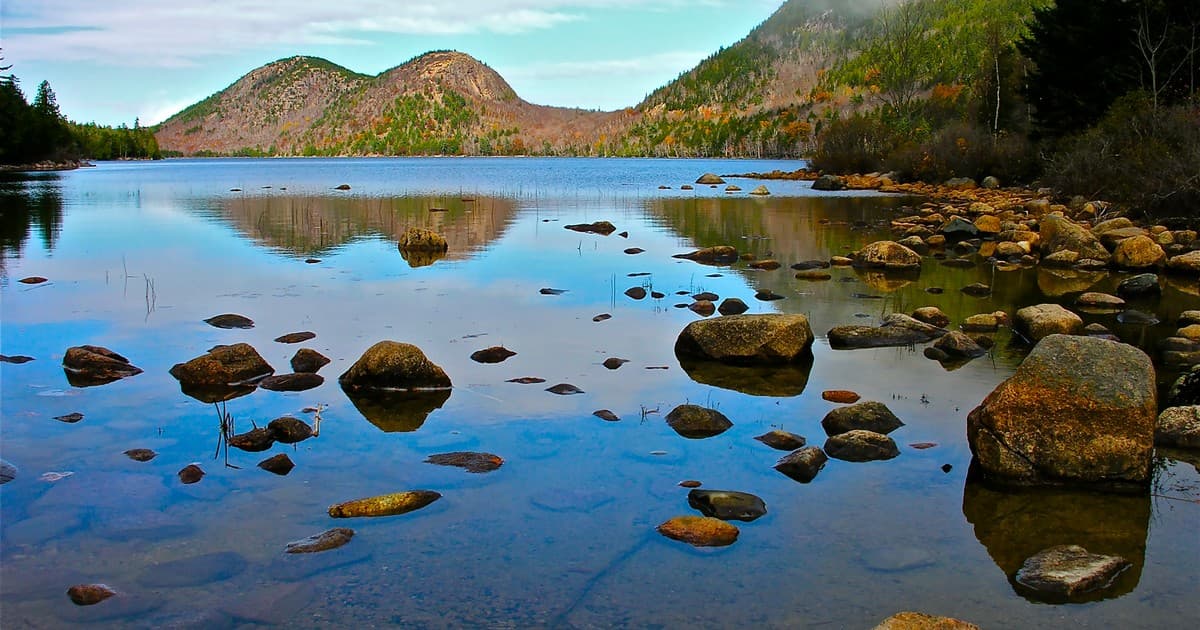
Maine is the northeasternmost state and is known for rocky coastline, forests, lakes, and fishing communities. Augusta is the capital, while Portland is the largest city. Bangor, Lewiston, and Bar Harbor are also well-known, and Acadia National Park is one of the state's most visited natural places.
The region was home to Wabanaki peoples, including the Penobscot, Passamaquoddy, Maliseet, and Mi'kmaq. European fishing and settlement began early along the coast. Maine was once part of Massachusetts but became a separate state in 1820 as part of the Missouri Compromise.
Maine's economy historically centered on shipbuilding, fishing, lumber, paper, farming, and maritime trade. Its long coastline supported lobster fishing and seafaring, while inland forests supported timber and paper mills. The state also became known for writers, artists, and summer visitors drawn to its landscape.
Today, Maine combines tourism, fishing, forest products, health care, education, renewable energy, and small manufacturing. It has one of the oldest populations in the country and a strong rural character outside its southern coast. Its identity is closely tied to independence, natural beauty, and coastal life.
Presidents with Maine Ties
Significant historical connection — not necessarily born here

Ask Dr. Hart about Maine
AI Historical Guide · America 250 Atlas
Dr. Abigail Hart can help you explore Maine's history, key events, role in the American story, and connections to presidents and national milestones.