South
Maryland
“Border State Between Freedom and Slavery”
Maryland’s history is shaped by colonial origins in religious tolerance, a central role in the founding of the nation, the inspiration for the national anthem, and remarkable contributions to American freedom. Founded in 1632 as a refuge for Catholics, it was among the earliest colonies to codify religious toleration. Annapolis served as the nation’s capital, where the Continental Congress ratified the Treaty of Paris in 1784, formally ending the Revolutionary War. Fort McHenry’s heroic defense in 1814 inspired Francis Scott Key to write the words that became the national anthem. Frederick Douglass, born in Maryland, became one of America’s greatest voices for freedom and human dignity. Thurgood Marshall, also from Maryland, argued the landmark Brown v. Board of Education case before the Supreme Court, reshaping American law and life. Maryland’s story is one of tolerance, patriotism, and the steady advance of American ideals.
Role in the Founding Era
Maryland played a significant role in the founding era. Annapolis served as the first peacetime capital of the United States, where the Continental Congress ratified the Treaty of Paris in 1784. Maryland delegates including Charles Carroll and Samuel Chase signed the Declaration of Independence. The state's early tradition of religious toleration influenced later concepts of liberty embedded in the Bill of Rights.
Key Historical Themes
Major Events Connected to Maryland
Declaration of Independence
The Continental Congress adopted the Declaration of Independence, announcing the separation of the thirteen colonies from Britain and articulating the foundational principles of American democracy.
Articles of Confederation Ratified
The Articles of Confederation, America's first governing document, were ratified — creating a loose union of states that proved too weak to govern effectively and was replaced by the Constitution in 1788.
Treaty of Paris — American Independence Recognized
Britain formally recognized American independence in the Treaty of Paris, ending the Revolutionary War and establishing U.S. borders from the Atlantic to the Mississippi River.
U.S. Constitution Signed
Delegates to the Constitutional Convention signed the United States Constitution, creating the framework for the federal government that has governed the nation for over 235 years.
Bill of Rights Ratified
The first ten amendments to the Constitution — the Bill of Rights — were ratified, guaranteeing fundamental individual freedoms including speech, religion, press, assembly, and due process.
War of 1812
The United States declared war on Britain over trade restrictions and the impressment of American sailors — a conflict that tested national sovereignty and produced the 'Star-Spangled Banner.'
Civil War Begins — Fort Sumter
Confederate forces fired on Fort Sumter, beginning the Civil War — the bloodiest conflict in American history, fought over slavery and the future of the Union.
Emancipation Proclamation
President Lincoln issued the Emancipation Proclamation, declaring all enslaved persons in Confederate states to be free — transforming the Civil War into an explicit war against slavery.
13th Amendment — Abolition of Slavery
The 13th Amendment to the Constitution was ratified, formally abolishing slavery throughout the United States — completing what the Emancipation Proclamation had begun.
Brown v. Board of Education
The Supreme Court unanimously ruled that racial segregation in public schools was unconstitutional — overturning Plessy v. Ferguson and sparking the modern civil rights movement.
Civil Rights Act of 1964
President Johnson signed the Civil Rights Act of 1964, outlawing discrimination based on race, color, religion, sex, or national origin — the most comprehensive civil rights legislation since Reconstruction.
About Maryland
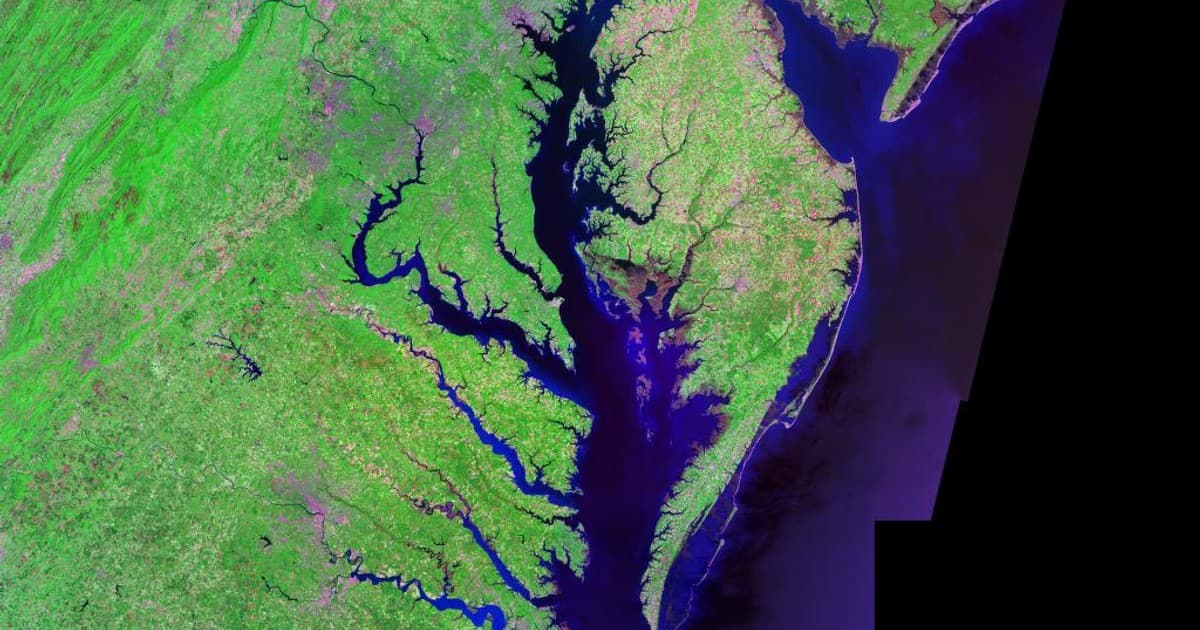
Maryland is a Mid-Atlantic state with mountains in the west, the Chesapeake Bay at its center, and Atlantic beaches on the Eastern Shore. Annapolis is the capital, while Baltimore is the largest city. The state also includes many suburban communities connected to Washington, D.C.
Maryland was founded as an English colony in the 1600s and became one of the original thirteen states. It was established partly as a place where English Catholics could find more security, though its history also included religious conflict, slavery, plantation agriculture, and port commerce.
During the American Revolution and the early republic, Maryland's location made it strategically important. The national anthem, 'The Star-Spangled Banner,' was inspired by the defense of Fort McHenry in Baltimore during the War of 1812. Maryland also played a complex border-state role during the Civil War.
Today, Maryland has a strong economy based on federal employment, biotechnology, health care, defense, cybersecurity, education, and shipping. The Chesapeake Bay remains central to the state's environment, seafood traditions, and identity. Maryland combines historic towns, urban centers, rural farmland, and coastal communities in a compact area.
Presidents with Maryland Ties
Significant historical connection — not necessarily born here

Ask Dr. Hart about Maryland
AI Historical Guide · America 250 Atlas
Dr. Abigail Hart can help you explore Maryland's history, key events, role in the American story, and connections to presidents and national milestones.