Midwest
Missouri
“Gateway of Expansion and Conflict”
Missouri stands at the crossroads of the Mississippi and Missouri Rivers, where westward expansion, commerce, and national ambition converged. St. Louis became a launching point for trade, exploration, migration, and the great routes that carried settlers toward the Plains, Rockies, and Pacific. The Missouri Compromise of 1820 reflected the young nation’s balancing act as it grew across a vast continent. The Dred Scott case, rooted in Missouri, became a pivotal legal moment that ultimately accelerated the drive toward emancipation and equal citizenship. Missouri’s Union loyalty during the Civil War helped secure the vital river heartland. In the twentieth century, Missouri produced Harry S. Truman — the president who guided America through the end of World War II and the dawn of the Cold War — and remained a proud crossroads of rural, urban, and Midwestern American traditions.
Role in the Founding Era
During the founding era, present-day Missouri lay west of the Mississippi under Spanish authority and outside the original United States. Its rivers made it central to continental trade and exploration. The Louisiana Purchase brought Missouri into the expanding republic, and its later admission as a slave state revealed how quickly westward expansion forced the nation to confront slavery’s future.
Key Historical Themes
Major Events Connected to Missouri
Louisiana Purchase
President Jefferson completed the Louisiana Purchase, doubling the size of the United States by acquiring 828,000 square miles from France for approximately $15 million.
Dred Scott Decision
The Supreme Court ruled that Dred Scott, an enslaved man, had no right to sue for his freedom — and that Congress had no power to prohibit slavery in U.S. territories, inflaming the sectional crisis.
Civil War Begins — Fort Sumter
Confederate forces fired on Fort Sumter, beginning the Civil War — the bloodiest conflict in American history, fought over slavery and the future of the Union.
Emancipation Proclamation
President Lincoln issued the Emancipation Proclamation, declaring all enslaved persons in Confederate states to be free — transforming the Civil War into an explicit war against slavery.
13th Amendment — Abolition of Slavery
The 13th Amendment to the Constitution was ratified, formally abolishing slavery throughout the United States — completing what the Emancipation Proclamation had begun.
14th Amendment — Equal Protection and Citizenship
The 14th Amendment granted citizenship to all persons born or naturalized in the United States and established equal protection under the law — overturning Dred Scott and laying the foundation for modern civil rights law.
15th Amendment — Black Male Voting Rights
The 15th Amendment prohibited denying the right to vote based on race, color, or previous condition of servitude — granting Black men the formal right to vote, though it would be systematically suppressed for nearly a century.
United States Enters World War I
The United States declared war on Germany and entered World War I — marking the nation's emergence as a major world power and shaping the 20th-century international order.
Attack on Pearl Harbor
Japan's surprise attack on Pearl Harbor killed 2,403 Americans and drew the United States into World War II — the largest and deadliest conflict in human history.
About Missouri
Missouri sits near the center of the United States, where the Midwest, South, and Great Plains meet. Jefferson City is the capital, while Kansas City and St. Louis are its largest metropolitan centers. The Missouri and Mississippi Rivers have made the state a crossroads for travel and trade.
The region was home to Indigenous peoples including the Osage, Missouri, Illini, and others. It became part of the United States through the Louisiana Purchase and entered the Union in 1821 as part of the Missouri Compromise. Its location made it a gateway to westward expansion.
Missouri's history includes river commerce, frontier settlement, the Santa Fe and Oregon Trails, slavery, Civil War divisions, and industrial growth. St. Louis became a major port and manufacturing city, while Kansas City developed through railroads, stockyards, jazz, and trade.
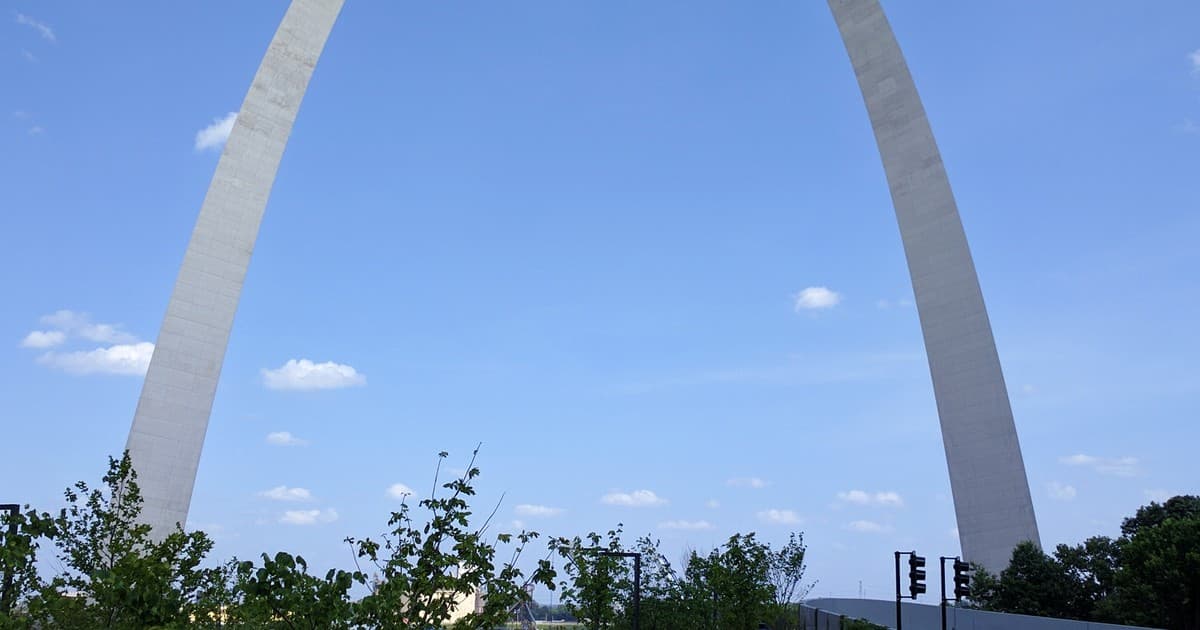
Today, Missouri's economy includes agriculture, transportation, health care, finance, manufacturing, aerospace, and education. The state is known for barbecue, blues, baseball, the Gateway Arch, the Ozarks, and a mix of urban and rural traditions. Its central location continues to define its role in national commerce.
Presidents from Missouri
Born or politically rooted in Missouri
Presidents with Missouri Ties
Significant historical connection — not necessarily born here

Ask Dr. Hart about Missouri
AI Historical Guide · America 250 Atlas
Dr. Abigail Hart can help you explore Missouri's history, key events, role in the American story, and connections to presidents and national milestones.