West
Alaska
“Arctic Homelands of Empire and Energy”
Alaska’s history is shaped by Alaska Native peoples, Russian exploration, U.S. acquisition, resource abundance, military strategy, and dramatic natural landscapes. Inuit, Yupik, Aleut, Tlingit, Haida, Athabaskan, and other Native peoples developed diverse and sophisticated societies across Arctic, coastal, island, and interior regions over thousands of years. The United States purchased Alaska from Russia in 1867 in what proved to be a visionary and consequential acquisition. Gold rushes, including the Klondike rush of 1896, brought energy and enterprise to the territory. Statehood came in 1959, and oil development, especially the Trans-Alaska Pipeline System, gave Alaska a vital role in American energy security. Today, Alaska stands as a land of extraordinary natural splendor, rich Native cultural heritage, and remarkable opportunity on America’s last great frontier.
Role in the Founding Era
During the founding era, Alaska was not part of the United States. Its many Native peoples maintained distinct cultures, economies, and political systems, while Russian fur traders and imperial agents were expanding influence in the North Pacific. Alaska remained Russian America until 1867 and did not become a state until 1959, placing its American history much later than the founding generation.
Key Historical Themes
Major Events Connected to Alaska
Monroe Doctrine
President Monroe declared that the Western Hemisphere was closed to further European colonization — a foundational statement of American foreign policy that shaped U.S. foreign relations for two centuries.
United States Enters World War I
The United States declared war on Germany and entered World War I — marking the nation's emergence as a major world power and shaping the 20th-century international order.
Attack on Pearl Harbor
Japan's surprise attack on Pearl Harbor killed 2,403 Americans and drew the United States into World War II — the largest and deadliest conflict in human history.
America at 250 — The Semiquincentennial
The United States marks the 250th anniversary of the Declaration of Independence — a moment to reflect on what the nation has achieved, where it has fallen short, and what comes next.
About Alaska
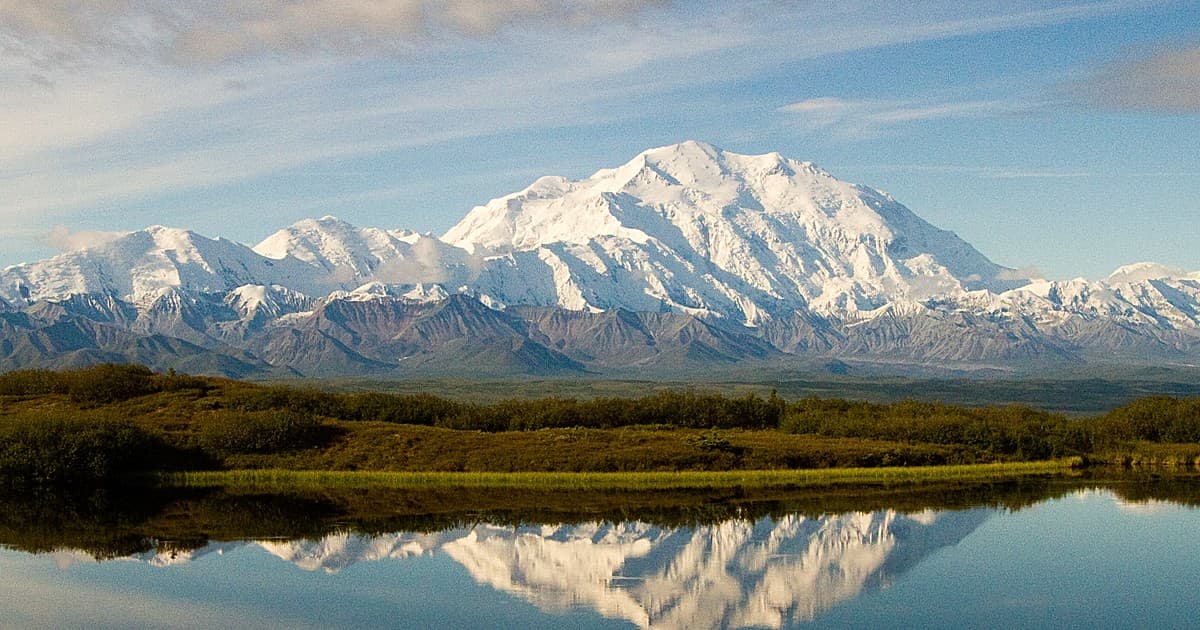
Alaska is the largest state in the United States by land area, yet it has one of the smallest populations. Its geography is dramatic and varied, with Arctic tundra, immense mountain ranges, glaciers, volcanoes, deep forests, and thousands of miles of coastline. Denali, the highest peak in North America, is one of its most famous natural landmarks.
Long before Alaska became part of the United States, it was home to many Alaska Native peoples, including Iñupiat, Yup'ik, Aleut, Tlingit, Haida, Athabascan, and others. Russian fur traders arrived in the 1700s, and the United States purchased Alaska from Russia in 1867. At first, many Americans viewed the purchase skeptically, but later discoveries of gold, oil, and other resources changed the nation's view of the territory.
Alaska became the 49th state in 1959. Its modern history has been shaped by resource development, especially oil from the North Slope, as well as fishing, shipping, tourism, and military strategy. The Alaska Native Claims Settlement Act was a major event that reshaped land ownership and Native corporations in the state.
Today, Anchorage is the state's largest city and a major transportation hub, while Juneau serves as the capital. Alaska's population is highly diverse, with a major Alaska Native presence and communities connected by air, water, and road systems. Its current identity is closely tied to wilderness, energy, climate change, Indigenous cultures, and the challenges of living across vast distances.
Presidents with Alaska Ties
Significant historical connection — not necessarily born here

Ask Dr. Hart about Alaska
AI Historical Guide · America 250 Atlas
Dr. Abigail Hart can help you explore Alaska's history, key events, role in the American story, and connections to presidents and national milestones.